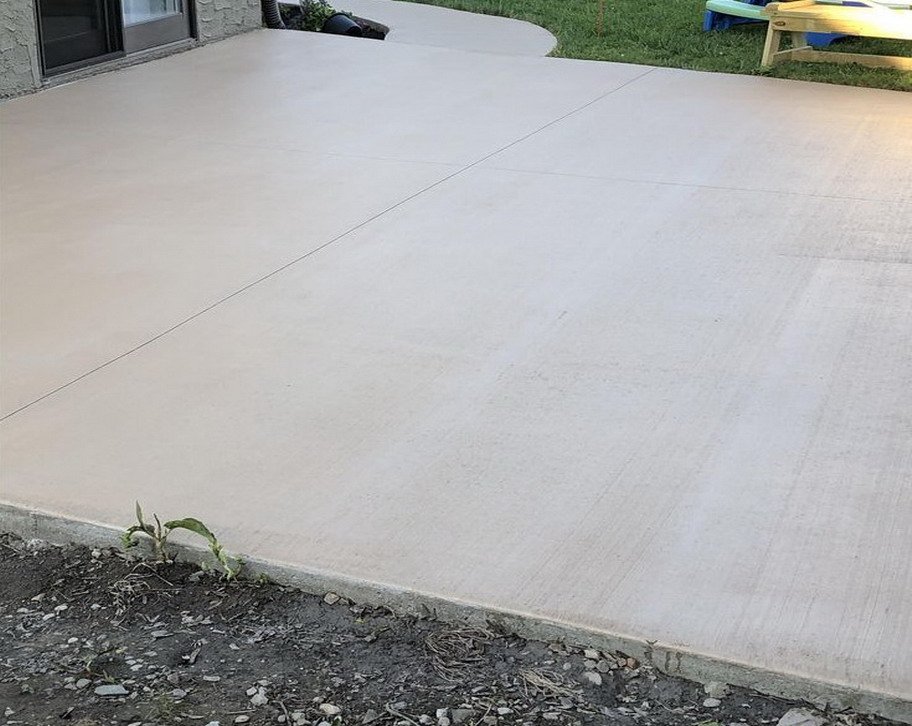
Why seal a concrete slab?
Your concrete slab faces constant threats from moisture, oil stains, and salt damage. Without a proper sealer, these contaminants penetrate deep into the porous surface, causing permanent discoloration and weakening the structure.
Freeze-thaw cycles create the most destructive force against bare concrete. When water freezes inside concrete pores, it expands and causes scaling,
spalling, and cracks in the concrete that compromise your slab’s integrity.
An effective concrete sealer creates a protective barrier against UV rays and chemical damage. This protection preserves the appearance of the concrete while preventing costly repairs from structural deterioration.
Sealing your concrete slab significantly extends its lifespan and maintains its natural look. The right sealant prevents abrasion from foot or vehicle traffic while making your surfaces more resistant to everyday wear and tear.
2 types of concrete sealers
Film forming sealers
Film-forming sealers sit on top of your concrete surface, creating a visible protective layer. Acrylic sealers offer the most cost-effective solution, available in both water-based and solvent-based formulas with different gloss levels and sheen options.
Polyurethane sealants provide superior abrasion resistance for high-traffic areas like driveways. These durable coatings withstand heavy foot or vehicle traffic while maintaining excellent adhesion to the concrete floor beneath.
Epoxy coatings deliver maximum chemical protection, making them perfect for garage floors exposed to oil and salt. However, epoxy may yellow when used for outdoor use, so consider this for interior concrete applications primarily.
Penetrating sealers
Penetrating sealer options include silane, siloxane, and silicate formulations that absorb deep into concrete pores. These sealers create invisible protection while preserving the natural look of the concrete surface without changing its appearance.
A penetrating concrete sealer works by chemically reacting within the slab to block moisture penetration. Water-based versions offer low VOC content and easy cleanup, while solvent-based sealer products penetrate deeper into the concrete for enhanced longevity and protection against harsh weather conditions.
Tips to seal a concrete slab?
Prepare surface
Proper surface preparation before applying any concrete sealer determines whether your sealing project succeeds or fails. You must clean, repair, and test your concrete surface thoroughly to ensure the sealant bonds correctly and provides long-lasting protection.
- Clean concrete thoroughly by removing dirt, oil, grease, and stains using pressure washing and pH-neutral degreasers for optimal adhesion.
- Remove existing sealer completely through chemical stripping or grinding, then test with water drops to verify bare concrete surface.
- Allow new concrete to cure 28-30 days minimum before sealing to prevent moisture issues and ensure proper sealant penetration.
- Repair all cracks in the concrete, spalls, and holes using appropriate concrete patch materials before applying any protective coating.
- Test for moisture by taping plastic sheeting for 24 hours to confirm the slab is completely dry before sealing.
You cannot skip these preparation steps if you want your concrete sealer to penetrate properly and create a protective barrier. Poor surface preparation leads to adhesion problems, peeling, and premature failure of your sealing efforts.
Choose the right concrete sealer
Your sealer choice depends on whether you’re treating interior concrete or exterior concrete surfaces. High-traffic areas need durable options like
polyurethane or epoxy, while
residential patios work well with acrylic sealer formulations.
Climate plays a huge role in sealer selection for outdoor use applications. If you face freeze-thaw cycles and salt exposure, choose penetrating sealers that won’t peel or create adhesion problems over time.
Consider your desired sheen level when selecting between water-based and solvent-based options. Acrylic sealers offer various gloss levels, while penetrating concrete sealers maintain a matte finish and natural look.
Chemical exposure from oil, grease, and salt requires robust protection like epoxy coatings. For UV protection without changing the appearance of the concrete, silane siloxane sealers penetrate deeper into the concrete while preserving longevity.
Concrete sealing process
Learning how to seal concrete properly requires following specific steps and using the right tools. The concrete sealing process demands attention to detail, proper timing, and correct application techniques to create a protective barrier that lasts.
- Use long-napped rollers for film-forming sealers and low-pressure sprayers for penetrating sealer applications on concrete surfaces.
- Apply paintbrush along edges and corners where rollers cannot reach to ensure complete coverage of entire slab.
- Always apply two thin coats instead of one thick application to prevent bubbling and ensure proper adhesion.
- Apply the first coat evenly across the surface of the concrete, maintaining consistent coverage throughout the area.
- Wait for proper dry time between coats, typically 2-4 hours depending on temperature and humidity conditions.
- Apply the second coat perpendicular to the first direction to guarantee uniform coverage and eliminate missed spots.
- Maintain temperatures between 50°F-90°F during application and avoid sealing when rain is expected within 24-48 hours.
- Allow surface to dry for 2-4 hours before light contact, avoiding any foot traffic during initial curing.
- Wait 24 hours before allowing light foot traffic on newly sealed concrete to prevent damage to coating.
Let it cure completely for 48-72 hours before heavy vehicle traffic to ensure maximum durability and protection.
Safety precautions
Proper ventilation becomes critical when applying solvent-based sealer or epoxy products indoors. These sealants release fumes that require adequate airflow to prevent health risks during the sealing process.
Always wear chemical-resistant gloves, safety goggles, and long sleeves when handling any concrete sealer. A respirator protects you from inhaling vapors, especially when working with low VOC or high-chemical-content products.
Keep ignition sources away from flammable sealers to prevent fire hazards. Dispose of rags and waste materials properly, as solvent-based products can spontaneously combust if not handled correctly.
Avoid 3 common sealer application mistakes
- Never apply the sealant on damp concrete surfaces, as moisture causes poor adhesion and early peeling. Test that your concrete surface is completely dry before beginning any sealing application to avoid costly failures.
- Using incompatible sealers or non-breathable coatings traps moisture vapor beneath the surface. This leads to delamination and requires you to scrub off the existing sealer and start over completely.
- Uneven application creates streaks, puddles, and bubbles that ruin the natural look of your concrete. Take time to etch and clean the surface properly, repair any cracks, and apply thin, consistent coats for professional results.
Bring your concrete back to life, schedule a restoration consultation
When your concrete starts showing cracks, discoloration, or surface wear, you don’t have to settle for a damaged look. At
Atlantic Brick and Stone, we specialize in
restoring and repairing all types of concrete surfaces in Fredericton.
Our team can assess the condition of your concrete, identify the right repair method, and bring it back to a clean, strong, and long-lasting finish.
Whether it’s a driveway, walkway, patio, or
foundation issue, we’re here to help fix it the right way.
Contact us discuss your project and schedule your restoration consultation.
Summary
- Concrete sealing creates a protective barrier that prevents moisture penetration, extends the lifespan of slabs, and maintains their natural appearance against wear and tear.
- Effective sealers combat moisture, oil stains, and freeze-thaw damage while protecting structural integrity and preventing costly repairs caused by UV degradation and environmental exposure.
- Choose between film-forming sealers like acrylic, polyurethane, and epoxy, or penetrating options, depending on location, climate, and desired finish for optimal protection.
- Proper surface preparation is essential, including thorough cleaning, removing old sealants, repairing cracks, and ensuring dry surfaces for effective sealer adhesion.
- Follow safety precautions with ventilation, PPE, and fire hazard management while avoiding common mistakes like applying sealer on damp concrete or using incompatible products.
FAQ’s about concrete slab sealer
Do I really need to seal a concrete slab?
You don’t always have to seal a concrete slab, but doing so offers strong benefits, especially for slabs exposed to weather, chemicals, or moisture. Sealers help prevent water penetration, staining, freeze-thaw damage, and chemical damage. On purely structural or covered interior slabs, some people skip sealing, but for durability and aesthetics, a sealer is often a smart investment.
When is the right time to apply sealer after pouring new concrete?
You should wait until the concrete has sufficiently cured and dried before applying a sealer. We recommend waiting at least a month after pouring, which ensures the slab has cured and moisture levels are more stable.
What is the ideal temperature or season for applying sealer?
Sealers should generally be applied when conditions are moderate, not too hot, not too cold. If the temperature is below about 55°F, it’s often better to wait until spring if things drop too low.
How often do I need to reseal my concrete slab?
How often you reseal depends heavily on the type of sealer, how much traffic the slab gets, and the local climate. For example, acrylic or film-forming sealers generally need reapplication every 1–3 years, while penetrating sealers, like silanes or siloxanes, can last 5–10 years or more.
Will sealing make my concrete more slippery?
Yes, it can. Some sealers, especially glossy, film-forming types like certain acrylics, can reduce traction and make the surface more slippery.