
Mortar is a key material of your brick wall; it’s not just the glue holding everything together, but the shock absorber, the weatherproof seal, and the expansion joint all rolled into one. When a homeowner in Fredericton watches their beautiful brick chimney start to crumble after just a few winters, or when flakes of brick face pop off a heritage building downtown, the culprit is almost always the same: the wrong mortar ratio.
Here’s the part that surprises most people: stronger isn’t better. In fact, using mortar that’s too hard is one of the fastest ways to destroy your brickwork. The mortar should always be slightly weaker than the brick itself, so when your wall shifts during our brutal freeze-thaw cycles, any cracks appear in the easily repairable mortar joints rather than in the expensive brick faces. It’s a counterintuitive principle that separates amateur work from professional masonry.
At Atlantic Brick and Stone, we’ve spent over 15 years perfecting this balance. We’ve seen the damage caused by well-meaning DIY repairs using the wrong cement-to-sand ratio, and we’ve restored countless heritage homes where previous contractors used modern high-strength mortar on soft historic bricks. The science behind mortar ratios isn’t complicated, but getting it right requires understanding your specific brick type, your local climate, and the intended use of the structure.
In this guide, you’ll learn exactly which mortar type belongs in your project; whether you’re repointing a century-old brick home, building a new retaining wall, or repairing your chimney. We’ll break down the four standard mortar types, explain what each ingredient actually does, and show you how to select the right ratio based on your brick characteristics and New Brunswick’s demanding weather conditions.
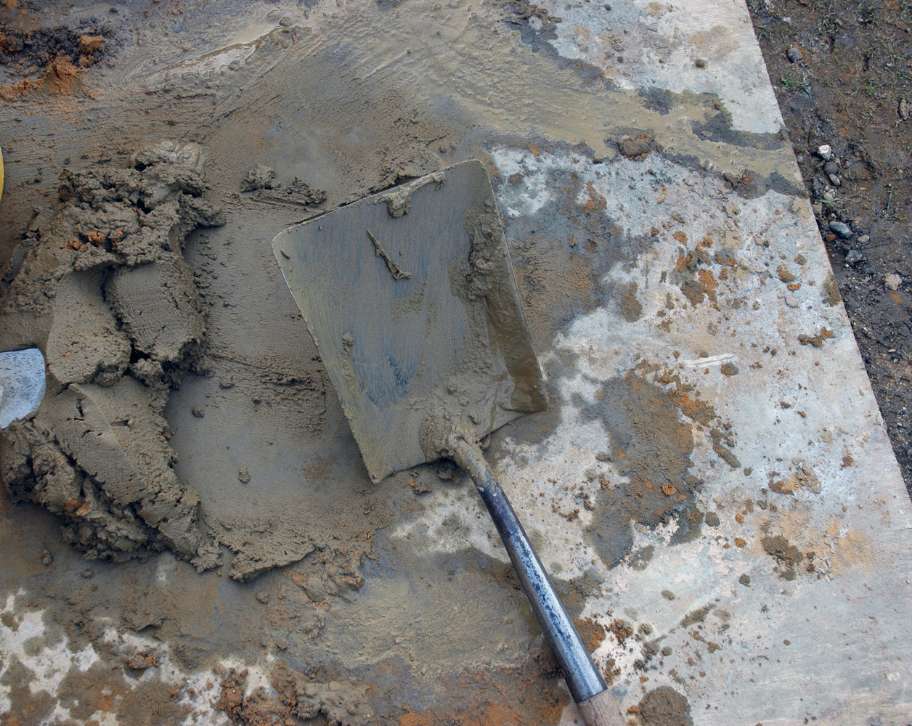
The masonry industry uses four primary mortar classifications; Types M, S, N, and O; each with a specific ratio of Portland cement, hydrated lime, and sand. These aren’t arbitrary formulas; they’re engineered approaches for different structural demands and brick characteristics.
Type N mortar is the workhorse of residential brickwork. With a ratio of 1 part Portland cement, 1 part lime, and 6 parts sand, it delivers approximately 750 psi of compressive strength. This medium-strength mix is what Atlantic Brick and Stone reaches for on most residential projects in Fredericton. The high lime content makes it flexible enough to handle the thermal expansion and contraction that happens when temperatures swing from -25°C in January to +30°C in July.
Type N is ideal for:
Exterior walls
Chimneys
Any above-grade application where the brick isn’t carrying extreme structural loads
The lime gives it a “self-healing” quality; when tiny hairline cracks form, the lime reacts with moisture and carbon dioxide to gradually seal them.
Type S mortar steps up the strength with a 2:1:8-9 ratio (2 parts Portland cement, 1 part lime, 8-9 parts sand). This mix reaches about 1,800 psi and is designed for situations where you need superior bonding and lateral strength. Think retaining walls, foundation walls, brick patios, and any structure that faces high moisture exposure or wind loads. For commercial property managers in the Fredericton area, Type S is often the specification for exterior veneers that must withstand our coastal-adjacent weather patterns. The higher cement content makes it more resistant to water penetration, which is critical for below-grade applications or structures in constant contact with soil moisture.
Type O mortar is the preservation specialist. At a 1:2:9 ratio (1 part Portland cement, 2 parts lime, 9 parts sand), it produces only about 350 psi of compressive strength; but that’s exactly the point. Historic buildings in downtown Fredericton were built with soft-fired clay bricks that are more porous and weaker than modern bricks. If you repoint these structures with Type N or Type S mortar, the mortar becomes harder than the brick. When the wall moves (and all walls move), the stress transfers to the brick faces, causing them to spall and pop off. Type O’s high lime content keeps it soft, flexible, and vapor-permeable, allowing moisture to escape through the mortar joints rather than forcing it through the brick faces where it can freeze and cause damage.
Type M mortar is the heavy-duty option at a 3:1:12 ratio (3 parts Portland cement, 1 part lime, 12 parts sand), delivering 2,500 psi of compressive strength. This is rarely used in standard residential brickwork because it’s too hard and inflexible. Atlantic Brick and Stone reserves Type M for below-grade foundations, heavy retaining walls, and structures that must resist significant compressive loads or sulfate attack from soil contact. In Fredericton’s freeze-thaw environment, Type M works well for foundations because it resists moisture penetration effectively, but it should never be used on above-grade brick walls where flexibility is needed.
When our masons evaluate a project, we consider the brick’s age and hardness, the structure’s exposure to weather, and whether it’s load-bearing or decorative. A 1920s brick home requires a completely different approach than a 2020 commercial building, and using the wrong type can cut your masonry’s lifespan in half.
Understanding what each component does helps explain why changing the ratio changes everything about how your brickwork performs.
Portland cement is the muscle of the mix. It’s the primary binding agent that gives mortar its compressive strength and allows it to harden relatively quickly. When you increase the proportion of cement, you get a harder, stronger mortar; but you also get a more brittle one. High-cement mortars shrink more as they cure, they’re less workable for the mason to spread, and they don’t “breathe” as well. In Fredericton’s climate, where moisture management is critical, too much cement can trap water behind the mortar joint. When that water freezes, it expands and cracks the brick faces.
Hydrated lime is the ingredient most people underestimate. Lime doesn’t add much compressive strength, but it changes the mortar’s workability and long-term performance. It acts as a plasticizer, making the mix sticky and smooth so it spreads easily and adheres better to brick surfaces. More importantly, lime provides that self-healing property we mentioned earlier. When micro-cracks form (and they always do), lime continues to react with atmospheric carbon dioxide in a process called carbonation, gradually filling those tiny gaps. Lime also makes mortar vapor-permeable, allowing moisture to escape through the joints rather than forcing it through the brick. This is why historic mortars; which were often pure lime with no Portland cement; lasted for centuries.
Sand makes up the bulk of any mortar mix, typically 2.25 to 3 times the combined volume of cement and lime. It acts as the structural skeleton, reducing shrinkage and controlling the overall volume. The quality of sand matters tremendously:
Must be clean (free of clay, silt, and organic material)
Well-graded (containing a range of particle sizes from fine to coarse)
Free from contaminants that weaken the bond
In New Brunswick, we’re fortunate to have access to good masonry sand, but Atlantic Brick and Stone always verifies the sand quality before mixing. Dirty sand or sand with too many fine particles will create weak mortar that crumbles, while sand that’s too coarse won’t bond properly.
Water content doesn’t appear in the ratio numbers, but it’s just as critical. The mortar should reach a “buttery” consistency; wet enough to be plastic and workable, but not so wet that it slumps off the trowel or runs down the brick face. A good test is to hold a trowel at a 45-degree angle with mortar on it; the mortar should stick without sliding off. Too much water dilutes the cement, reducing the final strength. Too little water means the mortar won’t bond properly to the brick. Professional masons develop a feel for the right consistency, adjusting based on temperature, humidity, and how quickly the brick is absorbing moisture.
Atlantic Brick and Stone’s expertise shows in how we balance these ingredients. We’ve seen countless repairs where homeowners or inexperienced contractors added extra cement thinking it would make the mortar “stronger,” only to watch the brick faces spall off within two winters. We’ve also seen historic restorations ruined by using modern high-cement mortars on soft old bricks. Getting the ingredient balance right isn’t just about following a recipe; it’s about understanding what each component does and how they work together in your specific application.
Choosing the correct mortar type isn’t a guessing game; it’s a methodical assessment of three key factors: the masonry unit’s strength, the environmental exposure, and the application method.
Masonry unit strength is your starting point. Modern bricks fired at high temperatures are dense, hard, and relatively impermeable. These can handle Type N or Type S mortar without problems. But if you’re working on a home built before 1950, chances are those bricks are softer and more porous. Atlantic Brick and Stone’s masons can assess brick hardness by examining the texture, testing absorption rates, and looking at the brick’s condition. For heritage homes in Fredericton’s historic districts, we typically specify Type O mortar or even pure lime mortars to match the original construction. Using harder mortar on soft bricks is like pairing a rigid steel frame with a flexible rubber component; the mismatch creates stress points that lead to failure.
Environmental exposure determines how much strength and water resistance you need. A chimney or parapet in New Brunswick faces the harshest conditions: direct rain, snow accumulation, freeze-thaw cycles, and no protection from adjacent structures. For these high-exposure applications, Type N is the baseline, providing enough flexibility to handle thermal movement while offering good water resistance. Retaining walls or foundation walls that contact soil moisture typically require Type S for its superior water resistance and higher strength. Interior walls or protected exterior walls can often use Type O, especially in restoration work. Atlantic Brick and Stone evaluates sun exposure, prevailing wind direction, and proximity to moisture sources when making these recommendations.
Application method matters more than most people realize. New construction allows you to optimize the mortar for the brick type and exposure. But repointing; removing deteriorated mortar and replacing it; requires matching the existing mortar’s hardness as closely as possible. If the original mortar was a soft lime-based mix and you repoint with modern Type N or Type S, you create a “hard band” in the wall. This hard band doesn’t move with the rest of the structure, concentrating stress at the interface between old and new mortar. Atlantic Brick and Stone takes samples of existing mortar, analyzes the composition, and replicates the mix ratio, aggregate size, and even the pigment quantity to achieve a seamless blend. We test our mortar matchups under natural lighting before applying them to make sure the colour, texture, and hardness integrate properly.
For extensions and additions, the challenge is matching not just the brick but the mortar as well. A common mistake is using readily available pre-mixed mortar that doesn’t match the original construction. Atlantic Brick and Stone’s masons understand that mortar from different eras had different characteristics. A 1920s home might have a lime-heavy mortar with local sand that gives it a distinctive colour and texture. To achieve architectural continuity, we analyze the original mortar’s composition; the ratio of cement to lime, the sand’s colour and grain size, and any pigments used; then replicate it precisely. This attention to detail is what separates a seamless repair from an obvious patch job.
Our commitment to proper mortar selection extends beyond just following formulas. We consider the building’s age, its historical significance, the owner’s budget, and the long-term maintenance plan. A properly selected mortar ratio isn’t just about preventing immediate failure; it’s about making sure your brickwork lasts for decades with minimal maintenance, even in Fredericton’s climate.
Using incorrect mortar ratios causes predictable failures. Too much cement creates mortar harder than the brick, so when the wall shifts due to settling or thermal expansion, the mortar doesn’t give; instead, the brick faces pop off (spalling). Too much sand produces weak, crumbly joints that erode quickly under wind and rain, leaving gaps where water penetrates. Insufficient lime reduces workability during application and makes the mortar less vapor-permeable, trapping moisture inside the wall where it freezes and causes internal damage.
Achieving consistent batches requires precise measurement; professional masons use “bucketing” (fixed-volume containers) rather than shovelfuls to make sure every batch has identical ratios. Water content must be carefully controlled to reach the right consistency without diluting the cement. Atlantic Brick and Stone’s masons follow proper mixing sequences (dry ingredients blended first, then water added gradually) and understand curing requirements for different temperatures and humidity levels. Incorrect mixing leads to patchy colour differences and compromised structural integrity that won’t be apparent until the mortar fails months or years later.
Mortar typically stays workable for 1.5 to 2.5 hours after mixing, depending on temperature and humidity. If it stiffens from evaporation before the chemical set begins, you can retemper it once by adding small amounts of water and remixing. However, once the chemical hardening process starts (usually after 2 hours), the mortar must be discarded. Adding water after the chemical set has begun significantly weakens the final bond strength, creating joints that will fail prematurely. Professional masons mix only what they can use within the working time to avoid waste and maintain quality.
GET STARTED
Create stunning structures with our residential and commercial masonry services in Fredericton. From meticulous designs to the completed build, our process is professional and rewarding, and we can’t wait to build your dream with you.
Atlantic Brick and Stone, one of the best masonry contractors in Fredericton, NB
Contact
8 Muskie Street, Lower Kingsclear, New Brunswick E3E 0E7, Canada