
Have you noticed a crack in your basement floor and wondered if it’s just a cosmetic flaw or a sign of something more serious? What if that hairline fracture is actually the first warning of structural damage that could cost thousands to repair later?
Not all concrete cracks signal disaster, but distinguishing between harmless surface issues and genuine structural threats requires more than a quick glance. Concrete crack mapping is a systematic diagnostic process that documents, measures, and analyzes every fracture in your concrete surfaces. This comprehensive evaluation creates a detailed “base record” that helps professionals determine whether cracks are stable or actively worsening.
For property owners in regions like Fredericton, where freeze-thaw cycles can exceed hundreds per winter and temperature swings reach 60°C annually, understanding concrete crack behavior is especially important. Water infiltration through even minor cracks accelerates deterioration, turning small problems into major structural emergencies. Professional crack mapping identifies the root causes behind cracking, whether from soil settlement, drainage failures, or thermal stress, allowing for targeted repairs that address the problem at its source rather than just covering surface symptoms.
This guide will walk you through the crack mapping process, common crack types and their causes, professional evaluation methods, and modern repair techniques that deliver lasting results in demanding climates.
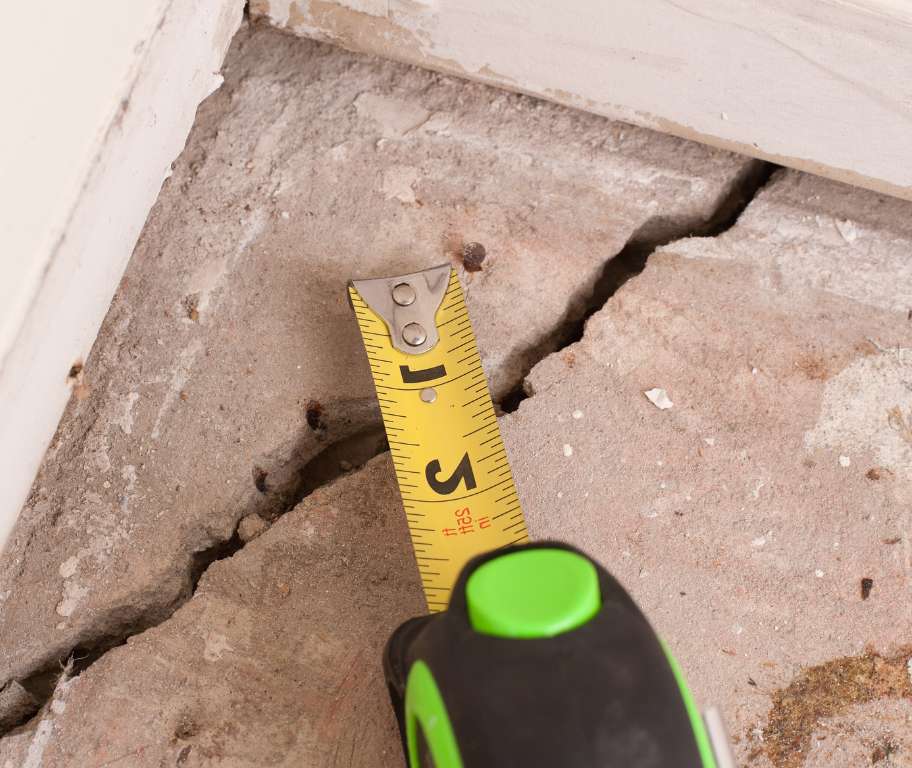
Concrete crack mapping is the systematic process of documenting, measuring, and analyzing every crack on a scaled plan that includes joint locations, joint types, and points of structural restraint. Rather than examining cracks in isolation, this comprehensive approach evaluates the entire floor or wall system to determine whether fractures represent normal shrinkage, environmental stress, or genuine structural failure.
The mapping process creates a “base record” that serves as a reference point for future inspections. By comparing subsequent surveys against this baseline, professionals can determine if cracks are dormant (stable and non-progressive) or active (continuing to move or widen over time). This distinction is critical because active cracks require immediate intervention to prevent progressive deterioration, while dormant cracks may only need monitoring and preventive sealing.
Property owners benefit from crack mapping in several ways:
It distinguishes between cosmetic surface issues and serious structural problems, preventing both unnecessary panic and dangerous neglect
It provides legal protection through condition reports (also called dilapidation surveys) that document existing damage before construction projects, tenant changes, or property transfers
It enables data-driven repair strategies that address root causes rather than just surface symptoms
Understanding crack patterns, joint locations, and restraint points is necessary for accurate diagnosis. For example, cracks that radiate from corners or run parallel to joints often indicate normal shrinkage restraint, while stair-step patterns through masonry units suggest foundation settlement. Horizontal cracks near load-bearing walls signal serious structural movement requiring immediate professional evaluation.
|
Method |
Information Gathered |
Limitations |
Best Use Case |
|---|---|---|---|
|
Visual Inspection Alone |
Surface appearance, approximate width, visible patterns |
Cannot determine depth, progression rate, or root cause |
Initial screening for obvious damage |
|
Professional Crack Mapping |
Precise measurements, documented patterns, joint relationships, restraint points, baseline for future comparison |
Requires specialized training and equipment |
Comprehensive diagnosis, legal documentation, repair planning, ongoing monitoring |
In freeze-thaw climates like Fredericton, crack mapping becomes especially valuable because water infiltration through cracks accelerates deterioration exponentially. Even hairline cracks under 0.1mm can allow moisture penetration that expands during freezing, widening the crack and causing spalling (surface flaking). Professional mapping identifies these vulnerabilities before they escalate into costly structural repairs, making it a wise investment for long-term property protection.
Concrete cracking stems from several primary causes, each producing distinct patterns that help professionals diagnose the underlying problem. Understanding these causes and their visual signatures allows property owners to recognize when professional evaluation is necessary.
Drying shrinkage is the most common cause of concrete cracking. As hardened concrete loses capillary water, it contracts. If the slab is restrained by the sub-base, adjacent walls, or embedded fixtures, internal tension builds until the concrete cracks to relieve the stress. These cracks typically appear within the first few months after installation and often run in relatively straight lines across the slab.
Thermal expansion and contraction cause stress fractures in regions with extreme temperature fluctuations. In NB, Canada, where temperature swings can exceed 60°C between summer and winter, concrete expands and contracts repeatedly. Without adequate control joints to accommodate this movement, the concrete will crack at its weakest points. These cracks often appear near corners, openings, or changes in slab thickness.
Structural overloading occurs when applied loads exceed the design capacity of the concrete. This can happen when heavy equipment is placed on residential garage floors not designed for such weight, or when warehouse racking is loaded before the concrete reaches full strength. Overload cracks often appear as inclined cracks near support points or as sudden, wide fractures under concentrated loads.
Plastic shrinkage cracks form before the concrete has fully hardened, typically within the first few hours after placement. Rapid surface moisture loss during hot, windy conditions causes the surface to shrink faster than the interior, creating shallow, irregular cracks that often resemble chicken wire. While usually cosmetic, these cracks can provide pathways for water infiltration if not properly sealed.
Differential settlement results from uneven soil movement beneath the foundation. When one portion of a slab settles more than another, the concrete bends and cracks. Settlement cracks are particularly serious because they indicate ongoing foundation movement. These often appear as stair-step patterns through masonry units or as wide, displacement cracks where one side of the fracture is noticeably higher than the other.
Visual diagnostic signs help identify crack origins:
Rust staining around cracks suggests moisture has reached steel reinforcement, causing corrosion that expands and creates additional cracking
Inclined cracks near beam supports typically indicate shear stress problems requiring structural evaluation
Crazing (fine, interconnected surface lines resembling a spiderweb) usually indicates surface-level curing issues rather than structural depth
Efflorescence (white mineral deposits) signals water movement through the crack, indicating active moisture infiltration
Crack severity is generally classified by width:
Hairline cracks (under 0.1mm): Usually cosmetic surface shrinkage that can be sealed with flexible fillers to prevent water infiltration
Medium cracks (0.1-0.3mm): Require monitoring and professional sealing to prevent progression; may indicate developing structural issues
Wide cracks (over 0.3mm): Demand immediate professional structural assessment; often indicate active settlement, overloading, or serious foundation problems
Recurring cracks that reopen after repair are particularly concerning because they indicate unresolved root causes. Common underlying issues include ongoing drainage problems that saturate soils and cause repeated settlement, foundation movement from unstable soils, or thermal stress from inadequate control joints. Addressing these root causes is necessary for permanent repair.
While not all cracks are preventable, proper construction techniques significantly reduce risk. Control joints placed at appropriate intervals (typically every 3-4 meters for slabs) provide predetermined weak points where cracks can form in controlled locations. Air-entrained concrete mixes create microscopic air bubbles that accommodate freeze-thaw expansion, reducing internal stress. Adequate steel reinforcement distributes loads and limits crack width even when cracking occurs.
Professional concrete crack evaluation begins with a thorough visual inspection and precise documentation. Specialists photograph each crack with scale references (typically a ruler placed directly in the frame) to provide accurate visual records for future comparison. Crack gauges and digital measuring devices record exact widths, while detailed notes document crack patterns, joint relationships, and any signs of displacement or moisture infiltration.
When visual inspection cannot determine crack depth or internal damage, non-destructive testing (NDT) methods provide detailed information without compromising the structure. Ultrasonic Pulse Velocity (UPV) testing measures the time ultrasonic waves take to travel through concrete. Because waves travel slower through air (cracks and voids) than solid material, technicians can calculate crack depth and concrete density. Velocity readings above 4,500 m/s indicate excellent quality, while speeds below 3,000 m/s suggest significant internal cracking or poor-quality material.
Impact-Echo testing generates stress pulses at the surface and monitors reflections using transducers. This method is particularly effective for thick concrete elements, helping identify delaminations (separation between concrete layers), voids, and honeycombing (air pockets from incomplete consolidation during pouring) deep within the structure.
Ground-Penetrating Radar (GPR) locates subsurface features like reinforcement bars and conduits before repairs begin. This prevents accidental damage to structural steel during repair work and helps determine if corrosion of embedded reinforcement is contributing to crack formation.
Advanced repair techniques address both surface symptoms and underlying causes:
Epoxy injection fills deep structural cracks with high-strength resin that bonds to concrete surfaces, restoring load-bearing capacity and preventing water infiltration. This method works best for dormant cracks in dry conditions.
Polyurethane foam injection is ideal for active, water-infiltrating cracks because the foam expands to fill voids and remains flexible to accommodate minor movement. The hydrophobic properties repel water even under pressure.
Crack stitching uses metal plates or staples anchored across wide cracks with high-strength epoxy. This technique reinforces the crack zone and prevents further widening, particularly useful for cracks caused by structural movement.
Crystalline waterproofing coatings like Krystol T1 are applied broadly around crack zones (extending at least 300mm beyond visible cracks) to address subsurface moisture migration. These coatings penetrate the concrete and form crystals that block water pathways.
Addressing underlying causes is necessary for lasting repairs. Drainage correction diverts water away from foundations, preventing soil saturation that causes settlement. Foundation stabilization techniques (such as helical piers or slab jacking) correct existing settlement and prevent future movement. Soil remediation improves bearing capacity and reduces the risk of differential settlement.
Cold-climate repairs require specialized materials and techniques. Most concrete repair products require temperatures above 5°C for proper curing, limiting the repair window in regions like New Brunswick. Professionals use heated enclosures, specialized cold-weather formulations, and proper curing protection to enable successful repairs even during colder months.
Atlantic Brick and Stone offers comprehensive crack evaluation services that combine certified foundation repair specialists, advanced diagnostic capabilities, and 15+ years of regional expertise in Atlantic Canada’s demanding freeze-thaw climate. Their approach goes beyond surface fixes to identify and resolve root causes, whether drainage failures, foundation settlement, or structural movement, delivering repairs backed by warranty coverage and designed to last decades rather than seasons.
Their team provides free initial consultations where certified foundation repair specialists assess concrete condition and recommend appropriate repair paths. The comprehensive evaluation services include crack pattern analysis, precision measurements, and full property context to determine whether cracks represent normal surface behavior or require immediate structural intervention. With advanced repair techniques including epoxy injection, polyurethane foam injection, crack stitching, and crystalline waterproofing, they deliver solutions designed specifically for Atlantic Canada’s demanding freeze-thaw conditions.
If you notice new cracks, recurring cracks that reopen after previous repairs, or water infiltration through existing cracks, schedule an inspection promptly. The cost of professional evaluation is minimal compared to the expense of repairing extensive structural damage caused by delayed intervention. Proactive maintenance through regular inspections and timely repairs protects your property investment and provides peace of mind that your foundation remains structurally sound.
Residential properties should undergo bi-annual inspections in spring and fall to catch freeze-thaw damage early. Spring inspections identify damage from winter freeze-thaw cycles before it worsens. Fall inspections provide proper sealing before winter moisture infiltration begins. Commercial properties and structures with known issues require more frequent professional monitoring.
Minor hairline cracks under 1/8 inch can be sealed by homeowners using appropriate flexible fillers designed for concrete. However, cracks near load-bearing structures, water-infiltrating cracks, recurring cracks that reopen after repair, and any crack exhibiting displacement require professional evaluation. Treating structural problems as cosmetic issues risks progressive deterioration demanding far more expensive remediation later.
Active cracks continue to move or widen over time, indicating ongoing structural issues that require immediate intervention. Dormant cracks are stable and non-progressive, typically resulting from completed shrinkage or past events that have resolved. Crack monitors (simple devices installed across cracks) or periodic professional surveys help determine crack behavior and appropriate response strategies.
Costs vary based on property size, crack severity, and testing methods required. Simple visual inspections and basic mapping for residential properties typically cost less than advanced non-destructive testing for commercial structures. Many contractors, including Atlantic Brick and Stone, offer free initial consultations to assess scope and provide detailed pricing before any work begins.
Not all cracks are dangerous. Many are cosmetic surface issues from normal shrinkage that pose no structural threat. Pattern recognition and professional evaluation determine actual risk level. Hairline cracks under 0.1mm are generally manageable with proper sealing. Wide cracks over 0.3mm, stair-step patterns, horizontal foundation cracks, and recurring cracks require professional assessment to prevent potential structural compromise.
GET STARTED
Create stunning structures with our residential and commercial masonry services in Fredericton. From meticulous designs to the completed build, our process is professional and rewarding, and we can’t wait to build your dream with you.
Atlantic Brick and Stone, one of the best masonry contractors in Fredericton, NB
Contact
8 Muskie Street, Lower Kingsclear, New Brunswick E3E 0E7, Canada