
Brick steps crumbling after salting often involve more than salt alone. Water can soak into brick and mortar, then freeze and expand, while poor drainage, weak materials or movement add stress. In Fredericton, repeated winter thaws and freezes can expose these weaknesses. The right repair depends on whether the brick, mortar or stair support has failed.
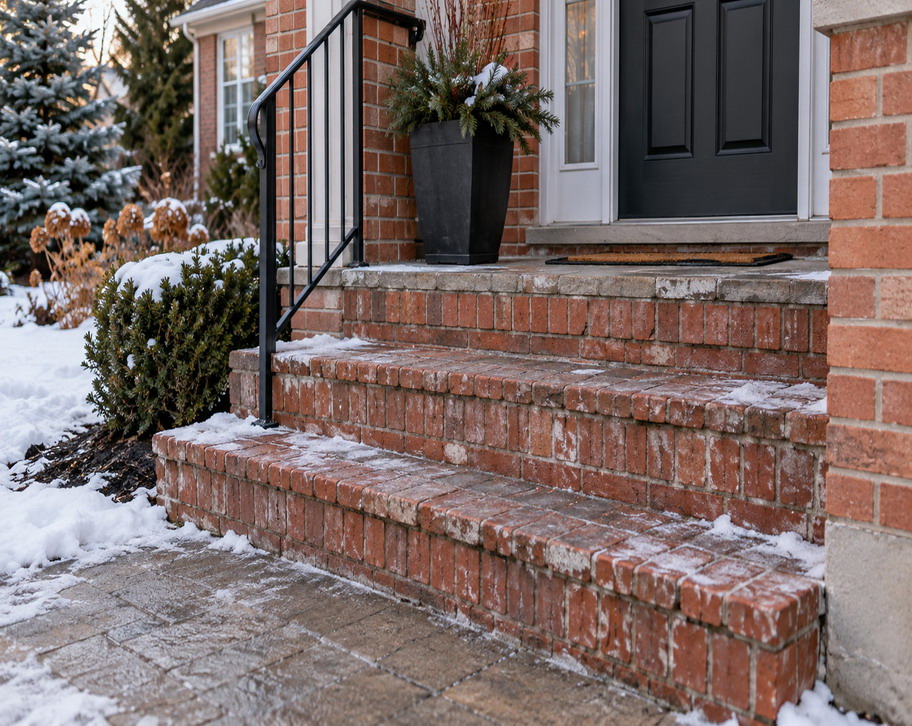
Brick steps may crumble after salting when moisture enters porous masonry and repeated freezing and thawing weakens its surface. Salt can add stress, but it does not prove that salt caused the damage by itself. Poor drainage, leaking downspouts, unsuitable brick or mortar, and settling can create similar signs. Spalling means the brick face flakes, scales or breaks away, while mortar failure affects the joints between bricks.
Salted meltwater can move into small cracks and pores. As the water evaporates, salts may form crystals inside the masonry and add pressure. Look at the whole stair, including the tread slope, drainage, joints and nearby support, before settling on a cause. Replacing a damaged brick without fixing ongoing water entry may leave the same risk in place.
Brick faces, mortar joints and stair supports show different signs of failure, so identify what has changed before choosing a repair. Flaking on a brick face is not the same problem as mortar that has fallen out. A loose or uneven tread may signal movement beyond either surface issue. Check each tread, riser, edge and joint, and restrict access if any part feels unstable.
Brick spalling appears as a rough, layered face, flakes or missing chips, often along exposed edges and tread surfaces. A white powder may be efflorescence, a deposit left when moisture carries dissolved salts to the surface and evaporates. The deposit shows that moisture has moved through the masonry, but it does not identify the salt source. If deposits keep returning, check for water entry and poor drainage.
Mortar failure can appear as cracked, powdery or recessed joints, or gaps where mortar has fallen out. Compare these with the warning signs that masonry joints need repair. Open joints can let more water enter, but repointing alone will not replace a brick face or correct a moving stair. Loose treads, widening cracks or separation from the building need prompt attention. Do not pry at loose bricks to test them.
| Symptom | Possible cause | Appropriate next step |
|---|---|---|
| Flaking or chipped brick face | Freeze-thaw wear, salt exposure or unsuitable brick | Check the brick condition and moisture source |
| White powder on brick | Moisture carrying salts to the surface | Review water routes and watch for deposits returning |
| Recessed or missing mortar | Weathering, poor mortar fit or prolonged wetting | Have joints checked for repointing |
| Rocking tread or widening cracks | Movement or failing support | Keep people away and arrange an on-site inspection |
When brick steps begin crumbling, reduce the chance of injury and limit further water and salt exposure. Avoid loose or uneven treads, and restrict access where a step may shift underfoot. Take photos from the same angles over time to track changes. If the deterioration is worsening, note where the damage appears and whether those areas receive de-icer or runoff.
Clear snow and slush with a plastic- or rubber-edged shovel, taking care not to scrape brick edges. Use grit for traction where suitable, and limit ice-melt products according to their labels and guidance for the masonry. Do not pry unstable bricks, pressure wash weak surfaces, apply unverified chemicals or coat a wet step. These actions can worsen damage or hide signs needed to find the cause.
Many damaged brick steps can be repaired without rebuilding the whole stair, but the work must match the type and extent of failure. Local mortar loss may call for repointing, while badly spalled bricks may need replacement. Movement or widespread damage can require more extensive work. A repair plan should also check water movement and drainage, since new mortar or bricks will not stop a continuing moisture problem.
Repointing removes deteriorated mortar from joints and replaces it with new mortar. It may suit steps where the brick remains sound and the damage is limited to the joints. New mortar needs to suit the existing brick and mortar in strength, flexibility, colour and moisture movement. This matters especially with older or softer brick, which can be harmed by mortar that is too hard.
Replace a brick when it has lost substantial material, cracked through or become too loose to remain sound. The replacement should suit the outdoor exposure and fit the existing masonry in size and appearance. A surface patch does not restore a brick that has lost much of its face. Work on stairs must also keep tread levels, edges and drainage in view.
A shifting stair, several loose treads or widespread brick damage may call for broader masonry restoration, including rebuilding part or all of the steps. The work may also need to address support, the landing, adjoining walkways and water runoff. Covering cracks or replacing a few visible bricks will not correct movement underneath. Brick steps crumbling after salting may need more than a surface repair if damage continues across the assembly.
| Condition | Likely work | Moisture or drainage check |
|---|---|---|
| Sound brick with failing joints | Compatible mortar repointing | Yes, to help prevent recurring joint damage |
| Brick face lost or cracked | Replace affected brick | Yes, especially where water collects |
| Loose or uneven tread | Inspect support and repair or rebuild | Yes, along with water routes |
| Damage across several steps | Consider broader restoration or rebuilding | Yes, as part of repair planning |
A useful masonry assessment starts by comparing where the damage appears. Are exposed, salt-treated treads deteriorating while sheltered brick faces remain sound? Are joints eroding across the whole stair, or are individual bricks flaking? These patterns help narrow the likely causes, but cannot prove salt is the only one.
A mason also checks tread levels, loose units, open joints, step support and how water reaches the stairs. Runoff from a downspout or poorly sloped landing needs attention alongside the damaged masonry. Replacement bricks must suit outdoor freeze–thaw exposure, not merely match the colour. Mortar strength and curing conditions must fit the existing brick and the selected repair product, particularly during cold weather.
Protecting brick steps from winter salt damage means limiting de-icer use and reducing the time water sits on the masonry. Clear snow soon after a storm with a tool that will not scrape the brick. Use only the amount of de-icer needed, and follow product directions and masonry guidance. Sand or other suitable grit can help with traction without melting ice.
Clear slush when conditions allow, and keep drains and water paths free of debris. Check whether a downspout, roof edge or nearby walkway directs runoff onto the steps. Avoid assuming any de-icer or sealer is safe for every brick and mortar type. A coating must suit the masonry and allow appropriate moisture movement; applying one to a wet step can trap water.
Salt may contribute to brick steps crumbling after salting, but moisture, material condition and movement also matter. Identify whether the brick face, mortar joints or stair support has failed before choosing a repair. Repointing can renew suitable joints, but it cannot repair a spalled brick or unstable tread. The repair should include a check of drainage and water entry.
Keep people away from loose or uneven steps, and arrange an assessment when cracks widen, several bricks break or damage spreads. Repairs also depend on conditions at the time, since mortar needs preparation and curing suited to its product guidance. A sound repair addresses the damaged masonry and the conditions that keep it wet.
For damaged brick steps in Fredericton, Atlantic Brick and Stone can assess the masonry, explain repair or repointing options, and help you plan the next step. Request a masonry repair estimate if the steps are loose, flaking or showing recurring moisture damage.
Salt can contribute to lasting damage, but the outcome depends on the brick, mortar, moisture and exposure. Repeated wetting and freezing can weaken masonry, and damage may continue if water still enters the steps. An inspection can help identify whether salt, drainage, materials or movement are involved.
No. Repointing replaces deteriorated mortar in the joints, but it does not restore a brick face that is flaking or missing. Damaged bricks may need replacement, and the source of moisture should also be checked.
White powder may be efflorescence, which forms when moisture carries dissolved salts to the surface. It indicates moisture movement, but it does not prove that winter de-icer is the source. Check for recurring deposits, damp areas and water entry.
It depends on the mortar product and site conditions. Mortar needs suitable preparation and curing conditions, so follow its product guidance rather than assuming cold-weather work is suitable. A masonry contractor can advise whether the repair can proceed at that time.
No. Sealer cannot replace damaged brick or mortar, fix movement or correct drainage. A coating may also affect how moisture leaves the masonry if it does not suit the materials. Confirm compatibility and allow the surface to dry as directed before any treatment.
GET STARTED
Create stunning structures with our residential and commercial masonry services in Fredericton. From meticulous designs to the completed build, our process is professional and rewarding, and we can’t wait to build your dream with you.
Atlantic Brick and Stone, one of the best masonry contractors in Fredericton, NB
Contact
8 Muskie Street, Lower Kingsclear, New Brunswick E3E 0E7, Canada