
You are standing in your driveway, noticing cracks, flaking concrete, or stains creeping up your foundation walls. Your neighbour just painted their foundation and it looks great, for now. You’re wondering whether to do the same, grab a waterproof sealer, or invest in something more substantial like cement parging. It’s a decision many Fredericton homeowners face when their foundation shows signs of wear or moisture damage.
Cement parging is a thin cementitious coating applied to masonry or concrete foundation walls, creating both a protective barrier and an attractive finish. While painting offers a quick cosmetic refresh and sealing provides some moisture resistance, parging delivers comprehensive structural protection engineered to withstand Atlantic Canada’s punishing freeze-thaw cycles. The difference isn’t just cosmetic, it’s about masking problems versus actually solving them.
This guide will help you understand when each method makes sense based on your foundation’s condition, your budget, and your long-term protection needs. We’ll break down the core differences between these approaches, examine real cost comparisons, and give you the criteria to choose wisely. Atlantic Brick and Stone has spent over 15 years providing professional parging services across Fredericton, and we’ve seen firsthand what works, and what fails, in our challenging climate. By the end, you’ll know exactly which foundation protection method is right for your property and why choosing correctly now saves you thousands in future.
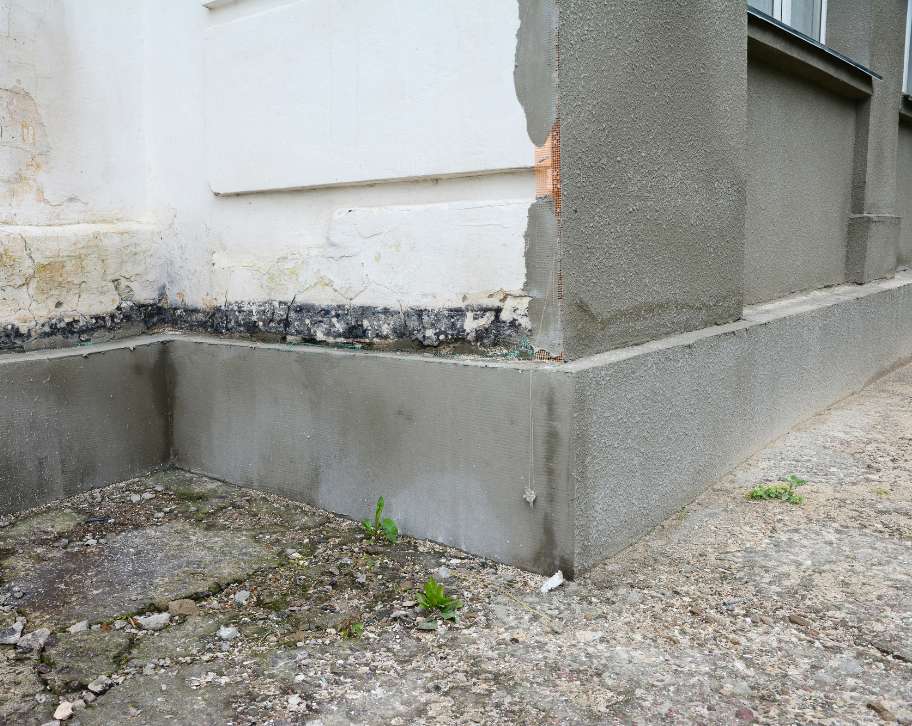
Cement parging is a thin protective layer, typically between 1/4 and 3/4 inch thick, made from a cement-based mortar applied directly to concrete block, poured concrete, or brick foundation walls. Think of it as giving your foundation a new skin, one designed to shield the underlying masonry from moisture, temperature extremes, and physical wear. This coating creates both a protective barrier and an aesthetic improvement for the visible above-grade portions of your foundation.
Professional parging mixes combine Portland cement with sand, bonding agents, and acrylic additives. Each component serves a purpose:
The cement provides strength and durability
The sand creates workability and texture
Bonding agents ensure the new layer adheres permanently to the old surface
Acrylic improves flexibility, allowing the mix to move with temperature changes without cracking
Parging serves multiple critical functions beyond appearance. It provides moisture protection by sealing porous concrete surfaces and filling voids where water would otherwise penetrate. It creates a sacrificial layer that absorbs freeze-thaw punishment before it reaches the foundation itself, while also improving the appearance of walls showing honeycombing or inconsistent mortar joints.
Painting a foundation applies a surface-level aesthetic treatment with minimal moisture resistance and no structural protection whatsoever. Paint doesn’t fill voids, doesn’t seal pores effectively, and offers zero protection against freeze-thaw damage. Sealing goes a step further by reducing water absorption, but sealers can’t fill cracks, address surface irregularities, or prevent new cracks from forming. Neither option comes close to the protection parging provides.
Durability tells the real story. Professional parging lasts 10 to 15 years with proper maintenance. Paint requires reapplication every 3 to 5 years, while sealers need refreshing every 2 to 4 years. Over a 15-year period, you’ll repaint three to five times or reseal four to seven times, while parging continues protecting your foundation with minimal upkeep.
Parging also requires specialized masonry expertise, thorough surface preparation, precise material mixing, and multi-coat application with proper curing. Painting and sealing are simpler processes most homeowners can tackle, but that simplicity comes at the cost of far less protection and a much shorter lifespan. In foundation protection, that difference matters enormously.
Visible structural damage is your first clear signal that parging is necessary. When foundation walls show spalling, honeycombing, exposed aggregate, or deteriorating mortar joints, you’re looking at conditions that painting or sealing simply cannot address. These issues indicate active deterioration, applying paint or sealer over them is like putting a band-aid on a broken bone. The underlying problem continues to worsen.
Chronic moisture problems demand the comprehensive protection only parging provides. If your basement walls experience persistent dampness, water seepage, efflorescence, or mould growth, superficial treatments have already failed or will fail quickly. Parging creates a proper moisture barrier that addresses the root cause rather than masking symptoms.
Severe freeze-thaw damage is particularly relevant in Fredericton’s climate. When foundations show extensive cracking from ice expansion, you need a sacrificial protective layer that absorbs future freeze-thaw cycles. Without it, each winter causes progressively more damage, and eventually you’re facing major structural repairs that cost exponentially more than preventive parging.
Concrete block foundations benefit especially from parging. Above-grade concrete block walls are inherently porous, with hollow cores and mortar joints creating additional vulnerability. Parging seals these surfaces comprehensively, transforming a porous wall into a weather-resistant barrier. If your foundation is concrete block and exposed above ground, parging is essential.
Aesthetic transformation also justifies parging when homeowners want to:
Conceal unsightly foundation walls
Create a smooth uniform surface for painting
Prepare for a high-quality finished appearance
Parging provides a clean slate that dramatically improves curb appeal and delivers a professional, finished look.
Long-term property investment makes parging the smart financial choice. Whether you’re staying for 10-plus years or preparing to sell, a properly parged foundation signals that the home has been well-maintained and protected, something buyers recognize and value.
Previous parging failure presents an ideal opportunity to upgrade. When existing parging has deteriorated, don’t just patch the failing system, replace it with modern fiber-reinforced or acrylic-modified mixes engineered to last longer and perform better.
Atlantic Brick and Stone’s approach begins with thorough foundation assessment. Our certified team doesn’t automatically recommend parging, we conduct detailed inspections to determine if it’s actually necessary. Sometimes painting or sealing is genuinely sufficient, and we’ll tell you honestly. But when parging is needed, we explain exactly why and what problems it will solve.
Our professional installation process ensures maximum durability. We remove all deteriorated material, clean the surface, repoint loose mortar joints, and apply custom cement mixtures with proper bonding agents and acrylic modifiers. Application happens in multiple thin coats with expert troweling, followed by proper curing, delivering parging that stands up to Fredericton’s demanding climate for 10 to 15 years or more.
Painting makes sense in limited scenarios. If your foundation has been professionally parged or consists of smooth poured concrete, is structurally sound, and completely free from moisture problems, then a quality masonry paint or elastomeric coating can provide aesthetic refreshment that lasts several years before reapplication.
Sealing is appropriate for newer foundations, typically less than five years old, with minimal cracking and no significant structural issues. A breathable penetrating sealer can provide supplementary moisture resistance, helping extend lifespan and reduce water absorption. It works best as a preventive measure, not a fix for existing problems.
However, the limitations of painting are severe. Paint cannot fill voids, repair cracks, or protect against structural deterioration, it’s purely cosmetic. If moisture is present behind the surface (and in most older foundations, there is), paint will peel and fail within a year or two. It’s a surface decoration, not a protection system.
Sealing has equally significant limitations. Sealers can’t smooth rough concrete block, fill honeycombing, or stop water intrusion through existing cracks. They provide no protection against freeze-thaw cycles or structural movement, they’re a supplementary treatment, not a primary defense.
Painting fails predictably over deteriorating masonry or surfaces with active moisture problems. You end up with peeling, bubbling paint within one to two years, wasted money, and a real problem that’s continued worsening underneath. We see this constantly, homeowners who tried to save money with paint and ended up spending more when they finally addressed it properly.
Sealing fails on older foundations with existing damage, actually trapping moisture behind the surface and accelerating spalling. Water that would have evaporated gets trapped, freezes, and causes the surface to blow off in sheets. Knowing when not to seal is as important as knowing when to seal.
The false economy of cheap options is something we explain regularly. While painting costs $1 to $3 per square foot and sealing $1 to $2.50 compared to $3 to $7+ for professional parging, those savings disappear quickly. Repeated applications plus eventual structural repair costs make painting and sealing far more expensive over time.
Atlantic Brick and Stone’s recommendation is straightforward: we advise against painting or sealing as primary protection for exposed foundation walls in Fredericton’s climate. These treatments work best as supplementary measures after professional parging has created a sound substrate. Parge first, then paint or seal if desired, but only once the foundation has real protection underneath. We prioritize solutions that actually work long-term, because we’ve seen too many costly failures from shortcuts that seemed economical at the time.
Professional parging represents a significant initial investment, typically ranging from $3.00 to $7.00 or more per square foot depending on surface condition, mix type, and complexity. Surfaces needing extensive prep, crack repair, or removal of deteriorated material cost more, as do complex facades with many corners or architectural details.
Painting appears more attractive initially at $1.50 to $3.00 per square foot, but requires reapplication every 3 to 5 years. Over 15 years, that’s three to five paint jobs totaling $4.50 to $15.00 per square foot, and that assumes no underlying foundation repairs, which is optimistic given that paint provides no structural protection.
Sealing costs $1.00 to $2.50 per square foot but demands reapplication every 2 to 4 years as effectiveness fades. Over 15 years, you’ll need four to seven applications, totaling $3.75 to $9.38 per square foot, still without addressing freeze-thaw damage or serious moisture intrusion.
Parging lifespan changes the entire equation. Professional application provides 10 to 15 years of protection with minimal maintenance. One $5 per square foot parging job lasting 15 years costs less than three $2 per square foot paint jobs over the same period, and delivers exponentially better protection.
Hidden costs of inadequate protection often dwarf initial savings. Delaying proper parging can lead to structural repairs costing $5,000 to $15,000 or more for crack repair, waterproofing systems, or masonry reconstruction. When freeze-thaw damage, moisture intrusion, or wall deterioration set in, parging suddenly seems incredibly inexpensive by comparison.
Parging also adds tangible value beyond protection. A smooth, professionally finished foundation improves curb appeal and signals quality to buyers. Real estate professionals note that proper foundation work can add 3 to 5 percent to resale value, particularly in markets like Fredericton where buyers understand climate-related maintenance.
Atlantic Brick and Stone’s professional parging eliminates repetitive treatments and prevents costly structural repairs, delivering superior moisture protection that lasts a decade or more. Instead of scheduling foundation work every few years, you’re done, and you have the confidence of knowing your foundation is properly protected.
Maintenance requirements reinforce the case further. Parging needs only a periodic visual inspection and occasional minor touch-ups. Compare that to the labour-intensive cycles of scraping, cleaning, priming, and repainting, or repeated sealer applications. The ongoing time and effort of surface treatments adds up significantly, while professional parging minimizes that burden entirely.
Parging is a structural protection system that shields foundations from moisture, freeze-thaw damage, and environmental wear, while painting and sealing are temporary cosmetic treatments that require frequent reapplication and solve nothing long-term.
For Fredericton’s harsh climate, professional cement parging offers superior long-term value, one properly executed parging job lasting 10 to 15 years costs less than multiple paint or sealer applications over the same period.
The right choice depends on your foundation’s current condition, moisture issues, masonry integrity, and long-term property plans. If damage or moisture problems exist, parging isn’t just recommended, it’s necessary.
Choosing paint or sealant when parging is truly needed will cost more in the long run through repeated applications, ongoing deterioration, and eventual structural repairs, a common and costly mistake many homeowners make.
Atlantic Brick and Stone provides honest assessments, recommending painting or sealing only when genuinely sufficient, but always prioritizing solutions that deliver lasting protection over repeated failures and escalating costs.
Contact Atlantic Brick and Stone for a professional foundation inspection to identify underlying problems, understand your options, and receive honest recommendations that prevent expensive repairs down the road.
Painting unparged concrete block is not recommended because the porous surface allows continuous moisture penetration, causing paint to peel and blister within one to two years. Concrete block has countless tiny passages and hollow cores that absorb water readily, and paint simply can’t seal these effectively. The proper approach is to parge concrete block foundations first, creating a smooth, sealed surface that prevents moisture intrusion. Once parging has cured, you can paint it for aesthetic purposes, and that paint will last because it has a protected substrate underneath. Atlantic Brick and Stone can assess whether your foundation needs parging before any painting work, saving you from the frustration and expense of premature paint failure.
Parging is specifically recommended for above-grade foundation walls, the visible portion between ground level and your siding, where it provides both protection and aesthetic improvement. Below-grade walls (the underground portion of your foundation) require different waterproofing systems such as rubberized membranes, drainage boards, or specialized coatings designed for constant soil contact and hydrostatic pressure. These below-grade systems serve different purposes and face different challenges than above-grade parging. Atlantic Brick and Stone specializes in above-grade parging for cement block and poured concrete foundations, as well as retaining walls, confirming that the visible portions of your foundation receive proper protection against weather, moisture, and freeze-thaw damage.
Parging cracks or fails due to several preventable causes: rapid drying from high temperatures, direct sunlight, or low humidity; improper mixture ratios that create weak or overly rigid coatings; poor surface preparation that prevents proper bonding; freeze-thaw cycles during the curing period; and lack of bonding agents that secure adhesion to the substrate. Atlantic Brick and Stone prevents these failures through meticulous attention to every factor. We thoroughly clean and dampen surfaces to secure proper bonding, use custom cement mixtures with appropriate bonding agents and optional acrylic for improved flexibility, schedule applications during ideal weather conditions (50°F to 80°F with moderate humidity), and employ proper curing techniques that allow the cement to hydrate fully without rapid moisture loss. Our experienced masons manage all these variables expertly, delivering crack-resistant, long-lasting results that protect your foundation for 10 to 15 years or more.
GET STARTED
Create stunning structures with our residential and commercial masonry services in Fredericton. From meticulous designs to the completed build, our process is professional and rewarding, and we can’t wait to build your dream with you.
Atlantic Brick and Stone, one of the best masonry contractors in Fredericton, NB
Contact
8 Muskie Street, Lower Kingsclear, New Brunswick E3E 0E7, Canada