
Have you noticed fresh cracks zigzagging across your concrete steps every spring? Do repairs seem to last only a few months before the damage returns? Concrete steps crack in winter primarily because the freeze-thaw cycle forces expanding ice to rupture pores from the inside. When water seeps into microscopic pores and freezes, it expands by approximately 9%, creating tremendous internal pressure that literally tears the concrete apart. This process happens hundreds of times each season, making winter the most destructive time for concrete structures.
The problem isn’t your repair skills. It’s the invisible forces working beneath the surface. Winter weather creates a perfect storm of destructive conditions that attack concrete from multiple angles. Freeze-thaw cycles force water to expand inside tiny pores, poor drainage saturates the base, and common de-icing products accelerate surface deterioration.
This guide explains exactly why concrete steps crack during winter months and what makes them more vulnerable than other outdoor surfaces. You’ll learn how temperature swings, water infiltration, and soil movement combine to create structural damage. More importantly, you’ll discover which factors you can control to protect your investment.
Understanding the root causes is the first step toward breaking the repair-and-repeat cycle.
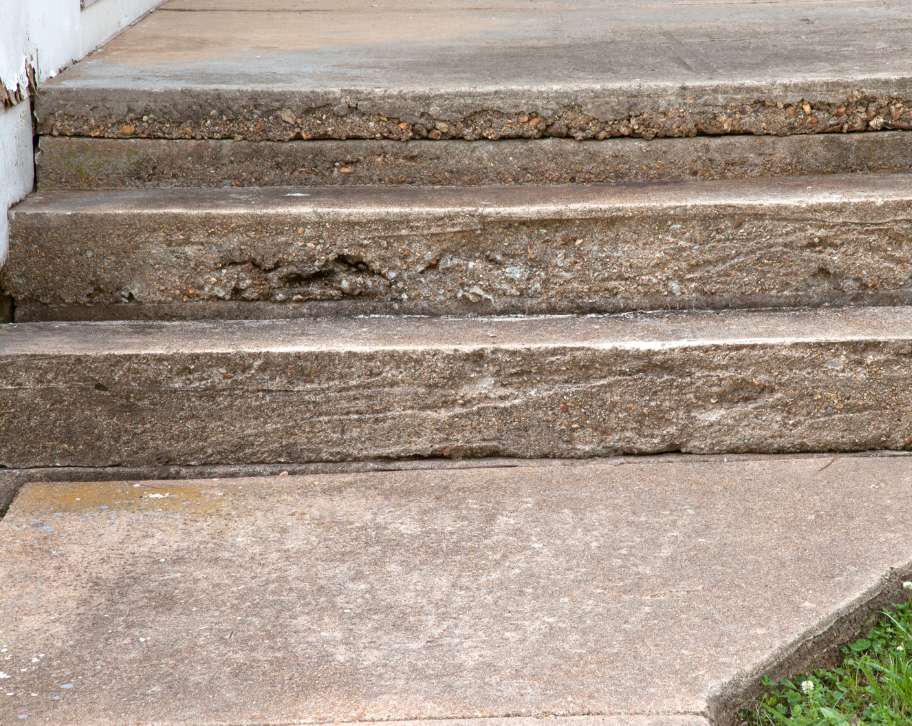
Concrete steps crack during winter primarily because of the freeze-thaw cycle, a relentless process that happens hundreds of times each season. Water seeps into the microscopic pores of concrete, and when temperatures drop below 32°F, that water freezes and expands by approximately 9%. This expansion creates tremendous internal pressure that literally tears the concrete apart from the inside.
Each freeze-thaw cycle compounds the damage. The first winter might produce hairline cracks barely visible to the eye. By the second or third season, those hairlines widen into structural fractures. Water penetrates deeper with each cycle, reaching areas that were previously protected. The concrete becomes progressively weaker as the internal structure breaks down. Studies show that concrete can experience up to 200 freeze-thaw cycles in a single winter season in cold climates, with each cycle weakening the material’s structural integrity.
Surface scaling appears as the first visible symptom. Thin layers of concrete begin peeling away in sheets, exposing the aggregate beneath. This happens when water trapped just below the surface freezes and lifts the top layer. Spalling follows as deeper damage occurs, with chunks of concrete breaking away from edges and corners. These aren’t just cosmetic issues. They’re warning signs that the freeze-thaw cycle is actively destroying your steps.
Temperature fluctuations create stress through natural expansion and contraction. Concrete expands when warm and contracts when cold. During winter, steps might experience 30-degree temperature swings within 24 hours. This constant movement creates tension at weak points, particularly where steps meet foundations or where previous repairs were made.
Saturated concrete suffers the most severe damage. When concrete stays wet for extended periods, its pores fill completely with water. There’s no room for ice expansion, so the pressure has nowhere to go except through the concrete itself. This is why steps with poor drainage or those constantly exposed to melting snow deteriorate faster than well-drained surfaces. The water-cement ratio used during initial construction plays a critical role here, concrete mixed with excess water (ratios above 0.5) creates more porous structures that absorb moisture more readily and suffer greater freeze-thaw damage.
|
Damage Type |
Appearance |
Primary Winter Cause |
Severity Level |
|---|---|---|---|
|
Hairline Cracks |
Thin lines less than 1/8 inch wide |
Initial freeze-thaw stress, minor settling |
Low (cosmetic) |
|
Surface Scaling |
Thin layers peeling in sheets |
Repeated freeze-thaw near surface, de-icing salts |
Moderate (progressive) |
|
Spalling |
Deep chunks breaking away from edges |
Advanced freeze-thaw damage, saturated concrete |
High (structural concern) |
|
Structural Fractures |
Wide cracks exceeding 1/4 inch, separation from foundation |
Multiple freeze-thaw cycles, soil heaving, inadequate base |
Critical (replacement needed) |
The combination of water infiltration and temperature extremes makes winter the most destructive season for concrete. Steps face these conditions directly, with no protection from the elements. Each winter accelerates the deterioration process, which is why addressing the root causes matters more than simply patching visible damage.
Drainage problems and soil conditions create the foundation for step failure by keeping concrete constantly saturated and allowing ground movement beneath the structure. Water pooling near the base of steps is one of the most damaging scenarios. When water accumulates and cannot drain away, it soaks into the concrete and surrounding soil. This saturation maximizes ice expansion damage during freeze-thaw cycles because the concrete never gets a chance to dry out between temperature swings.
Soil settling and heaving caused by freezing ground conditions create uneven support beneath steps. When soil freezes, it expands and pushes structures upward. When it thaws, the soil contracts and settles, often unevenly. This constant up-and-down movement stresses the concrete from below, creating cracks that start at the base and work their way up through the steps. Clay-rich soils are particularly problematic because they absorb large amounts of water and experience dramatic volume changes, expanding up to 10% when saturated and contracting significantly when dry.
Proper base compaction during initial construction determines whether steps will remain stable for decades or start cracking within a few years. A well-compacted gravel base allows water to drain away from the concrete and provides stable support that resists settling. Shortcuts during construction, such as pouring concrete directly on loose soil or skipping the gravel layer entirely, guarantee future problems. The concrete might look fine initially, but the first winter will reveal these hidden flaws. Industry standards recommend a minimum 4-inch compacted gravel base with 95% compaction density for residential concrete steps.
Void formation under steps happens when soil washes away or settles unevenly, leaving empty spaces beneath the concrete. These voids create unsupported sections that crack under the weight of foot traffic. You might not see the void, but you’ll notice the consequences: steps that sound hollow when tapped, visible gaps along the foundation, or sections that flex slightly when stepped on.
Frost depth considerations matter significantly in cold climates. Frost penetrates deep into the ground during extended cold periods, sometimes reaching 48 inches or more in northern regions. If step footings don’t extend below the frost line, the freezing ground will push them upward each winter. This heaving creates stress cracks and causes steps to separate from the foundation wall.
Warning signs of drainage and soil problems:
Steps pulling away from the foundation: A visible gap between the top step and the house indicates the entire structure is moving. This happens when soil beneath the steps settles or when frost heaving pushes the steps away from the building. The gap might start at 1/4 inch but can widen to several inches over multiple seasons.
Uneven settling creating sloped or tilted steps: If water pools on one side of a step or if the steps lean noticeably to the left or right, the base has settled unevenly. This creates stress points where cracks will inevitably form. The settling often happens gradually, making it easy to miss until the damage becomes severe.
Visible gaps underneath the bottom step: Shine a flashlight under the lowest step. If you can see daylight or empty space, soil has washed away or settled. This void means the step is cantilevered without proper support, making it vulnerable to cracking under weight.
Water staining or moss growth on step surfaces: Persistent dampness shows that water isn’t draining properly. Moss and algae only grow where moisture remains for extended periods. These biological indicators reveal that your steps are staying saturated, setting them up for maximum freeze-thaw damage.
Cracks that widen near the base and narrow toward the top: This crack pattern indicates movement at the foundation level. The base is shifting while the upper portion remains relatively stable, creating a wedge-shaped crack that signals serious structural issues.
Addressing drainage and soil problems requires looking beyond the concrete itself. The solution often involves regrading the surrounding area to direct water away from the steps, installing proper drainage systems, or even rebuilding the base with correctly compacted materials. Surface repairs alone won’t fix problems that originate beneath the concrete.
De-icing products and maintenance practices can absolutely damage concrete, often accelerating deterioration faster than natural freeze-thaw cycles alone. Rock salt (sodium chloride) is the most common culprit. It causes surface scaling by drawing moisture into the concrete’s pores. The salt creates a brine solution that penetrates deeper than plain water, and when this salty water freezes, it causes more aggressive internal damage. You’ll notice white staining and a powdery residue on the surface, which are signs that the salt is actively breaking down the concrete. Research indicates that sodium chloride can increase the number of freeze-thaw cycles by up to 50% compared to plain water, significantly accelerating concrete deterioration.
The chemical process works like this: salt lowers the freezing point of water, which sounds beneficial. However, this means water stays liquid at temperatures where it would normally freeze solid. The liquid brine repeatedly freezes and thaws at lower temperatures, creating more freeze-thaw cycles than would occur naturally. Each cycle chips away at the concrete’s surface, eventually exposing the aggregate and creating a rough, pitted texture.
Metal shovels gouge and chip concrete surfaces, especially at corners and edges where the concrete is most vulnerable. Each scrape removes a small amount of material. Over years of winter maintenance, these small damages accumulate into significant surface deterioration. The gouges also create new entry points for water infiltration, compounding the freeze-thaw problem.
Safer alternatives to protect your concrete steps:
Calcium Magnesium Acetate (CMA): This de-icer is significantly less corrosive than rock salt and doesn’t cause the same aggressive scaling. CMA works by preventing ice from bonding to the concrete surface rather than by lowering the freezing point dramatically. It costs more than rock salt but saves money by extending the life of your concrete. CMA is particularly effective for newer concrete that hasn’t fully cured.
Sand or kitty litter for traction: These materials don’t melt ice, but they provide grip without any chemical damage to the concrete. Spread a thin layer on icy steps to prevent slips. Sand is inexpensive and can be swept away easily once the ice melts. This approach works best for light ice conditions or when combined with minimal de-icer use.
Plastic or rubber-edged shovels: Replace metal shovels with tools that have softer edges. Plastic blades flex slightly on contact, reducing the force that gouges concrete. Rubber-edged pushers are ideal for clearing light snow without any surface contact damage. These tools require replacing more frequently than metal ones, but they prevent the cumulative damage that leads to expensive repairs.
Heated mats or cables: For high-traffic commercial properties or homes where safety is paramount, electric heating systems prevent ice formation entirely. These systems eliminate the need for chemical de-icers and reduce physical scraping. The upfront cost is higher, but they provide consistent protection without any concrete damage.
Timing matters as much as product choice. Applying a commercial-grade concrete sealer in late fall creates a protective barrier before winter arrives. The sealer fills surface pores, preventing water and de-icing chemicals from penetrating. This single preventative step can extend the life of your concrete by years. Sealers should be applied on dry days when temperatures are above 50°F and no rain is forecast for 24 hours. The concrete must be clean and completely dry for the sealer to bond properly.
Proactive maintenance beats reactive repairs every time. Small investments in proper materials protect your concrete investment for decades.
Air-entrained concrete is the single most effective specification for preventing freeze-thaw damage in cold climates. This specially formulated concrete contains billions of microscopic air bubbles—typically 4% to 8% of the concrete’s volume—that act as relief valves when water freezes inside the concrete. These tiny air pockets provide space for ice expansion, preventing the internal pressure that causes cracking. Air-entrained concrete can withstand hundreds of freeze-thaw cycles without significant deterioration, while standard concrete often fails after just a few dozen cycles.
The concrete mix design determines long-term durability as much as any other factor. A properly designed mix uses a water-cement ratio below 0.45 for exterior applications in freeze-thaw environments. Lower water content creates denser concrete with fewer capillary pores that can absorb moisture. This specification alone can reduce water absorption by 30% to 40% compared to mixes with higher water-cement ratios. The mix should also include adequate cement content, at least 564 pounds per cubic yard for severe exposure conditions—to ensure proper strength and density.
Control joints and expansion joints are essential for managing the natural movement of concrete as it expands and contracts with temperature changes. Control joints are deliberately weakened lines in the concrete that guide where cracks will form, keeping them straight and controlled rather than random and unsightly. For concrete steps, control joints should be placed at intervals no greater than twice the slab thickness in inches. Expansion joints, filled with compressible material, allow adjacent concrete sections to move independently without transferring stress. Without these joints, thermal expansion creates random cracking at the weakest points in the structure.
Reinforcement with rebar or wire mesh doesn’t prevent cracks from forming, but it keeps cracks tight and prevents them from widening into structural failures. Steel reinforcement holds concrete sections together even after cracking occurs, maintaining structural integrity and preventing complete separation. For residential steps, #4 rebar (1/2-inch diameter) placed 12 inches on center in both directions provides adequate reinforcement. The steel must be positioned in the lower third of the concrete thickness—typically 2 to 3 inches from the bottom—to provide maximum tensile strength where stress concentrates.
These specifications work together as a system. Air-entrained concrete with proper mix design resists freeze-thaw damage internally. Control joints manage surface cracking. Reinforcement maintains structural integrity even when cracks do appear. Together, these elements can extend the service life of concrete steps from 10 to 15 years (for poorly specified concrete) to 30 to 50 years or more.
Atlantic Brick and Stone specializes in building concrete steps that withstand harsh winter conditions through proper material selection and expert installation techniques. We use air-entrained concrete mixes specifically designed for freeze-thaw resistance. These mixes contain billions of microscopic air bubbles that provide internal relief spaces when water freezes, preventing the concrete from cracking under expansion pressure. Our standard mix design maintains a water-cement ratio below 0.45 and includes proper reinforcement with rebar or wire mesh to ensure long-term structural integrity.
Our professional-grade sealing services create a waterproof barrier that keeps moisture out of the concrete’s pores. We apply commercial sealers every two to three years, timing the application for late fall before the first deep freeze. This proactive approach stops water infiltration before it starts, dramatically reducing winter damage. Every installation includes properly placed control joints and expansion joints to manage thermal movement and prevent random cracking.
We offer free consultations and transparent assessments to help property owners understand the root causes of their concrete problems. Our team evaluates drainage conditions, soil stability, and existing damage to recommend the most cost-effective solution, whether that’s targeted repairs or full replacement. We never push unnecessary services. If a simple repair will solve the problem, that’s what we recommend.
Atlantic Brick and Stone backs our installations with a 1-year concrete warranty covering major cracking exceeding one-quarter inch, scaling, and spalling. This warranty reflects our confidence in our materials and installation methods. We follow Canadian Standards Association (CSA) guidelines strictly, ensuring proper base compaction, accurate formwork, and correct reinforcement placement. These details make the difference between steps that last three decades and those that crack within three years.
Hairline cracks in concrete steps can typically be repaired using flexible epoxy or polyurethane sealers. These materials fill the crack and flex with temperature changes, preventing water infiltration. However, if hairline cracks are numerous, widening rapidly, or accompanied by settling or heaving, they may indicate deeper structural issues. In these cases, a professional assessment is needed to determine if the damage stems from foundation problems that require more extensive repairs or full replacement.
Concrete steps should be sealed every two to three years to maintain effective protection against winter damage. High-quality sealers create a waterproof barrier that prevents moisture from penetrating the concrete’s pores, which is critical for freeze-thaw resistance. The best time to apply sealer is in late fall on a dry day when temperatures are above 50°F. High-traffic areas or steps exposed to harsh conditions may require more frequent sealing, potentially every 18 to 24 months, to maintain continuous protection.
Scaling refers to the surface layer of concrete peeling away in thin sheets, typically less than 1/4 inch deep. It’s often caused by freeze-thaw cycles near the surface or by de-icing salt damage. Spalling involves deeper chunks of concrete breaking away, usually at edges and corners, and indicates more advanced deterioration. Both result from freeze-thaw damage, but spalling signals that water has penetrated deeper into the concrete structure, causing more severe internal pressure and requiring more extensive repairs.
Concrete steps crack more frequently because they have vertical exposure to weather on multiple surfaces, unlike horizontal slabs. Edges and corners are structurally vulnerable stress points where concrete is thinnest. Steps also experience constant concentrated foot traffic that creates repetitive stress on the same areas. Steps often lack the proper drainage that sloped driveways and patios naturally have, leading to water pooling at the base and keeping the concrete saturated, which maximizes freeze-thaw damage.
The ideal time for concrete repairs is late spring through early fall when daytime temperatures consistently stay between 50°F and 80°F. These conditions allow repair materials to cure properly and bond effectively to existing concrete. However, preventative sealing should be done in fall before the first deep freeze to protect steps through winter. Emergency structural repairs shouldn’t wait regardless of season, as delaying can lead to safety hazards and more extensive damage that costs significantly more to fix.
GET STARTED
Create stunning structures with our residential and commercial masonry services in Fredericton. From meticulous designs to the completed build, our process is professional and rewarding, and we can’t wait to build your dream with you.
Atlantic Brick and Stone, one of the best masonry contractors in Fredericton, NB
Contact
8 Muskie Street, Lower Kingsclear, New Brunswick E3E 0E7, Canada