
Common foundation waterproofing mistakes often arise from focusing on visible issues rather than the underlying causes of water intrusion. These errors lead to recurring problems and escalating damage, impacting a property’s stability and value. Identifying these frequent missteps, from poor exterior drainage to incorrect material use, allows property owners to implement effective, long-lasting solutions.
Preventing extensive damage and ensuring the long-term integrity of your home or commercial property means understanding common foundation waterproofing mistakes. These missteps often turn minor issues into costly repairs. This guide covers frequent errors, from surface-level fixes to improper system installations. By recognizing these pitfalls, you can protect your property’s structural health for many years.
This guide details why these mistakes happen and how to avoid them. You will learn about the need for exterior water management and correct material selection. We will examine the errors that can compromise your foundation.
The most common foundation waterproofing mistakes occur when the focus is on visible symptoms instead of the actual source of water. Many property owners try to solve issues like damp spots or peeling paint with quick fixes. Unfortunately, these do not address the root cause of the water intrusion. These efforts often fail because they do not account for the underlying issues driving the moisture.
Another reason these errors are so frequent is that early warning signs are often dismissed. A musty smell or a small damp patch on a concrete wall might seem minor. However, these are often the first indicators of a more significant problem. Allowing these small signs to go unchecked lets minor moisture problems grow into serious structural concerns.
Applying waterproof paints or sealants to interior basement walls is a frequent error that only masks the problem temporarily. These coatings create a surface barrier but do nothing to stop the force of water from the outside. This external force, known as hydrostatic pressure, builds up in saturated soil and can easily push through or bypass superficial patches. When the true sources of water are ignored, the damage will continue to spread, finding new ways into your home. A professional diagnosis is needed to trace the water back to its origin, whether it is poor grading, clogged gutters, or foundation cracks.
Key indicators of water problems include:
Musty odors
Isolated damp spots on masonry
Peeling or bubbling paint
A white, powdery residue called efflorescence
These signs point to persistent moisture that can worsen over time, leading to significant damage. Ignoring these warnings allows for the development of mold and mildew, which can pose health risks and degrade your home’s air quality. This moisture also accelerates the decay of building materials, compromising the structural integrity of your foundation walls and leading to much more expensive repairs later.
Many homeowners attempt DIY fixes without understanding how water, soil, and foundations interact as a complete system. These fragmented attempts, like patching a single crack, often fail because they do not relieve the underlying pressure causing the water intrusion. This can lead to new leaks appearing elsewhere. Below are some common misconceptions that lead to failed DIY projects:
“A quick patch will fix the leak permanently.” Most patches are temporary and do not address the external pressure forcing water inside. The water will simply find another path of least resistance.
“Interior paints can stop severe water pressure.” Waterproof paints are surface coatings that cannot withstand significant hydrostatic pressure. They will eventually blister, peel, and fail, trapping moisture within the wall.
“Any sealant works for all cracks.” Different cracks require different solutions. A rigid sealant used on a crack that moves with temperature changes will quickly fail and re-open the leak.
“My foundation is just ‘damp’ naturally.” A persistently damp foundation is a sign of a problem. It indicates that water is constantly present against your foundation, which can lead to material decay and structural issues.
“Waterproofing is a one-time job.” Effective waterproofing systems require periodic maintenance. Sump pumps need testing, and gutters and drains must be kept clear to function correctly.
Effective exterior water management is the first line of defense against basement foundation leaks and moisture problems. How water behaves around your property directly influences the health of your foundation. When exterior drainage and grading are poor, they actively channel water toward the building, which dramatically increases the hydrostatic pressure against the foundation walls.
The structural condition of the foundation itself also plays a big role. Unaddressed cracks and signs of movement create direct pathways for water to enter your basement or crawlspace. These openings compromise the building’s stability and render any interior waterproofing efforts less effective over time.
One of the most significant foundation water damage causes is improper grading. The soil around your foundation should slope away from the building, dropping at least six inches over the first ten feet. When the ground is flat or slopes inward, it creates a funnel that directs rainwater and snowmelt directly against your foundation walls, causing water to pool and saturate the soil. Clogged gutters and downspouts that discharge too close to the house compound this problem by dumping large volumes of roof runoff right where it can do the most damage. Extending downspouts, installing French drains, and using strategic landscaping can effectively manage surface water and protect your foundation.
Not all foundation cracks are purely cosmetic. Even hairline cracks can serve as entry points for water, and they often expand over time due to freeze-thaw cycles and soil movement. It is helpful to distinguish between minor shrinkage cracks and those that indicate a structural problem. Waterproofing a foundation without addressing its structural integrity is an incomplete solution. If a wall is bowing or settling, simply sealing a crack will not stop the underlying movement. For a lasting repair, the structural issue must be corrected first, often using methods like carbon fiber reinforcement or wall anchors, before applying any waterproofing membrane.
Crack Type | Description | Common Cause | Recommended Repair |
|---|---|---|---|
Vertical/Diagonal | Hairline to ¼ inch wide; often non-structural. | Concrete shrinkage, minor settling | Polyurethane injection, epoxy crack repair |
Horizontal | Runs along the wall; indicates outward bowing. | Hydrostatic pressure, soil expansion | Wall anchors, carbon fiber straps |
Stair-step | Follows mortar joints in block/brick foundations. | Foundation settling, frost heave, expansive soils | Repointing, underpinning, structural reinforcement |
Choosing the right materials and ensuring they are installed correctly are fundamental to successful foundation waterproofing. Critical errors often occur when inadequate products are used that cannot withstand local weather conditions or the immense force of hydrostatic pressure. This leads to premature system failure and recurring basement moisture problems.
Even with high-quality materials, improper installation can make an entire waterproofing system ineffective. Components like French drains and sump pumps are highly technical and require precise installation to function as intended. Mistakes during this stage can result in a system that fails when it is most needed, such as during a heavy storm.
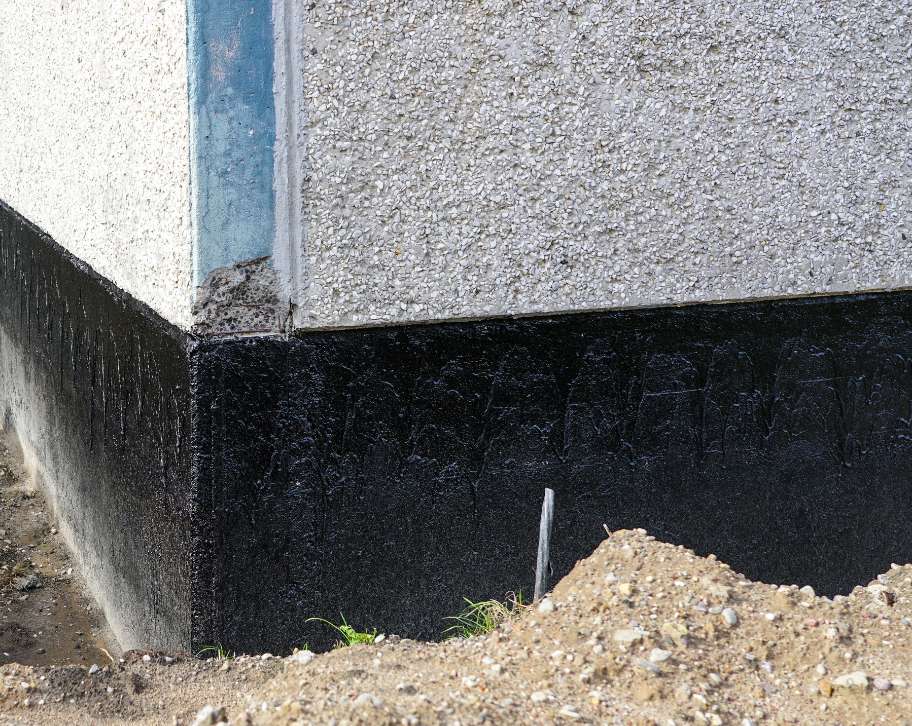
A common mistake is confusing damp-proofing with true waterproofing. Damp-proofing is a thin, asphalt-based coating designed to resist soil moisture but cannot bridge cracks or stop water under pressure. True exterior waterproofing requires a thick, flexible, elastomeric membrane that can stretch and remain intact as the foundation settles. Using rigid sealants on cracks that expand and contract is another frequent error, as these patches will break and fail. For long-term durability, it is helpful to use commercial-grade materials and additives designed for the specific climate and soil conditions of your property.
An undersized sump pump is a setup for failure. Many pumps cannot handle the volume of water from heavy rainfall or rapid snowmelt, causing them to burn out and leading to a flooded basement. Another serious oversight is not installing a battery backup system. Power outages often accompany severe storms, and without a backup, your primary pump becomes useless. Proper discharge line routing is also necessary; if water is pumped out too close to the foundation, it will simply seep back into the soil and cycle through the system again, putting extra wear on the pump.
For a French drain to work, it must be installed with a continuous downward slope to allow gravity to move water away from the foundation. The trench must also be at the correct depth to collect groundwater effectively. A major installation error is failing to use washed gravel and a high-quality geotextile filter fabric. This fabric is what prevents soil and silt from migrating into the drain and clogging the pipes. Without it, the system will eventually choke with mud and stop working entirely, making your investment useless.
Ignoring foundation water damage leads to a host of escalating problems that affect your property’s health, safety, and value. Delayed action allows minor moisture issues to compound over time, resulting in severe structural degradation and creating an environment for health hazards to develop. What starts as a simple leak can become a major expense.
To avoid these outcomes, regular maintenance and professional inspections are necessary. Waterproofing systems are not self-sustaining; they require attention to prevent failures. Proactive measures are always more cost-effective than dealing with the aftermath of a catastrophic system failure or widespread structural damage.
Persistent moisture weakens a foundation over time. Freeze-thaw cycles cause water in cracks to expand, widening the fissures and breaking down concrete and mortar. This process, known as spalling, can cause the surface of the foundation to crumble away, compromising its structural integrity. An issue that could have been fixed with a minor repair can evolve into a major restoration project requiring extensive excavation and structural reinforcement. Early intervention by a professional is the best way to avoid these high costs.
A damp, wet basement is an ideal breeding ground for mold and mildew. These fungi release spores into the air that can cause respiratory problems and other health issues.
This moisture also damages interior finishes, causing paint to peel, drywall to soften, and wood flooring to warp. A musty, damp basement is a major deterrent to potential buyers and can significantly lower your property’s resale value.
Foundation waterproofing systems are not “set it and forget it” installations. To ensure they continue to protect your property, they need regular attention. This includes clearing gutters and downspouts of debris, testing your sump pump to confirm it operates correctly, and inspecting drainage systems for clogs. A professional assessment can identify small issues before they become emergencies, saving you from unexpected and expensive repairs.
For properties facing persistent moisture or signs of foundation issues, engaging certified professionals is the first step toward lasting protection. Expertise in diagnosing root causes, selecting appropriate commercial-grade materials, and executing precise installation ensures comprehensive protection. Atlantic Brick and Stone provides specialized foundation waterproofing services, addressing challenges unique to local climate and soil conditions. Our approach focuses on delivering durable, long-term results to protect your property and provide peace of mind.
Interior waterproofing is designed to manage water after it has already entered the foundation wall. While it can be an effective part of a solution, exterior systems provide more complete protection by stopping water before it can penetrate the foundation, thereby protecting the structural material itself from constant moisture exposure.
It is a good practice to inspect your foundation at least twice a year, typically in the spring after the ground thaws and in the fall before freezing temperatures set in. You should also check for any signs of water intrusion after periods of heavy or prolonged rainfall.
Hydrostatic pressure is the force that water-saturated soil exerts against your foundation walls. When groundwater cannot drain away from the foundation, this pressure builds and can force water through tiny cracks, pores in the concrete, and joints, leading to basement leaks and moisture problems.
A French drain is a highly effective and often vital part of an exterior waterproofing system. It works by collecting groundwater at the base of the foundation (the footing) and channeling it away. This process significantly reduces hydrostatic pressure against the walls, which is a primary cause of water intrusion.
When water gets into cracks or the pores of concrete and mortar, it expands as it freezes. This expansion exerts a powerful force that can widen existing cracks and cause the surface of the masonry to break apart. Repeated freeze-thaw cycles over many seasons can lead to serious structural damage.
Correcting foundation waterproofing mistakes early is the key to preserving your property’s structural health and value. A professional assessment can identify the true source of moisture and provide a tailored plan that ensures lasting protection. By taking proactive steps and avoiding common pitfalls, you safeguard your investment and create a healthier living environment.
GET STARTED
Create stunning structures with our residential and commercial masonry services in Fredericton. From meticulous designs to the completed build, our process is professional and rewarding, and we can’t wait to build your dream with you.
Atlantic Brick and Stone, one of the best masonry contractors in Fredericton, NB
Contact
8 Muskie Street, Lower Kingsclear, New Brunswick E3E 0E7, Canada