
At first glance, the rows of brick or stone around a window look solid and simple. Hidden inside that wall is a small horizontal support called a lintel, quietly carrying thousands of pounds of weight. When that support starts to fail, cracks, sticking windows, and sagging brick can follow fast. This masonry lintel repair guide explains what is happening behind those cracks and what to do before the damage spreads.
Lintels sit above door and window openings and transfer the load of the wall to the masonry on each side. They can be made from steel, concrete, brick, stone, or timber, and each material reacts differently to moisture, age, and Fredericton’s freeze and thaw cycles. When a lintel weakens, bricks can shift, frames can bend, and in serious cases a section of wall can fail. Even small changes around openings are a sign that the structure deserves a closer look.
Homeowners often first notice small step cracks or a bit of rust and assume it is only cosmetic. In reality, those early lintel failure signs are a warning that the structure needs attention. Dealing with the problem early is far less stressful and far less expensive than waiting until a full steel lintel replacement or major brick rebuild is needed.
In the sections ahead, this masonry lintel repair guide walks through what a lintel does, how different materials fail, the warning signs to watch for, repair versus replacement options, typical lintel replacement cost ranges, and simple maintenance habits. With more than fifteen years of hands-on masonry experience across Fredericton and nearby communities, Atlantic Brick and Stone helps homeowners with professional lintel repair, careful brick matching, and clear, no-pressure advice. For anyone worried about a crack over a window or door, we also offer free estimates so the next step feels clear and manageable.
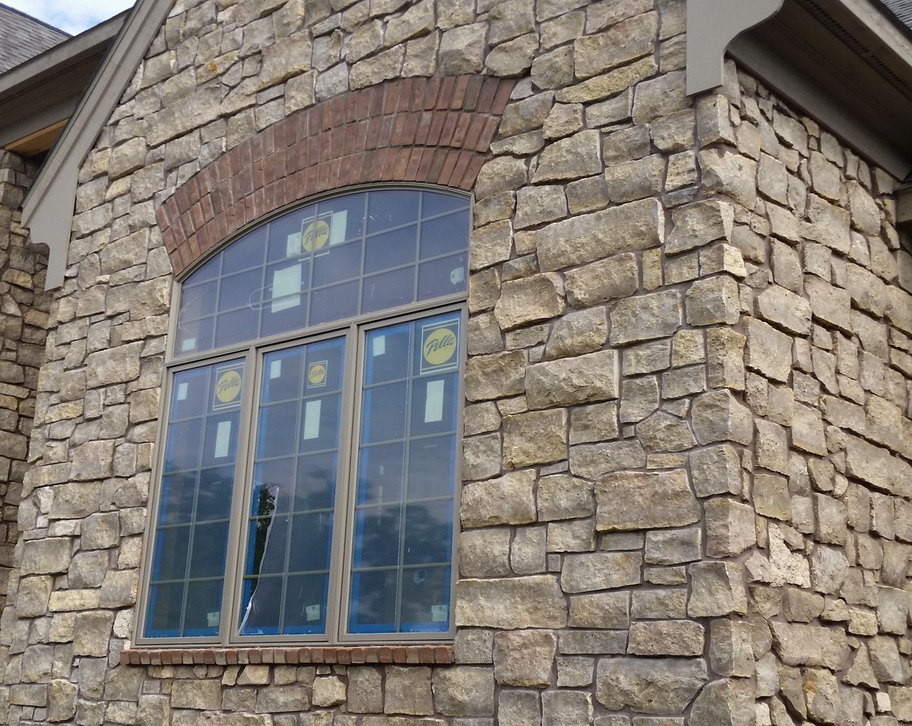
A masonry lintel is a horizontal support that spans the top of an opening in a brick, block, or stone wall. It sits just above a window or door and carries the weight of everything built above that gap. Without a proper lintel, the wall would try to push straight down into the opening, which a window or door frame is not built to handle.
The job of the lintel is to collect the load from the bricks or stone above and spread that weight into the solid wall on each side. When it is sized and installed correctly, the lintel keeps the wall stable and straight. It also keeps that load off the frame so windows and doors can open and close freely for decades.
In many houses, the lintel hides one or two courses above the window or door, buried behind brick or stone facing. That makes it easy to forget, right up until the day the wall starts showing signs that the hidden support is in trouble.
When a lintel starts to fail, the support it provides becomes uneven or disappears in the middle of the span. Bricks can begin to tilt, mortar joints can crack in a stair-step pattern, and the wall above the opening may start to sag. In extreme cases, part of the wall can separate or collapse, which turns a small crack into a serious safety risk.
Lintels can also have a decorative side, especially on older homes where shaped stone, patterned brick, or soldier courses draw the eye. Even when they look decorative, they are still structural pieces that should never be ignored. If there is any doubt about how well a lintel is performing, a professional inspection is the safest way forward.
Around Fredericton, many masonry openings are supported by five main lintel materials. Steel, concrete, timber, stone, and brick each respond in their own way to moisture and freeze and thaw cycles. Weather that works into the wall can weaken, crack, or rust any of them.
Knowing which material you have is the first step toward choosing the right repair method and spotting which risks—rust, rot, or cracking—are most likely over time.
Lintel problems rarely appear overnight. The wall usually shows clues before bricks become loose or a window frame twists badly. When homeowners learn to read those clues, they can call for help while repairs are still straightforward. A short walk around the house a couple of times a year is often enough to spot trouble.
These lintel failure signs almost always start small and slowly grow worse. In Fredericton, it makes sense to check above doors and windows each spring and fall, especially after freeze and thaw cycles. At the first hint of movement, a professional lintel crack repair assessment from Atlantic Brick and Stone can confirm whether simple repointing is enough or whether structural work is needed.
Seeing a crack over a window tells you that the wall is moving, but it does not explain why. Good lintel repair depends on fixing the underlying cause, not just patching the visible damage. In our work around Fredericton, the same root problems appear often when lintels begin to fail.
Because several factors often combine, an inspection from an experienced masonry contractor is essential before choosing any fix. Atlantic Brick and Stone checks drainage, flashing, and wall movement along with the cracks so that repairs deal with the real cause, not just the surface.
Once a problem shows up, the big question is whether the lintel can be repaired or has to be replaced. Because lintels carry the weight of the wall, this is not a good place for trial and error or DIY lintel repair. Choosing the wrong approach can leave the wall unstable, waste money, and even create safety hazards.
Repair can work well when damage is limited and caught early. Hairline cracks in the lintel or nearby masonry, small areas of surface rust, and local mortar failure are good candidates for cracked lintel repair. Masonry repair techniques in these cases may include epoxy injection for small cracks, repointing loose joints, and installing stainless steel helical bars that add strength without removing the entire lintel. For concrete lintel repair, the damaged concrete can sometimes be cut back, the rusty rebar cleaned or replaced, and new repair mortar applied.
Full replacement becomes the safer choice when the lintel has heavy corrosion, clear bending, or wide cracks. If rust jacking has lifted rows of brick, if the line of bricks above a window or door has a visible dip, or if pieces of steel have flaked away, the lintel has lost much of its strength. At that point, steel lintel replacement or new support for a window lintel replacement or door lintel repair usually costs less over time than repeated patch jobs that never address the weakened core.
Deciding between repair and replacement takes training and experience, along with a good understanding of building codes. Atlantic Brick and Stone has more than fifteen years of hands-on work with structural lintel repair across the Fredericton area. Our team assesses the full picture, explains the options in clear language, and designs a professional lintel repair or replacement plan that matches both safety needs and budget. On larger spans or complicated structures, we also coordinate with engineers when required by local codes.
Lintel work may look simple from the street, but it is careful structural work that follows a set sequence. Knowing what happens during the process helps homeowners see why professional lintel repair is worth the investment and why it is not a weekend project.
Inspection and planning. The mason identifies the lintel type, maps out cracks and any movement in the wall, and looks for moisture paths from flashing, gutters, or failed sealants. Photos and measurements are often taken so the right replacement size and load rating can be chosen if needed.
Temporary structural support. Props or strongboys are set up so the wall above the opening stays safely in place while bricks and mortar around the lintel are removed. This step protects both the workers and the structure.
Repair of sound lintels. For lintels that are still basically solid, several masonry repair techniques may be used. In many brick walls, stainless steel helical bars are slid into narrow slots cut in the mortar bed above the opening and bonded in place, forming a hidden reinforcement beam. Cracked bricks can be pinned and anchored back to stable masonry, and loose joints are repointed. These methods create a new, stronger load path without taking out the entire lintel.
Full lintel replacement. When the lintel has lost too much strength, the damaged steel or concrete is cut out in stages while the temporary supports carry the weight above. A new lintel is chosen to match the opening and load requirements, often a galvanized steel unit, and is set with proper bearing at each end. Flashing and weep paths are added so water can safely drain away instead of soaking the new steel.
Masonry restoration. Bricks are cleaned or replaced and the wall is rebuilt around the new or reinforced lintel. On heritage homes, Atlantic Brick and Stone takes extra care with brick colour, size, and mortar style so that window lintel replacement or door lintel repair blends neatly with the original façade.
Throughout the process, safety, moisture control, and curing conditions stay in focus. Work is timed to avoid extreme cold or driving rain while new mortar sets. Any outside causes of damage, such as poor drainage or missing caulking, are discussed so they can be corrected. That way, structural lintel repair gives long lasting peace of mind rather than another short patch.
When homeowners first notice a crack over a window, the next thought is often about cost. Lintel work touches both structure and appearance, so it takes time, skill, and materials. Understanding what affects lintel replacement cost makes it easier to plan and to see why early repairs are usually cheaper than waiting.
Several points shape the final price:
As a guide, minor lintel repairs for a typical window opening, such as crack filling or limited repointing, can run from about three hundred to seven hundred dollars. More extensive work with reinforcement, including helical bars or partial concrete rebuilds, can reach fifteen hundred dollars or more. Full window lintel replacement or door lintel repair is more involved, with projects around twenty five hundred dollars and complex jobs passing five thousand dollars. Investing in professional lintel repair protects the structure and usually costs far less than rebuilding a failed wall, which is why Atlantic Brick and Stone provides clear, written estimates at no charge.
A well installed lintel can last for many decades, especially if small problems are caught early. Simple seasonal checks go a long way toward protecting these hidden supports. With a few habits, homeowners can often prevent small issues from growing into a major sagging lintel repair.
Moisture control is just as important as visual checks:
It is necessary to cover cracks with caulking or paint over rust to tidy the surface. These cosmetic fixes can trap moisture and hide warning signs, which only delays proper repair. At the first worrying change, calling a professional such as Atlantic Brick and Stone for a quick assessment usually costs very little and can prevent far more serious structural lintel repair later on.
Lintels may be hidden behind brick or stone, but they play a central role in holding every door and window opening in place. When they weaken, the wall speaks through cracks, rust stains, and sticking frames. Paying attention to those early signs and understanding what they mean keeps both people and buildings safe.
This masonry lintel repair guide has walked through how lintels work, why they fail, and what professional repair and replacement look like. While it is helpful to know the basics, lintel work itself is not a do it yourself task. Temporary supports, structural judgment, and detailed masonry skills are all needed for safe, long lasting results.
Atlantic Brick and Stone has spent more than fifteen years helping owners across Fredericton protect their brick and stone walls. If a crack above a window, a sagging row of bricks, or a rusty steel angle has raised concern, we are ready to provide a free, no pressure assessment and clear recommendations. Reach out by phone or through our website to schedule a visit, and let our team keep both the structure and the appearance of your masonry in good shape.
A lintel can often last several decades, but the exact number depends on material and conditions. Well protected steel and reinforced concrete lintels can perform for fifty years or more, while timber ones may last only twenty to thirty years. Moisture, freeze and thaw cycles, and installation quality all affect lifespan, and regular maintenance can stretch those years.
Lintels are structural supports, so they are not a safe place to experiment with DIY lintel repair. Proper work requires temporary support systems to hold the wall, along with training to judge how the load is moving. Mistakes can cause partial collapse or hide serious weakness. Licensed professionals design code compliant fixes and, like Atlantic Brick and Stone, have the tools to carry them out safely.
Only a masonry repair contractor can say for sure whether repair is enough or full replacement is safer. Small, stable cracks and light surface rust may be handled with localized repair and reinforcement. Heavy rust, clear bending, or wide cracks usually point toward replacement. A free assessment from Atlantic Brick and Stone gives a clear answer without guesswork.
With an experienced mason, yes. Skilled crews carefully match brick size, colour, and texture, and they also mix mortar to blend with the original wall. At Atlantic Brick and Stone, this attention to detail is especially important on historic homes, where any patch that stands out would spoil the character of the façade.
Prevention starts with regular inspections inside and out, watching for fresh cracks, rust stains, or sticking windows and doors. Keeping gutters clear, managing drainage away from walls, and making sure weep holes and flashing work properly all reduce moisture around the lintel. At the first warning sign, contacting a mason for advice, and arranging periodic professional assessments for older homes, can stop minor issues from turning into major structural repairs.
GET STARTED
Create stunning structures with our residential and commercial masonry services in Fredericton. From meticulous designs to the completed build, our process is professional and rewarding, and we can’t wait to build your dream with you.
Atlantic Brick and Stone, one of the best masonry contractors in Fredericton, NB
Contact
8 Muskie Street, Lower Kingsclear, New Brunswick E3E 0E7, Canada