
If you are a Fredericton homeowner dealing with deteriorating parging on your foundation, you know the challenge: how do you remove this flaking cement coating without damaging the concrete underneath? Old parging doesn’t release easily, and the wrong technique can chip concrete blocks or crack poured concrete, turning a maintenance task into a costly repair.
Fredericton’s harsh freeze-thaw cycles make parging repair inevitable. Moisture seeps in, freezes, expands, and cracks the surface; what begins as a small fissure quickly becomes widespread delamination, leaving your foundation walls exposed to water infiltration and structural damage.
Atlantic Brick and Stone has spent over 15 years mastering parging removal. We’ve repaired the damage caused by well-meaning homeowners using sledgehammers and angle grinders on their foundations. With the right approach, however, you can remove old parging cleanly and preserve your foundation’s integrity for decades.
This article covers the professional techniques, essential tools, and step-by-step process our masons use. You’ll also learn the warning signs that indicate when DIY should give way to professional help; whether you’re preparing for re-parging or tackling cracked parging compromising your home’s protection.
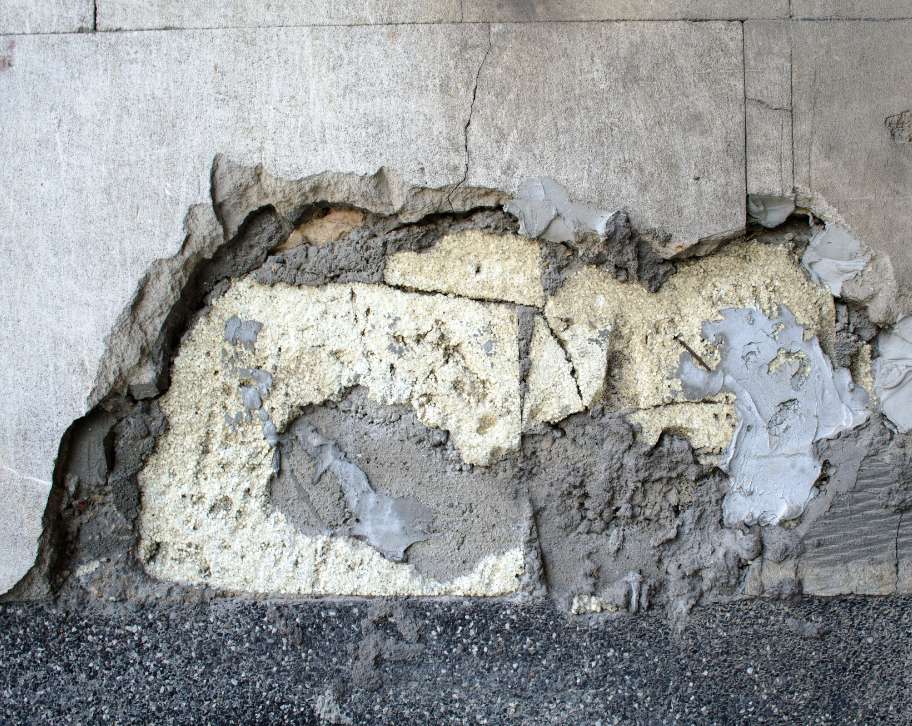
Your foundation wall isn’t just concrete, it’s the structural backbone of your entire home. When old parging needs removal, the stakes are higher than most homeowners realize. That thin cement coating often bonds so firmly to the underlying blocks or poured concrete that aggressive removal techniques can chip, crack, or weaken the very structure it once protected.
The foundation wall beneath the parging may already be compromised. Mortar joints between concrete blocks can loosen over time, and hidden hairline cracks might lurk beneath the surface. One overzealous strike can propagate a crack through the entire wall or dislodge mortar that was barely holding on.
Understanding the difference between cosmetic and structural damage is critical. A crack in the parging itself is a surface issue; repairable. A crack extending through the parging and into the foundation wall signals potential structural settling or hydrostatic pressure problems. Before removal begins, assess whether you’re dealing with simple parging failure or a deeper concern requiring structural intervention.
At Atlantic Brick and Stone, our experienced masons approach every project with this diagnostic mindset. We tap sections to identify hollow areas, examine crack patterns to distinguish surface delamination from structural issues, and plan removal accordingly. This careful assessment prevents substrate damage that turns a straightforward repair into a foundation emergency.
Proper removal also means addressing what lies underneath. Deteriorated parging often conceals loose mortar between blocks that needs raking out and repointing. Atlantic Brick and Stone’s methodology ensures we identify and repair underlying issues before applying new parging, creating a stable, long-lasting foundation protection system.
The financial reality is stark. Rushed or inexperienced removal can lead to foundation repairs costing thousands; far exceeding professional parging services. A cracked foundation wall can require structural repair, waterproofing, and potentially excavation work that dwarfs the cost of careful removal.
Ultimately, the quality of your removal work directly determines how well new parging adheres. A clean, stable, properly prepared surface ensures a permanent bond, while a damaged substrate creates conditions for premature failure. Protecting your foundation during removal ensures your investment delivers decades of reliable protection.
The difference between successful parging removal and foundation disaster often comes down to choosing the right tool for the specific condition you’re facing. Professional masons don’t rely on brute force, they use a carefully selected arsenal of manual and power tools, each suited to different removal scenarios.
Manual tools form the foundation of safe parging work:
Cold chisels paired with masonry hammers allow you to carefully break away large sections of loose or hollow-sounding parging
Putty knives and scrapers provide precision control for thinner layers and tight areas near grade level
Wire brushes (hand-held and power drill attachments) are essential for final cleaning and removing residual mortar
The key technique here is controlled tapping rather than aggressive striking. You’re not trying to demolish the wall; you’re coaxing deteriorated material away from sound substrate. These tools let you access corners and edges without applying the kind of force that risks damaging the foundation.
Wire brushes deserve special mention because they’re essential for the final cleaning phase. This cleaning step is non-negotiable. Any dust, loose particles, or thin mortar residue left behind will prevent new parging from bonding properly.
Power tools demand professional judgment and experience:
Angle grinders equipped with masonry cutting wheels can efficiently remove thick, stubborn parging layers, but they’re also capable of scoring or cutting into your foundation wall if used carelessly
Rotary hammers with chisel attachments offer rapid, controlled impacts that break up material without sustained force
Atlantic Brick and Stone’s masons use grinders sparingly and only in situations where manual methods would be inefficient or ineffective. The technique involves keeping the blade at a shallow angle and maintaining constant awareness of depth to avoid over-penetration.
Rotary hammers demand experience and a light touch. In the hands of an inexperienced operator, a rotary hammer can quickly damage concrete blocks or create cracks in poured concrete.
Surface preparation separates professional work from amateur attempts. Atlantic Brick and Stone follows a methodical approach: we work in small, manageable sections rather than trying to remove entire walls at once. This section-by-section strategy allows continuous assessment of the wall’s condition. If we encounter unexpected structural issues or areas where the parging is bonded more firmly than anticipated, we can adjust our technique immediately.
Water misting during removal serves multiple purposes:
Reduces dust that makes the work area hazardous and difficult to assess
Helps reveal the condition of the underlying wall by washing away loose particles
Shows where material is still firmly attached versus where it’s ready to come away
Safety and precision define the professional approach. Our masons constantly adjust their technique based on what they’re encountering. If the parging is thin and brittle, gentle tapping with a hammer and chisel is sufficient. If it’s thick and well-adhered, we might use a rotary hammer with carefully controlled depth. When working on historic structures; common in Fredericton’s older neighbourhoods; we employ even more conservative techniques because preservation of the original masonry takes absolute priority.
Knowing when to stop is as important as knowing how to remove material. Atlantic Brick and Stone’s professionals recognize the subtle signs that indicate we’re approaching the substrate: changes in sound when tapping, shifts in material texture, or resistance that suggests we’ve reached sound concrete. This sensitivity prevents the over-aggressive removal that damages foundations.
Finally, proper safety equipment protects both the worker and the property:
Eye protection and dust masks are mandatory; flying chips and silica dust pose serious health risks
Heavy-duty gloves prevent hand injuries from sharp edges and rough surfaces
Drop cloths and barriers protect surrounding landscaping, windows, and architectural features
Professional parging removal isn’t just about getting the old material off; it’s about doing so without creating collateral damage to your property.
Professional parging removal follows a systematic sequence designed to protect your foundation at every stage. This isn’t a process you rush through on a Saturday afternoon, it’s a methodical approach that prioritizes foundation integrity over speed.
Initial assessment begins before any tools touch your wall. Atlantic Brick and Stone’s masons start by thoroughly inspecting the foundation to identify where parging has delaminated, cracked, or become hollow. We tap sections with a hammer, listening for the distinctive hollow sound that indicates the parging has separated from the substrate. This auditory inspection reveals far more than visual examination alone.
Critically, we distinguish between parging failure and structural foundation cracks. If we observe cracks that extend through the parging and into the concrete blocks or poured concrete beneath, we stop the removal process and recommend a structural assessment. These cracks may indicate foundation settling, hydrostatic pressure issues, or other problems that require engineering evaluation before any cosmetic work proceeds.
Our planning considers the substrate material. Cement block foundations require different handling than poured concrete. Blocks have mortar joints that may be compromised, while poured concrete presents a more uniform but potentially harder surface. The parging’s thickness, age, and adhesion strength all factor into our removal strategy. A 40-year-old parging that’s barely clinging to the wall demands a different approach than a 10-year-old coating that’s still firmly bonded in most areas.
Removal proceeds systematically from top to bottom or in clearly defined sections. We begin by removing all loose, flaking, or hollow-sounding parging using hammers and chisels. The technique here is important: we apply gentle, controlled force; tapping rather than striking hard. Each tap tests the material’s resistance and allows us to gauge how firmly it’s attached.
Working in manageable sections maintains control and prevents the kind of wholesale demolition that risks foundation damage. If we’re removing parging from a 30-foot foundation wall, we might divide it into six five-foot sections, completing each one fully before moving to the next. This approach allows us to adjust our technique based on what we’re encountering and makes sure we don’t miss areas that need attention.
The goal at this stage is removing material that’s already failed while leaving anything that’s still firmly bonded and structurally sound. Sometimes partial removal is the right answer; if only the bottom three feet of parging has deteriorated due to ground moisture, there’s no reason to remove sound material higher up the wall.
Deep cleaning transforms a rough, debris-covered wall into a clean substrate ready for new parging. We use wire brushes; both manual and power drill attachments; to scrub away residual mortar, dust, and efflorescence. Those white, crusty salt deposits you often see on foundation walls are efflorescence, and they must be completely removed because they prevent proper bonding.
Next comes washing. Atlantic Brick and Stone washes foundation walls with mild detergent to remove dirt, biological growth like algae or moss, and any oils or contaminants that might interfere with adhesion. This isn’t a quick rinse; it’s a thorough cleaning that leaves the surface completely free of anything that could compromise the bond between wall and new parging.
The cleaning phase also reveals the true condition of your foundation. Once all the old parging and debris are removed, we can see exactly what we’re working with: the condition of mortar joints, any cracks or damage in the concrete, and areas that need repair before new parging can be applied.
Addressing underlying issues is where Atlantic Brick and Stone’s comprehensive approach really shines. We don’t just remove old parging and slap on new material. If we discover loose mortar joints between concrete blocks, we rake out the compromised mortar and repoint those joints with fresh material. This repointing work is a specialized skill; it requires matching the mortar strength to the blocks and making sure proper depth and tooling for weather resistance.
Any cracks or holes in the foundation wall get filled at this stage. Small cracks might be filled with hydraulic cement or specialized concrete repair compounds. Larger structural issues require more extensive repair or consultation with structural engineers. We also assess whether a chemical bonding agent is necessary. If your foundation wall was previously painted; a common situation in older homes; the new parging won’t naturally adhere to the paint. We apply a specialized bonding agent that creates a mechanical and chemical bridge between the painted surface and the new mortar.
Final inspection makes certain everything is ready for the new protective coating. We conduct a thorough inspection to verify that no loose material remains and that the wall is structurally sound. Any areas that sound hollow when tapped get additional attention. Any remaining dust gets brushed or blown away.
The final preparation step involves moistening the substrate to what’s called SSD; Saturated Surface Dry. This means the wall is damp but not dripping wet. Why does this matter? If you apply new parging to a bone-dry foundation wall, the dry concrete will suck moisture out of the new mortar mix too quickly. This rapid moisture loss causes the parging to cure improperly, leading to shrinkage cracks and poor adhesion. By dampening the wall first, you make sure the new parging cures at the proper rate, achieving maximum strength and durability.
This five-step process represents Atlantic Brick and Stone’s commitment to doing parging removal right. Each step builds on the previous one, creating the foundation; literally; for parging that will protect your home for 10 to 15 years or more.
Knowing when to tackle a project yourself versus when to call professionals can save you thousands of dollars in foundation repairs. While small parging patches might be within reach of an experienced DIYer, several situations demand the expertise that Atlantic Brick and Stone brings to every project.
Large-scale removal quickly exceeds the capabilities of homeowners working with basic tools. If parging failure extends across multiple foundation walls or covers hundreds of square feet, professional equipment and efficiency become essential. What might take a homeowner weeks of weekends; with increasing risk of mistakes as fatigue sets in; Atlantic Brick and Stone completes in days with precision and without substrate damage.
For commercial properties and multi-unit buildings, the scale alone necessitates professional involvement. Our experience with large masonry projects means we can mobilize the right crew size, equipment, and materials to complete extensive removal work on schedule.
Historic building restoration represents a specialized category where professional expertise is non-negotiable. Older homes and heritage properties in Fredericton’s established neighbourhoods require techniques that preserve architectural integrity while addressing modern performance needs. The original masonry in these structures may be more fragile than contemporary materials, and the parging removal approach must account for this vulnerability.
Atlantic Brick and Stone’s careful restoration approach; honed over 15 years; makes sure we protect original masonry during parging removal. We understand which techniques and tools are appropriate for century-old foundations versus modern construction.
Structural concerns should immediately trigger a call to professionals. If you observe bulging parging; where the coating is pulling away from the wall in large sections; it often indicates significant water infiltration behind the material or foundation movement. Large horizontal cracks, especially those that appear to extend into the foundation wall itself, may signal serious structural issues like foundation settling or hydrostatic pressure from groundwater.
Atlantic Brick and Stone can identify whether you’re dealing with cosmetic parging failure or a deeper foundation problem requiring structural repair, waterproofing, or drainage improvements. Attempting DIY removal in these situations risks worsening the underlying problem or missing critical warning signs.
Preparation for re-parging is another scenario where professional removal pays dividends. The quality of your removal and surface preparation work directly determines how long your new parging lasts. If you’re investing in new parging; whether for protection, aesthetics, or both; it makes sense to make certain the substrate is properly prepared.
Atlantic Brick and Stone’s comprehensive service includes removal, thorough cleaning, repointing loose mortar joints, and applying new parging with quality materials and proper mixture ratios. This integrated approach makes sure every step is done correctly, maximizing the lifespan of your new protective coating.
Avoiding costly mistakes represents perhaps the most compelling reason to choose professional services. DIY parging removal attempts can lead to:
Chipped concrete blocks
Cracked foundation walls
Damaged mortar joints
Compromised structural integrity
These foundation repairs often cost significantly more than professional parging services would have cost initially. Atlantic Brick and Stone’s 15+ years of experience and commitment to quality craftsmanship mean the job gets done right the first time. We carry the insurance and expertise to handle unexpected complications without putting your foundation; or your wallet; at risk.
Local expertise matters when you are entrusting someone with your home’s structural integrity. As Fredericton’s trusted masonry experts, Atlantic Brick and Stone understands the specific challenges of New Brunswick’s freeze-thaw climate. We know how parging fails in this region, which techniques work best for local soil conditions and weather patterns, and how to prepare foundations for decades of Maritime winters.
Homeowners and property managers throughout the Fredericton area rely on Atlantic Brick and Stone for reliable, non-damaging parging removal and long-lasting results. When you call us, you’re not just hiring masons , you’re partnering with neighbours who have built their reputation on protecting local foundations.
Removing old cement parging successfully comes down to technique, patience, and professional judgment not brute force. The difference between clean removal and costly foundation damage lies in understanding the task’s delicate nature, using the right tools with controlled force, and following a systematic process that protects the substrate at every step.
The risks of improper removal are real. Chipped concrete blocks, cracked walls, and compromised mortar joints can transform a routine repair into a structural emergency costing thousands of dollars. Atlantic Brick and Stone’s approach; backed by over 15 years of experience; prioritizes careful assessment, methodical removal in manageable sections, thorough cleaning, and addressing underlying issues before any new parging is applied.
Choosing experienced masons who understand parging adhesion, foundation materials, and New Brunswick’s challenging climate ensures your home’s structural integrity remains intact while preparing it for decades of reliable protection.
If you’re noticing cracked parging, flaking surfaces, or delamination on your Fredericton-area property, don’t wait for minor issues to become major problems. Contact Atlantic Brick and Stone for a professional assessment. Our skilled masons will evaluate your foundation’s condition, recommend the most cost-effective approach, and execute dependable parging removal that prepares your wall for long-lasting results. Trust your foundation to the local experts built on quality craftsmanship and customer-focused service.
Small hairline cracks or minor surface damage can often be patched without full removal, saving time and money. However, full removal becomes necessary when you observe large sections of flaking or delaminated parging, hollow-sounding areas when you tap the surface, or extensive cracking across multiple areas of your foundation. If more than 30% of your parging shows deterioration, removal and re-application typically makes more sense than spot repairs. Atlantic Brick and Stone provides professional assessments to determine the most cost-effective approach for your specific situation, making sure you invest in the right answer.
Small, isolated patches of failed parging may be manageable for experienced DIYers who have proper tools, understand masonry techniques, and can work carefully. However, large-scale removal, thick parging layers, or situations involving structural concerns require professional expertise to avoid foundation damage. The risk of chipping concrete blocks, cracking foundation walls, or missing underlying structural issues makes professional removal the safer choice for most homeowners. Atlantic Brick and Stone’s skilled masons bring 15+ years of experience and specialized tools needed for safe, efficient removal that protects your foundation’s integrity.
The primary risk is damaging the underlying foundation wall; chipping concrete blocks, weakening mortar joints between blocks, or creating cracks in poured concrete. Such damage compromises your foundation’s structural integrity and can lead to water infiltration, progressive deterioration, and expensive structural repairs that far exceed the cost of professional parging services. Additionally, improper removal often leaves a poorly prepared surface that causes new parging to fail prematurely. Atlantic Brick and Stone’s careful, methodical approach prevents these costly mistakes by using controlled techniques and constantly assessing the substrate’s condition throughout the removal process.
The timeline depends on several factors: the project’s size, the parging’s thickness and how firmly it’s adhered, and the condition of the underlying foundation wall. A typical residential foundation wall with moderate parging failure might take two to three days for complete removal, cleaning, and surface preparation. Larger projects or situations requiring extensive repointing of mortar joints may take longer. Atlantic Brick and Stone works efficiently while prioritizing precision and foundation protection; we never rush the process at the expense of quality. Most residential projects are completed within a few days, including thorough surface preparation that makes certain your foundation is ready for successful re-parging.
GET STARTED
Create stunning structures with our residential and commercial masonry services in Fredericton. From meticulous designs to the completed build, our process is professional and rewarding, and we can’t wait to build your dream with you.
Atlantic Brick and Stone, one of the best masonry contractors in Fredericton, NB
Contact
8 Muskie Street, Lower Kingsclear, New Brunswick E3E 0E7, Canada