
You just invested in fresh parging for your foundation. The grey finish looks pristine and protective. Then winter arrives, and by March, you’re staring at spiderweb cracks, flaking patches, and sections that have simply fallen away. The frustration isn’t just about wasted money, it’s the sinking feeling that your foundation is vulnerable, that water could be seeping in, that you’ll need to start all over again.
If this sounds familiar, you’re not alone. Across Fredericton and surrounding New Brunswick communities, homeowners face this exact problem every spring. The culprit isn’t bad luck or defective materials, it’s almost always improper installation combined with our region’s brutal freeze-thaw cycles. When temperatures swing from above freezing during the day to well below zero at night, poorly applied parging doesn’t stand a chance.
Here’s what most people don’t realize: parging that fails after one winter reveals fundamental mistakes in application, material selection, or timing. Professional-grade parging should protect your foundation for 10 to 15 years, not 10 to 15 weeks.
In this article, we’ll walk through why stucco parging cracks prematurely, how New Brunswick’s climate accelerates damage, and what warning signs indicate your coating won’t survive another season. You’ll also learn what professional installation looks like, when repair makes sense versus full replacement, and how to protect your investment through proper maintenance. Atlantic Brick and Stone has spent over 16 years addressing these exact challenges in the Fredericton area, and we’re sharing the expertise that prevents first-winter failures.
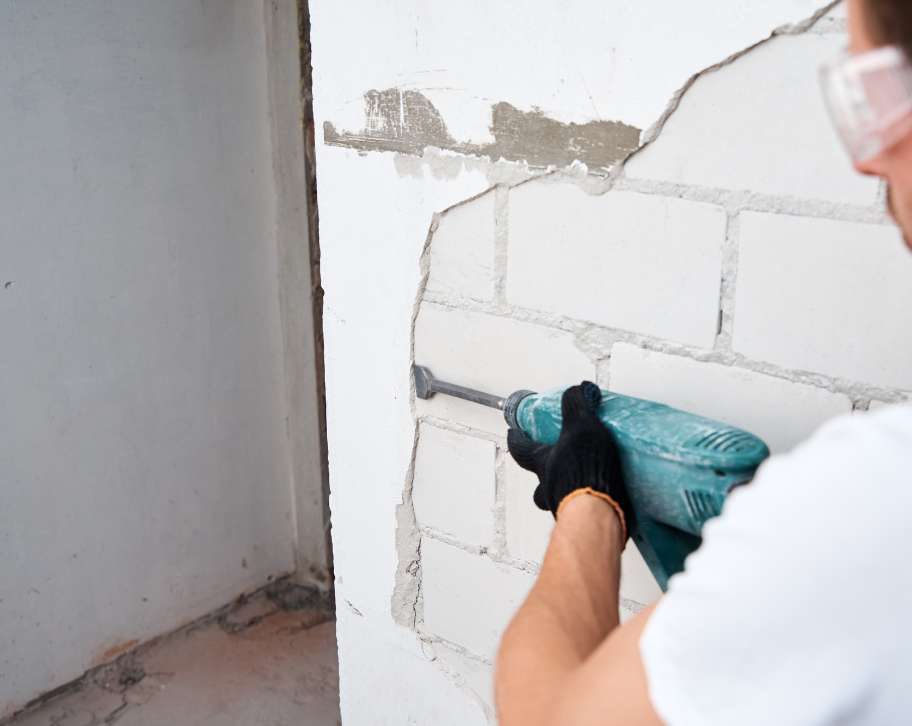
Stucco parging is a thin cementitious coating, typically a mixture of Portland cement, sand, bonding agents, and sometimes acrylic additives, applied to the visible portion of your foundation wall. That’s the area between where your siding ends and the ground begins, usually extending from the soil line to just below your home’s exterior cladding. While it provides a clean, finished appearance that conceals imperfections in concrete block or poured foundations, parging serves a far more critical function than aesthetics.
Think of parging as your foundation’s first line of defence. Concrete and masonry blocks are inherently porous materials. Without protection, water penetrates these tiny pores, and when temperatures drop below freezing, that trapped moisture expands. This expansion creates what masons call masons call spalling, the process where the surface of concrete chips, flakes, or breaks away. Over multiple freeze-thaw cycles, this damage progresses from surface deterioration to structural compromise.
A properly applied parge coat fills those pores and creates a water-resistant barrier. It’s designed to be a sacrificial layer, meaning it takes the environmental beating so your actual foundation doesn’t have to. When parging begins to fail, you patch or replace the coating, a relatively straightforward repair. When the foundation itself starts deteriorating, you’re looking at major structural work.
In Fredericton’s climate, where we experience significant temperature fluctuations throughout winter and spring, this protective function becomes absolutely critical. A single season can involve 30 to 50 freeze-thaw cycles. Without proper parging, each cycle accelerates foundation damage. That’s why professional installation matters so much, when done correctly with appropriate materials and additives, parging should last 10 to 15 years. If yours is cracking after just one winter, something went seriously wrong during installation.
Atlantic Brick and Stone specializes in both new parging installation and remediation of early failures. Our approach focuses on the technical details that separate durable protection from premature failure, particularly the climate-specific challenges that New Brunswick properties face.
When parging fails after a single winter, the problem almost always traces back to one of four critical installation errors. Understanding these issues helps you identify what went wrong and ensures any repair addresses the root cause rather than just covering up symptoms.
The strength and durability of parging depend entirely on precise proportions. The standard mixture typically calls for one part Portland cement to two or three parts clean, coarse sand, with water carefully controlled to about one-fifth to one-quarter the volume of dry materials. These ratios aren’t suggestions, they’re the difference between a coating that bonds properly and one that crumbles or peels.
When there’s too much water in the mix, you end up with weak parging that lacks proper binding properties. It might look fine initially, but it won’t develop the strength needed to resist freeze-thaw cycles. The cement particles become too diluted to form strong bonds, and the dried coating remains porous and vulnerable. Conversely, too much sand creates a crumbly mixture with poor adhesion. The coating won’t grip the foundation properly and will eventually separate and fall away.
Many inexperienced installers also skip critical additives like air-entraining agents. These specialized compounds create microscopic air bubbles throughout the mixture, providing expansion space when moisture freezes. Without them, the parging has no internal flexibility to accommodate freeze-thaw stress. Atlantic Brick and Stone meticulously controls mixing ratios for every project, adjusting based on substrate type and specific climate conditions to ensure maximum durability.
Even the highest-quality parging mixture will fail if applied over a poorly prepared surface. The foundation must be thoroughly cleaned of:
Dirt and debris
Moss and organic growth
Loose concrete particles
Old paint or coatings
Any deteriorated material
If there’s existing parging that’s crumbling or flaking, it must be completely removed, you can’t simply cover over failing material and expect good results.
The substrate also needs proper moisture conditioning. Bone-dry concrete will suck moisture out of wet parging too quickly, causing what masons call flash drying. This prevents proper curing and leads to immediate shrinkage cracks. The surface should be brought to a saturated surface dry state, damp but not dripping wet, before application begins.
Chemical bonding agents create a bridge between old concrete and new parging, ensuring they fuse as a single unit rather than remaining as separate layers. These acrylic or polymer-based liquids are brushed onto the prepared foundation just before the parge coat goes on. Skipping this step significantly increases the risk of delamination, where the parging separates from the wall and falls off in large sections.
Atlantic Brick and Stone’s process includes comprehensive surface assessment and preparation. We remove all deteriorated material, repoint loose mortar between blocks or bricks, and apply commercial-grade bonding agents to ensure the new parging achieves maximum adhesion and longevity.
Temperature and humidity during application have enormous impact on parging durability. The ideal range is between 50°F and 80°F with moderate humidity. Outside these parameters, you’re fighting against environmental conditions that prevent proper curing.
When parging is applied in cold weather, anything below 40°F, the water in the mixture can freeze before the cement has time to cure properly. This freezing disrupts the chemical hydration process that gives concrete its strength. You end up with weak, porous parging that’s already compromised before winter even arrives. On the opposite end, hot weather above 85°F causes rapid surface drying. The exterior hardens and shrinks while the interior remains wet, creating tension that results in shrinkage cracks.
Rushed timelines often force contractors to work in suboptimal conditions, particularly in late fall when homeowners want projects completed before winter. This is one of the most common causes of first-winter failure. Atlantic Brick and Stone schedules parging projects strategically for late spring or early fall, ensuring ideal conditions for proper curing. We also allow sufficient time between multiple thin coats, which is essential for building strength and preventing cracking.
This technical detail separates professional installations from amateur work. Air-entraining agents are specialized additives that create tiny, evenly distributed air bubbles throughout the parging mixture. These microscopic pockets, typically making up about 5 to 7 percent of the total volume, provide expansion space when water freezes.
Without these air bubbles, there’s nowhere for freezing water to expand except outward, creating internal pressure that cracks the parging from within. A single freeze-thaw cycle might not cause visible damage, but after 30 or 40 cycles in one winter, the cumulative stress leads to rapid deterioration. You’ll see spalling, where the surface flakes away in thin layers, and eventually larger sections will delaminate entirely.
Air-entraining agents aren’t included in basic parging mixes available at retail stores. They’re a specialized additive that requires professional knowledge to use correctly. Atlantic Brick and Stone incorporates climate-appropriate additives in all our parging mixtures, specifically engineered to resist the freeze-thaw cycles that define New Brunswick winters. This is one area where professional expertise provides measurable, long-term value that far exceeds the initial cost difference.
Understanding the freeze-thaw cycle explains why proper parging installation is so critical. During the day, melting snow and ice penetrate the porous surface of your parging through cracks or natural porosity. At night, that absorbed water freezes and expands by approximately nine percent. In the confined space of parging pores and micro-cracks, this creates tremendous internal pressure.
The first cycle might only widen existing hairline cracks slightly, but those wider cracks allow more water in during the next thaw, causing more expansion during the next freeze. Each cycle feeds into the next, progressively worsening the damage.
In a typical Fredericton winter, your foundation experiences 30 to 50 of these cycles. What starts as invisible micro-cracking in November becomes visible spalling by January and major delamination by March. Visible symptoms include:
Surface chipping and flaking
Sections that sound hollow when tapped
Large pieces falling away entirely
Properly prepared parging with air-entraining agents resists this process because microscopic air bubbles provide space for expanding ice, dissipating pressure harmlessly. This is why professional installation can last 10 to 15 years under the same conditions that destroy amateur work in a single season.
Atlantic Brick and Stone’s multi-coat technique, precise mixing ratios, and commercial-grade sealers create parging that accommodates winter stress rather than succumbing to it. Since damage accelerates exponentially once it begins, early detection and professional repair are essential.
Regular inspection helps you catch problems early, when repairs are still straightforward and affordable. Here are the key indicators that your parging is in distress and needs professional attention before winter arrives.
Horizontal or vertical cracking along mortar joints often indicates thermal expansion or settling. Small cracks may seem cosmetic, but they allow water infiltration that worsens through freeze-thaw cycles. Spalling, where the surface flakes away in thin layers, means freeze-thaw damage is already underway and will spread quickly.
Tap the parging with your knuckles across several spots. Solid parging produces a dull thud, while hollow-sounding areas indicate delamination. These sections will eventually detach completely, allowing water to accumulate and accelerate damage behind the wall.
White, powdery deposits, called efflorescence, signal water moving through the wall and carrying dissolved minerals to the surface, pointing to drainage issues or inadequate waterproofing. Bulging or “pillowing” means the bond has failed and the parging will soon fall away. Any sections already missing require immediate attention to protect the exposed foundation.
Small cracks caught early can sometimes be patched if the surrounding parging is sound. However, widespread damage, extensive delamination, or moisture penetration typically requires full removal and reapplication. Patching over fundamentally flawed parging only delays proper repair.
Atlantic Brick and Stone offers free assessments to diagnose the root causes of parging distress, examining crack patterns, water paths, and drainage conditions. Ignoring warning signs leads to water infiltrating the foundation itself, resulting in far more expensive structural repairs than timely parging replacement would ever cost.
Preventing first-winter parging failure requires expertise, proper materials, and meticulous attention to detail. Atlantic Brick and Stone’s approach addresses every factor contributing to premature cracking, drawing on over 16 years of experience with New Brunswick’s specific climate challenges.
Our process begins with comprehensive diagnostics. We study crack patterns to understand whether they indicate settling, thermal movement, or moisture issues, assess wall movement, and evaluate supporting elements like footings and drainage. This thorough analysis ensures we address root causes rather than just symptoms.
Surface preparation is where many installations fail. We thoroughly clean foundation walls, remove all failing parging rather than covering it over, and repoint loose mortar to create a solid substrate. The prepared surface is brought to the proper moisture condition, saturated surface dry, before any new material is applied.
We apply commercial-grade bonding agents to fuse the existing foundation and new parging as a single unit. Our mixtures are precisely controlled using one part Portland cement to two or three parts clean sand. The critical difference is the inclusion of climate-appropriate additives: air-entraining agents that create microscopic expansion space for freezing water, and acrylic polymers that increase flexibility to accommodate minor movement without cracking.
Application happens in multiple thin coats, typically one-quarter to three-quarters of an inch per layer, allowing each coat to cure before the next is applied. This prevents the shrinkage cracks that occur when thick layers dry unevenly. We schedule projects for optimal conditions, typically late spring or early fall when temperatures range between 50°F and 80°F.
After application, penetrating sealers fill the pores of cured parging to prevent water infiltration while still allowing the material to breathe, a critical balance, as completely waterproofing parging can trap moisture and cause different problems.
Our winterization services add focused protection for high-stress areas, including weather-resistant caulking around windows and doors, and targeted protection plans for steps, basement walkouts, and retaining wall bases. Every project is backed by our warranty, and detailed assessment reports give homeowners clear, transparent information to make informed decisions about their masonry protection.
Even professionally installed parging benefits from regular maintenance. These proactive measures protect your investment and prevent minor issues from becoming major repairs.
Resealing exterior masonry every two to three years with commercial-grade sealers maintains the water-resistant barrier. Pre-winter maintenance is particularly important, addressing small cracks and resealing before the first deep freeze prevents water infiltration and freeze-thaw damage.
Proper drainage management keeps water away from your foundation. Ensure downspouts direct water at least six feet from the house and that the grade slopes away from the foundation. Water pooling near the foundation dramatically increases freeze damage risk.
When winter arrives, use safer de-icing alternatives. Common road salt penetrates concrete, causing staining and accelerating cracking. Calcium Magnesium Acetate or sand provides traction without the corrosive effects. If you must use salt, apply it sparingly and rinse thoroughly when temperatures allow.
Snow removal technique also matters. Metal-edged shovels chip and scrape parging surfaces, creating entry points for water. Use plastic or rubber-edged shovels instead, and clear snow promptly to prevent thick ice formation that requires aggressive removal.
Address small cracks immediately before they worsen through freeze-thaw cycles. A hairline crack in fall becomes a major spall by spring if left untreated. Atlantic Brick and Stone can provide maintenance assessments and minor repairs before problems escalate, far more cost-effective than waiting until complete replacement is needed.
Parging maintenance is like changing your car’s oil. Regular attention prevents catastrophic failure, and proper maintenance can extend the lifespan of professionally installed parging to 15 years or more. Atlantic Brick and Stone can establish a maintenance schedule tailored to your property’s specific conditions, ensuring your foundation protection remains effective year after year.
Understanding when patching makes sense versus when complete removal is necessary saves money and prevents repeated failures. The decision depends on the extent of damage and the quality of the underlying parging.
Minor, localized cracking can sometimes be patched if caught early and the surrounding parging remains sound. This works when:
The cracks are isolated to a small area
The parging still adheres firmly to the wall
There’s no evidence of moisture penetration behind the coating
The repair involves cleaning out the crack, applying bonding agent, and filling with properly mixed parging material that matches the existing finish.
Several scenarios require complete removal and reapplication. Widespread cracking across multiple sections indicates systemic problems with the original installation. Patching individual cracks in this situation is futile because the entire coating is compromised. Delamination or hollow-sounding areas mean the parging has separated from the wall and patching won’t restore the bond. Evidence of moisture penetration, such as efflorescence or dampness on the interior foundation wall, requires addressing both the parging and underlying waterproofing issues.
If the original installation used improper materials or was applied in unsuitable conditions, the entire coating is fundamentally flawed. Attempting to patch over these deficiencies wastes money and delays proper repair. Complete removal allows correct surface preparation and properly bonded parging that will actually last.
Atlantic Brick and Stone’s free assessment determines the most cost-effective long-term solution. We evaluate the visible damage, the condition of remaining parging, the substrate underneath, and contributing factors like drainage problems. Complete reapplication costs more upfront than patching, but provides 10 to 15 years of protection, far more economical than repeated patch jobs that fail within a season or two.
The assessment also addresses underlying issues that contributed to the original failure, whether poor drainage, structural movement, or other factors. This comprehensive approach ensures your investment in new parging isn’t wasted because an underlying problem went uncorrected.
Late spring (May through June) and early fall (September through October) provide optimal conditions in the Fredericton area. Temperatures between 50°F and 80°F with moderate humidity allow proper curing without the rapid drying of summer heat or the freezing risk of late fall. Atlantic Brick and Stone schedules projects strategically to ensure ideal conditions. Rushed late-fall installations that don’t have adequate curing time before winter often fail during the first freeze-thaw cycles.
Professionally installed parging with appropriate materials and climate-specific additives should last 10 to 15 years in Atlantic Canada’s harsh conditions. This lifespan depends on proper maintenance, including periodic resealing every two to three years and prompt repair of minor damage before it worsens. First-winter failure clearly indicates installation problems rather than normal wear. Atlantic Brick and Stone’s work is backed by warranty, providing assurance that our installations will deliver the expected longevity.
GET STARTED
Create stunning structures with our residential and commercial masonry services in Fredericton. From meticulous designs to the completed build, our process is professional and rewarding, and we can’t wait to build your dream with you.
Atlantic Brick and Stone, one of the best masonry contractors in Fredericton, NB
Contact
8 Muskie Street, Lower Kingsclear, New Brunswick E3E 0E7, Canada