
Picture walking across a front step or driveway in late March and noticing that the smooth concrete poured a few years ago now looks pockmarked and rough. Tiny holes, flaky patches, and loose stones catch the light and raise a frustrating question. Many property owners in New Brunswick end up asking the same thing every spring: what causes concrete pitting, and why does it seem to happen so fast?
Concrete pitting and related concrete surface damage, like scaling and spalling, are very common in Fredericton’s freeze-thaw climate. The top layer of concrete starts to peel, chip, or form small craters, turning a clean slab into a patchy, worn-looking surface. At first it may seem cosmetic, but over time those concrete surface holes can grow deeper, leading to larger chunks breaking away and even creating safety issues.
Behind that damage there is usually a mix of causes. Weather, deicing salts, concrete mix quality, and installation practices all play a part. New concrete problems can show up in only a winter or two if the wrong mix was used or the base was not prepared properly. Understanding these concrete deterioration causes is the first step toward concrete pitting prevention and long-lasting repair.
Atlantic Brick and Stone has been helping Fredericton homeowners, commercial property managers, and heritage building owners deal with concrete surface defects for more than 15 years. In this guide, you will see how concrete pitting starts, what really causes it, how to assess the damage, and which repair options make sense. You will also see where simple maintenance is enough and when it is time to call the Atlantic Brick and Stone team for a free assessment and professional plan for fixing pitted concrete.
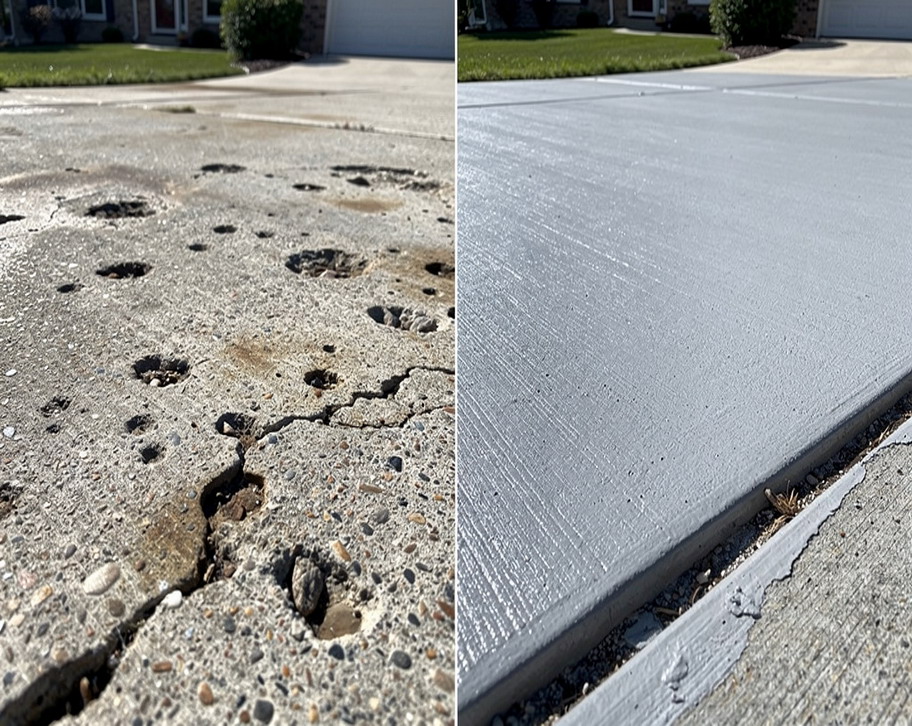
Concrete pitting is the formation of small holes or depressions in the surface of a slab. These pits can be just a few millimetres across or large enough to catch a shoe heel or snow shovel. They often appear alongside other concrete surface damage, such as flaking and thin chips coming off the top layer.
Pitting is closely related to scaling, which is the gradual loss of the surface layer of concrete. As scaling progresses, the smooth paste at the top wears away and exposes the coarse aggregate, the small stones inside the mix. That is why a damaged concrete driveway or patio often looks patchy and speckled, with rough stones showing through in certain spots while other areas are still smooth.
Homeowners should watch for:
Over time, these spots can deepen into visible craters and larger voids. Driveways, concrete walkways, patios, front steps, and garage floors are the most common places to see this kind of wear because they take the heaviest traffic and weather. Catching pitting early makes repairing the concrete surface easier and less expensive, which is why Atlantic Brick and Stone offers free assessments and pit depth measurements before the damage spreads.
Concrete may feel solid, but at a microscopic level it is full of tiny pores and capillaries. Water from rain, melting snow, or slush seeps into these spaces and sits just below the surface. In Fredericton, where temperatures often move above and below zero in the same week, this moisture becomes a major source of concrete freeze-thaw damage.
Here is what happens during a typical cycle:
Water soaks into the pores near the surface.
Temperatures drop below freezing.
Water turns to ice and expands by about nine percent.
That expansion creates pressure inside the cement paste.
Repeated cycles cause the surface to weaken and break apart.
On a single night this might not do much, but over dozens of freeze-thaw cycles each winter, the pressure repeatedly pushes against the surface layer and weakens it.
As the surface weakens, it starts to break apart in thin sheets or chips, and small pits form where the paste has been pushed out. This process is a major reason for concrete scaling problems and is one of the most common concrete deterioration causes in our climate. Slabs that do not drain properly, or that have low spots where water pools, are hit harder because they stay wet longer. During a concrete evaluation, Atlantic Brick and Stone always checks slope, drainage patterns, and nearby downspouts to see whether water management is adding to the pitting.
Deicing salts and chemicals are another major cause of concrete surface damage. Rock salt, or sodium chloride, is widely used on driveways and walkways, but it is hard on concrete. These products lower the freezing point of water on the surface, which may sound helpful for ice control but also increases the number of freeze-thaw cycles the concrete goes through.
Salts are hygroscopic, which means they pull moisture toward them and hold it. When salt is spread on a slab, more water is drawn into the concrete’s pores and stays there longer. That extra moisture gives freeze-thaw action more material to work with, which speeds up the breakdown of the cement paste and leads to more pits and flakes.
Over time, some deicing chemicals also react with the cement itself and weaken the surface, adding chemical attack on top of mechanical damage. The combination of:
creates a perfect recipe for concrete pitting and spalling.
Safer options include concrete-friendly products such as calcium magnesium acetate for melting, and sand for traction. Atlantic Brick and Stone regularly advises clients to limit salt use on new and existing slabs and to rinse away salt residue during mild spells to reduce long-term damage.
Even in the same climate, not all concrete performs the same way. One of the biggest concrete deterioration causes is a poor or poorly specified concrete mix. For exterior work in New Brunswick, concrete needs proper air entrainment. This means billions of microscopic air bubbles are added to the mix during batching.
These tiny bubbles act like relief chambers. When water inside the concrete freezes and expands, it can move into the nearby air pockets instead of pushing directly against the solid paste. Without this feature, the pressure from freezing water has nowhere to go and instead cracks and chips the surface, leading to serious concrete scaling problems and pitting.
Other mix issues that weaken concrete include:
Extra water makes the mix easy to place but leaves behind more pores as it evaporates. The result is a softer, more absorbent surface that soaks up water, oil, and deicing chemicals and breaks down much faster. New concrete problems, such as pitting in only a winter or two or two, often trace back to a mix that was not right for the job. Atlantic Brick and Stone specifies high-quality, air-entrained mixes for exterior flatwork, so clients are not fighting avoidable concrete surface defects later.
The base under a slab matters as much as the concrete on top. A driveway, patio, or garage floor needs a stable, well-compacted gravel base to support it. If the base is too thin, poorly compacted, or made of the wrong material, it will settle or shift over time. That movement shows up as cracking, uneven slabs, and added stress on the surface.
4 common base preparation mistakes include:
Topsoil and other organic materials break down and compress, causing the slab to sink in spots or tilt. In winter, frost can grab hold of wet, unstable soil and lift part of the slab, leading to heaving and more stress. All of this structural movement speeds up concrete driveway damage and pitting because cracks and gaps let more water enter.
Proper frost protection is also important around heated structures like houses and garages. Without it, the soil near the building can move differently than the soil farther out, creating tension across the slab. Atlantic Brick and Stone takes subgrade preparation seriously, stripping organic material, installing and compacting the correct depth of gravel, and planning for frost before any concrete is poured.
Even with a good mix and base, poor finishing and curing can still produce weak concrete that pits early. One harmful habit is adding water to the surface during finishing to make trowelling easier. This extra water raises the local water-to-cement ratio and creates a thin, weak “crust” on top that is far more likely to scale and pit.
Overworking the surface or starting finishing before bleed water has evaporated can trap water just below the top layer. When that trapped water freezes or dries, it leaves voids and weak zones that later break off as flakes. Pouring concrete in very hot, windy, or cold weather without proper protection can also interfere with curing. If concrete freezes before it gains strength, or dries too quickly, the surface never reaches its full potential.
Good curing keeps the concrete moist and within a steady temperature range for several days so it can build strength. Placing heavy vehicles or machinery on a slab too soon can crush or craze the surface. Atlantic Brick and Stone follows sound finishing practices, plans pours around the weather, and uses proper curing methods so clients are not left dealing with early pitting and concrete pitting repair on new work.
Beyond weather and installation, everyday use can also lead to concrete surface damage. Automotive fluids such as oil, gasoline, and brake fluid can soften and stain the surface if spills are left in place. Certain cleaners, fertilizers, and industrial chemicals can slowly attack the cement paste, especially on unsealed concrete, and leave it more fragile over time. These kinds of chemical exposures often show up as darkened, softened areas that later start to pit.
Physical abrasion is another common cause of concrete surface defects. Repeated snow removal with metal shovels, ice chisels, or plow blades can scratch and gouge the surface. Each scrape removes a little more of the protective top layer and exposes fresh concrete to moisture and chemicals. On a damaged concrete driveway, heavy vehicles, trailers, or delivery trucks can push loose material around and deepen existing pits, especially near edges and control joints.
Once the surface is scuffed and opened up, water and salts can penetrate more easily and speed up freeze-thaw damage. The combined effect of chemicals, abrasion, and winter weather often explains why one section of a slab fails faster than another. To slow this wear, it helps to:
Atlantic Brick and Stone offers penetrating concrete sealing services that protect against both chemical attack and surface wear, which is a key part of concrete pitting prevention.
One of the best ways to prevent concrete pitting is regular regular sealing with a quality penetrating sealer. These products soak into the pores of the concrete and form a water-repelling barrier below the surface. They allow vapour to escape, so the slab can still “breathe,” but they greatly reduce the amount of liquid water, salt, and oil that can soak in and start new damage.
A good sealer helps:
For most driveways, walkways, and patios in Fredericton, resealing every two to three years offers solid protection against concrete surface damage. New slabs should be allowed to cure for about 28 days before the first sealing so that the concrete can gain strength.
Existing concrete should be cleaned thoroughly and any loose, damaged areas repaired before sealing. Good preparation may include pressure washing, degreasing stains, and allowing the slab to dry. Sealer works best when applied in two thin coats rather than one thick one, during dry weather with temperatures roughly between 10°C and 32°C. Atlantic Brick and Stone uses high-quality siloxane or silane-based penetrating sealers that are designed for freeze-thaw climates and applies them under the right conditions for long-lasting results.
Winter habits make a big difference in how long a slab lasts. Clearing snow from driveways and walkways before it has a chance to compact and melt into the concrete reduces how much water can soak into the surface. It also means less ice will form, so less deicer is needed in the first place.
For better winter care:
New concrete is especially sensitive, so staying away from salt during that first cold season is strongly recommended. These simple maintenance habits add very little time to snow clearing but can significantly extend the life of a driveway or walkway before any concrete spalling repair is needed.
The most reliable way to avoid serious concrete pitting repair in the future is to start with well-planned, professional installation. That means:
Experienced finishers will avoid adding water to the surface, watch the weather forecast, and choose appropriate curing methods so the slab gains full strength. Atlantic Brick and Stone follows this kind of comprehensive process on every new concrete project and backs it with a satisfaction guarantee, so clients are not left facing early pitting or concrete driveway damage that could have been avoided.
Not all pitting is equal, and the best repair approach depends on how deep and widespread the damage is. You can think of it in three broad categories:
A professional assessment looks not only at what the concrete looks like, but also at what is happening inside the slab and below it. Atlantic Brick and Stone provides free assessments that include pit depth measurements, checks for soft or delaminated areas, and a written report outlining the condition of the concrete. This kind of evaluation helps you decide whether simple repairs, more advanced concrete spalling repair, or full replacement is the smartest choice.
When pitting and scaling are minor and the underlying slab is sound, surface-level treatments can work well. The first step is usually a thorough cleaning to remove dirt, loose concrete, and contaminants. This may involve pressure washing, mild detergents, and special cleaners for oil or automotive stains so that nothing interferes with bonding or sealer performance.
On some slabs, careful grinding, honing, or blasting can remove the weak top layer and expose solid concrete finishes beneath. This process can:
After the damaged layer has been removed, a penetrating sealer or surface densifier can be applied to help resist future concrete surface damage. Atlantic Brick and Stone carefully checks how deep the damage goes before recommending these treatments, so you are not spending money on work that will not last.
For localized areas of deeper pitting or spalling, patching and sectional repairs can be very effective. In this approach, the damaged area is cut out in a regular shape with a concrete saw to reach solid material. The team then inspects the gravel base below and corrects any issues by adding and compacting additional stone if needed.
To tie the new concrete into the old slab, holes are drilled into the edges of the existing concrete and rebar dowels dowels are anchored in place with epoxy. This reinforcement helps the new section move with the old slab instead of pulling away. For smaller repairs, a high-performance repair mortar that bonds tightly and shrinks very little can be used. Larger sectional repairs are poured with fresh concrete that matches the original as closely as possible.
Patching works best when the surrounding slab is still strong and the main issue is a specific area, such as:
Atlantic Brick and Stone regularly completes these kinds of structural patch repairs and can advise whether a patch will hold or whether the damage is too widespread for this approach.
Concrete concrete resurfacing overlays are thin layers of polymer-modified cement placed over an existing slab. They can make an old or stained surface look fresh and smooth again and can hide light pitting and shallow concrete surface defects. On interior floors or in mild climates, overlays can perform well when installed correctly.
For exterior slabs in a freeze-thaw climate like Fredericton, however, overlays come with serious limitations. An overlay is only as strong as the concrete under it. If the original slab is already scaling, cracking, or continuing to deteriorate, the new layer is very likely to delaminate and peel away before long. Moisture trapped between the old surface and the overlay can also freeze, which creates blisters and more flaking.
Because of these risks, overlays can sometimes hide deeper problems instead of addressing them. Structural issues in the subgrade, such as ongoing settlement or frost heave, will continue and may quickly crack the new surface. For these reasons, Atlantic Brick and Stone is cautious about using overlays outdoors and usually recommends other repair methods or full replacement unless very specific, favourable conditions are present.
There comes a point where repairing concrete surface defects no longer makes sense, and full replacement becomes the better option. This is often the case when the concrete matrix itself is failing and crumbling, not just the top few millimetres. If large areas are deeply pitted, the surface feels soft, or pieces are breaking away down into the stone layer, patching or thin repairs will not last.
Replacement is often the better choice when:
Structural issues are another sign that replacement may be the best path. Widespread cracking, slabs that have sunk or heaved, and ongoing movement from frost or poor base conditions indicate problems below the surface. In these situations, repairing concrete surface damage alone will not stop new cracks or pits from forming, because the slab is still moving.
Cost is also part of the picture. Repeated short-term fixes on badly damaged concrete can add up quickly, especially when they involve several visits and different materials. When repair costs start to approach the cost of a full replacement, investing in a new slab that should last decades, with far less maintenance, is often a better use of money.
A proper replacement is more than just breaking out the old slab and pouring new concrete. The process usually includes:
Atlantic Brick and Stone follows this thorough process for concrete replacement and provides detailed assessments so property owners understand why replacement is recommended and what to expect in terms of lifespan and warranty.
The cost of fixing pitted concrete in Fredericton depends on how damaged the slab is and which repair method is right. Cleaning and sealing sound concrete is on the lower end. Localized patching, grinding, or other surface treatments fall in the middle. Full replacement of a damaged concrete driveway or large patio has a higher upfront cost but usually offers the best long-term value. Trying repeated low-cost fixes on concrete that is already failing can add up quickly. Atlantic Brick and Stone provides detailed assessments, clear pricing, and a free initial visit so you know where your project sits on that range.
The lifespan of repaired concrete depends on how well the repair addresses the real problem. Surface fixes on a slab that is still strong underneath can last many years, especially when combined with sealing and better winter care. On the other hand, patching or overlaying concrete that is already losing strength will often fail again quite quickly, sometimes in only a couple of seasons. A properly installed new slab, with a solid base, air-entrained mix, and good curing, can often last 30 years or more. Atlantic Brick and Stone focuses on repairs and replacements that address root causes and backs its work with warranty coverage.
The best time to repair concrete pitting in New Brunswick is usually from late spring through early fall, when daytime temperatures stay above about 10°C. Concrete needs certain temperature and moisture conditions to cure properly, and many repair mortars and sealers have similar requirements. Dry weather is also important, especially for sealing and for some surface treatments. Assessment and planning can happen any time of year, even in winter, so you are ready to book work when conditions are right. Atlantic Brick and Stone can suggest the ideal season and schedule for your specific project during the free evaluation.
GET STARTED
Create stunning structures with our residential and commercial masonry services in Fredericton. From meticulous designs to the completed build, our process is professional and rewarding, and we can’t wait to build your dream with you.
Atlantic Brick and Stone, one of the best masonry contractors in Fredericton, NB
Contact
8 Muskie Street, Lower Kingsclear, New Brunswick E3E 0E7, Canada