
Have you noticed a growing gap between your concrete steps and your house? Are your front steps tilting, cracking, or creating an uneven surface that makes you hesitate before walking up to your door? Maybe you’ve spotted water pooling at the base of your steps after a rainstorm, or you’ve felt that unsettling wobble when you place your foot on the top step.
Sinking concrete steps signal serious structural issues happening beneath the surface, caused by soil erosion, poor compaction, and water infiltration. For homeowners in Fredericton and surrounding areas, where freeze-thaw cycles and soil conditions create unique challenges, understanding why your steps are separating from your foundation is the first step toward protecting your property’s safety and value.
This article explains the root causes of sinking concrete steps, the warning signs that demand immediate attention, and the professional repair methods that deliver permanent stability. You’ll learn how soil behavior, water infiltration, and installation quality combine to create this common problem, and what you can do to stop it from getting worse.
Let’s examine what’s really happening beneath those steps.
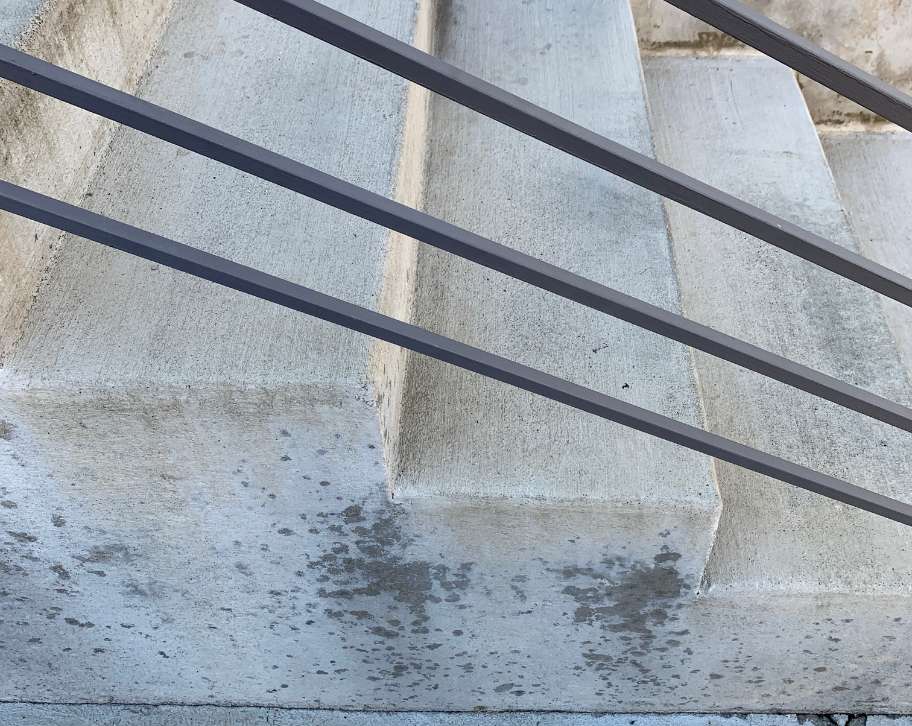
Concrete steps don’t sink on their own. The problem almost always starts with the soil underneath. Understanding the mechanics of soil behavior is the key to understanding why your steps are pulling away from your house.
Soil shrink-swell cycles during drought and heavy rain create the most common cause of step settlement. During dry periods, soil loses moisture and contracts, creating hollow voids beneath the concrete. When heavy rains follow, water rushes into these gaps instead of soaking in evenly. This washes away supporting soil in a process called erosion. The cycle repeats throughout the year, progressively weakening the foundation beneath your steps.
Poor initial soil compaction during installation guarantees future problems. When contractors pour concrete steps over loose, uncompacted soil, that soil will naturally compress under the weight of the concrete over time. This is especially common in Fredericton’s region, where sandy or loose soil compositions are prevalent. Steps installed on poorly prepared ground will sink within just a few years.
Water infiltration and inadequate drainage systems accelerate the problem. If your property’s grading slopes toward your foundation instead of away from it, or if downspouts discharge water directly at the base of your steps, the soil becomes saturated. Waterlogged soil loses its load-bearing capacity and turns into a soft, muddy slurry that cannot support heavy concrete. The steps settle or slide down the saturated slope, creating that visible gap between the steps and your house.
Freeze-thaw cycles in Fredericton’s climate expand existing cracks and accelerate deterioration. Water seeps into small cracks, freezes overnight, and expands. This expansion widens the crack. When the ice melts, more water enters the now-larger crack. This cycle repeats throughout winter and spring, progressively destroying the concrete’s structural integrity.
Tree root interference contributes in two ways:
Large trees planted within 10 to 20 feet of your foundation can physically push against the concrete, forcing it to shift
Extensive root systems extract massive amounts of water from the soil, causing localized shrinkage even during normal weather conditions
Foundation settlement sometimes causes the steps to appear separated when the real problem is the house itself sinking. If your home’s primary foundation is settling, the connection point where the steps meet the wall will often show the first visible gap.
|
Method |
Cost Range |
Longevity |
Effectiveness |
|---|---|---|---|
|
Caulking or patching gaps |
$20-$50 |
6-12 months |
Hides symptoms only; soil continues to shift |
|
Adding more concrete on top |
$100-$300 |
1-2 years |
Adds weight to failing soil; accelerates sinking |
|
Mudjacking or foam injection |
$500-$1,500 |
10-20 years |
Addresses soil voids; raises and levels steps permanently |
|
Full slab replacement with proper base |
$2,000-$5,000 |
20-30 years |
Corrects installation errors; provides new structural foundation |
Temporary fixes only mask the problem. Professional repair addresses the root cause beneath the surface.
Knowing what to look for helps you catch problems before they become dangerous or expensive. These warning signs tell you it’s time to call a professional.
Visible gaps between the step back and your house are the most obvious indicator. Measure the gap width and check it again in a few weeks. If it’s growing, the soil beneath is actively eroding. Gaps wider than half an inch require immediate evaluation.
Cracks wider than 1/4 inch signal structural failure, not just surface wear. Pay special attention to:
Stair-step crack patterns (cracks that follow the mortar joints in a zigzag pattern)
Horizontal cracks running across the width of the step
These indicate the concrete is breaking under stress.
Tilted or uneven step alignment creates serious tripping hazards. If the steps appear to lean away from the house, or if one side is noticeably lower than the other, the soil beneath has settled unevenly. This makes the surface dangerous to walk on, especially in wet or icy conditions.
Water pooling at the step base instead of draining away from your foundation means the grade has shifted. Proper installation directs water away from the house. When steps sink, they create a depression that traps water against your foundation, accelerating both step damage and potential basement water intrusion.
Secondary interior symptoms often accompany sinking steps. If doors or windows near your entrance start sticking, or if you notice new cracks in the interior walls adjacent to the front door, the foundation movement affecting your steps may be affecting your home’s frame as well.
Mold or mildew growth on step surfaces indicates persistent moisture retention. This makes the surface slippery and hazardous, and suggests that water is not draining properly from the area.
Some signs require immediate professional evaluation. Routine monitoring is appropriate for minor hairline cracks that aren’t growing, but anything more serious demands expert assessment.
Modern repair technology offers several proven methods to restore your steps without always requiring full replacement. The right method depends on the severity of the damage and the condition of the underlying soil.
Mudjacking pumps a stabilizing mixture beneath sunken slabs to raise and relevel them. Professionals drill small holes through the concrete and inject a thick slurry of cement, sand, and other additives. As the mixture fills the voids beneath the steps, it lifts the concrete back to its original height. The slurry then hardens, creating a solid base that prevents future sinking. This method works well when the concrete itself is structurally sound but has simply settled due to soil compression.
Polyurethane foam injection offers several advantages over traditional mudjacking:
The foam enters voids as a liquid, then expands and hardens within minutes
It’s waterproof and won’t wash away during heavy rains
It’s lightweight and doesn’t add significant weight to the soil
Steps can be used the same day, making this the fastest repair option available
Epoxy and polyurethane crack repair seals water entry points and restores structural integrity. For cracks that haven’t yet caused major settlement, injecting industrial-grade epoxy creates a watertight seal that prevents moisture from reaching the soil beneath. This stops the freeze-thaw cycle from widening the crack and prevents soil erosion from progressing.
Metal plate reinforcement addresses severe cracks and structural failures. When cracks are too wide for epoxy alone, professionals install metal plates across the crack and anchor them with bolts. This mechanically holds the concrete together and prevents the crack from spreading further.
Drainage correction eliminates the root cause of settlement. This includes:
Regrading the soil around your steps so water flows away from the foundation
Extending downspouts to discharge at least 5 to 10 feet from the step base
Installing French drains or permeable materials to manage runoff
Without proper drainage, even the best repair will eventually fail again.
Full slab replacement becomes the most cost-effective solution when the concrete is too deteriorated to repair. If the steps have multiple large cracks, significant spalling (surface flaking), or have sunk so far that leveling isn’t practical, replacement provides a fresh start. Professionals remove the old concrete, properly compact the soil base, install drainage improvements, and pour new steps with reinforcement and expansion joints designed to prevent future settlement.
Professionals assess whether leveling or replacement is appropriate by evaluating the extent of damage, the condition of the underlying soil, and the structural integrity of the existing concrete. They look at crack patterns, measure settlement depth, test soil compaction, and consider the age and overall condition of the steps. This thorough evaluation ensures you get the most cost-effective and lasting solution for your specific situation.
With over 15 years of specialized experience in masonry repair serving Fredericton and surrounding communities, Atlantic Brick and Stone brings deep expertise to diagnosing and resolving concrete step settlement issues specific to the region’s challenging freeze-thaw climate.
Our team conducts comprehensive assessments that identify root causes, not just surface symptoms. We evaluate soil conditions, drainage patterns, crack severity, and structural integrity to determine the right solution for your property.
We offer a full range of repair options:
Mudjacking and polyurethane foam injection
Epoxy crack repair
Drainage correction
Complete step replacement
Our team uses only top-grade materials, including high-density expanding foam, industrial epoxy and polyurethane fillers, and reinforced concrete mixes designed to withstand Atlantic Canada’s harsh seasonal cycles.
Beyond repair, we provide proactive maintenance guidance to prevent future settlement and extend your concrete’s lifespan. This includes proper drainage setup, routine sealing schedules, and early intervention strategies that protect your investment long-term.
We proudly serve Fredericton, Oromocto, New Maryland, Hanwell, Keswick, Lincoln, Brookside, Penniac, Douglas, and surrounding areas. Contact Atlantic Brick and Stone today to schedule your consultation and receive a personalized assessment with clear, honest repair recommendations that prioritize your safety and your budget.
Repair costs vary based on the method required. Mudjacking typically ranges from $500 to $1,500 and is more affordable than full replacement, which can cost $2,000 to $5,000. Factors affecting price include the extent of damage, underlying soil conditions, and whether drainage work is needed. Early intervention reduces overall repair costs by preventing minor issues from becoming major structural failures.
DIY fixes like caulking gaps or patching cracks only hide symptoms without addressing the soil instability causing the problem. Professional assessment is required to determine if soil voids, erosion, or foundation issues are present beneath the surface. Attempting repairs without addressing the root cause leaves uneven step surfaces that create safety and liability risks, especially for guests or delivery personnel.
Mudjacking and polyurethane foam injection are typically completed within a few hours, with steps usable the same day once the material cures. Full slab replacement requires several days for removal, base preparation, pouring, and curing before the steps can bear weight. Timeline depends on the repair method chosen and weather conditions during the work.
Progressive soil erosion beneath the steps from ongoing water infiltration causes the gap to expand. Freeze-thaw cycles widen existing cracks each winter, allowing more water to reach the soil. Untreated drainage issues continue washing away soil support throughout the year. Addressing the root cause through proper drainage correction and soil stabilization is the only way to stop gap expansion.
Maintain proper drainage grading that slopes away from your foundation at a rate of at least one inch per foot for the first six feet. Extend downspouts 5 to 10 feet from the step base to prevent water discharge near the foundation. Seal hairline cracks promptly to prevent water infiltration. Apply penetrative sealers every few years to protect against moisture. Keep large trees at a safe distance from your foundation to prevent root-related soil dehydration.
GET STARTED
Create stunning structures with our residential and commercial masonry services in Fredericton. From meticulous designs to the completed build, our process is professional and rewarding, and we can’t wait to build your dream with you.
Atlantic Brick and Stone, one of the best masonry contractors in Fredericton, NB
Contact
8 Muskie Street, Lower Kingsclear, New Brunswick E3E 0E7, Canada