
Yes, parging can sometimes be applied in winter in Fredericton, but only when the wall, fresh material and curing area stay within the selected product’s temperature requirements. Putting cement-based parging on a frozen foundation, or allowing it to freeze before it gains strength, can lead to weak bonding and early cracking. For most non-urgent exterior repairs, waiting for stable, milder weather is the simpler choice.
Here, parging means the thin cement-based finish on the visible part of a concrete block or poured-concrete foundation. It can improve the wall’s appearance and offer a protective surface, but it is not a structural repair or a substitute for a proper foundation waterproofing system. The right winter decision depends on the damage beneath the coating, not just how the surface looks.
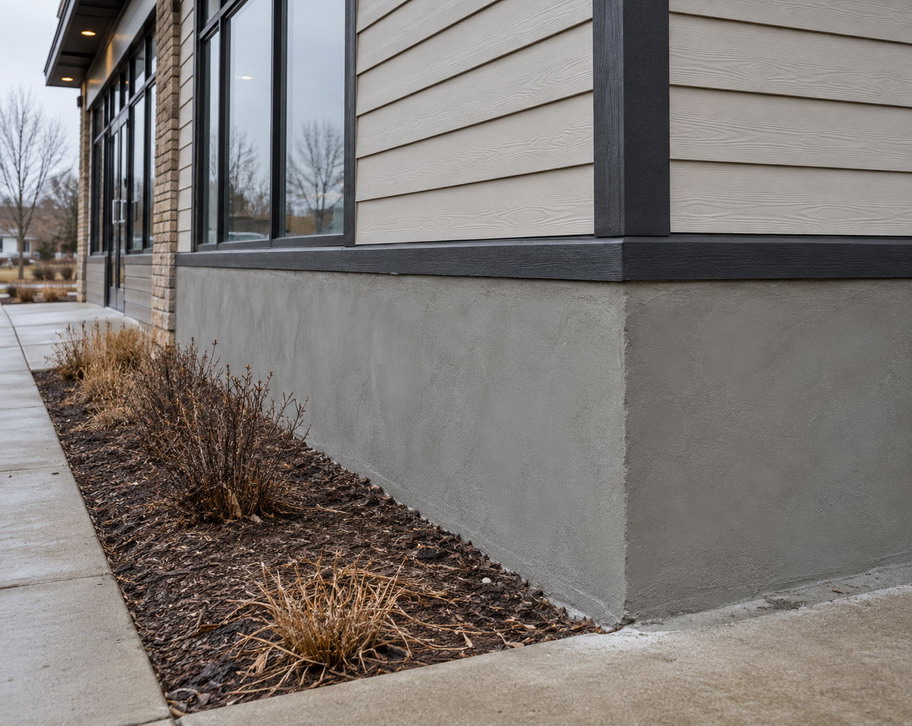
The safe working temperature depends on the product, the foundation surface and the length of time the repair can be protected. Many cement-based parging mixes need conditions above freezing, with the wall itself kept warm enough before application and while the coating cures. A positive daytime temperature is not enough if the wall is frozen or the overnight forecast is below the product’s limits.
For a concrete example, one cement-based parging mix sold in Canada calls for the mix and substrate to be kept between +5°C and +30°C for at least 24 hours before and 48 hours after application. Those are instructions for that product, not a universal rule for every parging material. The contractor must follow the exact requirements of the system being used, including any longer curing or weather-protection period.
The substrate is the wall beneath the parging. In Fredericton, a shaded foundation can remain cold long after afternoon air temperatures rise. Checking the air forecast alone does not confirm that a wall is ready for fresh cementitious material.
Cement-based parging develops strength as its ingredients react with water. This process is called curing, and it needs suitable temperature and moisture conditions. Low temperatures slow strength development. If water in a fresh coating freezes too soon, the material may lose strength, crack or separate from the foundation.
Winter also creates bonding problems before any new material is mixed. Frost, ice, loose old parging, dirt and contaminated or saturated surfaces can prevent a secure bond. A fresh layer may look smooth on installation day but later sound hollow or begin to flake away.
A thermometer showing +6°C outside does not mean the concrete beneath your siding is also +6°C. The wall may have been below freezing overnight, and different sides of a house receive different amounts of sun and wind. Temperature checks need to reflect the actual surface being coated.
Likewise, warming the mixing water or applying a covering for a few hours is not a substitute for the complete temperature and curing requirements. If the coating cannot be protected after the workers leave, the risk remains.
Winter parging can fail even when the wall is warm enough if water continues to enter behind the surface. Snow piled against the foundation, a downspout discharging beside the house or deteriorated mortar can keep the wall damp. As the weather changes, trapped moisture can contribute to peeling and freeze-thaw damage.
A sound repair starts by understanding where that moisture is coming from. Covering a wet or hollow section without correcting the underlying problem may leave you with another repair after spring thaw.
Professional winter work can sometimes proceed while outdoor temperatures are below freezing, but only if controlled conditions can be created and maintained. That may involve an enclosed work area, suitable heating, checks of the masonry temperature and protection for the entire early curing period. These measures are part of the repair plan, not a guarantee that every wall can be parged in winter.
A temporary enclosure must do more than block the wind. The actual wall needs to reach the product’s specified temperature, remain free of frost and be prepared as required by the material manufacturer. Fresh parging then needs to stay protected for the required time, including cold nights after application.
Heated enclosures also add complexity, access needs and safety considerations. Heating and ventilation should be handled by professionals with appropriate equipment. For a small cosmetic patch, these extra measures may not be worthwhile compared with scheduling the work in milder weather.
Not every crack or missing patch needs immediate winter application. The important question is whether the damage is limited to the coating or whether it indicates active water entry, loose material or a problem with the wall itself.
|
What You Notice |
What It May Mean |
Practical Next Step |
|---|---|---|
|
A small, stable surface chip with no moisture signs |
Possibly localized wear in the finish |
Document it and plan a repair when application conditions are suitable |
|
Flaking or hollow-sounding parging across a larger section |
The existing coating may have lost its bond |
Arrange an assessment before covering it with another layer |
|
Loose pieces beside an entrance or walkway |
Falling material could create a hazard |
Keep people clear and seek prompt professional advice about making the area safe |
|
Recurring dampness, water entering indoors or a growing crack |
A moisture or foundation issue may extend beyond the parging |
Have the underlying problem assessed promptly; do not rely on surface coating alone |
|
A frozen foundation with only cosmetic deterioration |
The substrate is unsuitable for an ordinary repair |
Postpone permanent parging until the product’s required conditions can be met |
These are useful signs for deciding what to investigate, not a diagnosis from appearance alone. The urgency can change if a crack is moving, masonry is loose or water is affecting the building. Our guide to signs that parging needs repair explains the visible symptoms in more detail.
Before setting a repair date, an experienced mason should evaluate both the existing coating and the conditions needed for the new one. A practical assessment includes the following checks:
Identify the source of damage. Look for poor drainage, recurring splashback, failed joints, movement or moisture entering behind the coating. Surface damage can have more than one cause.
Check the wall beneath the finish. Determine whether the concrete or block is sound, whether the old parging remains firmly bonded and whether cracks need separate attention.
Choose the repair area and material. A local patch may be suitable when surrounding parging is sound. Broad separation may call for more removal. The mix and preparation must suit the actual foundation surface.
Confirm temperatures and weather protection. Check the masonry, air, precipitation and forecast against the manufacturer’s instructions. Where cold-weather enclosure is proposed, plan for heating and monitoring beyond the application itself.
Protect the new coating while it cures. Follow the product’s temperature, moisture and protection requirements. The job is not finished simply because the surface feels firm to the touch.
On older brick or stone foundations, material compatibility deserves particular attention. A hard modern cement coat is not automatically the right treatment for every historic masonry wall. The existing assembly and how it manages moisture should be evaluated before new parging is specified.
Sometimes, but only if the existing material is sound and the new system is suitable for it. Loose, dusty, painted, hollow or poorly bonded surfaces can prevent the new coat from adhering correctly. Winter does not make those preparation requirements less important.
Applying fresh cement over an old layer that is already separating may hide the damage temporarily without restoring its bond to the foundation. Removing unsound material and checking the surface beneath are often necessary before choosing a patch or larger replacement.
If you are considering a partial repair, see our explanation of when new parging can be applied over old parging. Whether it can be done during winter is a second decision, based on the wall temperature and curing conditions.
Postponing the coating does not mean ignoring the foundation. Some practical measures can reduce exposure and help a mason understand the problem later, without attempting a risky cold-weather application.
Photograph the damage. Take pictures of cracks, flakes, damp patches and exposed areas from a safe position. Record whether they are changing after rain, snowmelt or a thaw.
Watch where water goes. Keep downspouts and drainage outlets working, and look for runoff collecting at the base of the foundation. Do not redirect water onto a neighbour’s property or into an unsafe area.
Manage snow piles. Where practical, avoid stacking plowed snow directly against the damaged wall, especially if that snow contains de-icing salt.
Do not hide loose material. Avoid painting, skim-coating or sealing a damp, deteriorating surface before the source of damage is understood.
Keep people away from falling pieces. If sections are breaking off above a path or entryway, restrict access and arrange prompt professional advice.
If there is active water entry or visible movement in the foundation, do not postpone the assessment merely because permanent parging may need warmer conditions. Different repairs or temporary protection may be appropriate while the cause is investigated. General winter property preparation is discussed in our guide to winterizing masonry in Fredericton.
No. Ordinary parging is not a complete foundation waterproofing system. It is principally a finishing and protective coating for an appropriate masonry or concrete surface. It cannot, by itself, stop water being forced through below-grade cracks, deal with drainage failures or stabilize a moving foundation.
This distinction matters when a homeowner notices a wet basement at the same time as cracked exterior parging. Both symptoms may relate to moisture, but adding another coat to the exposed wall will not necessarily treat the route water takes underground.
Where the evidence points to a crack, drainage issue or below-grade leak, the next step may involve an inspection and foundation repair rather than a surface finish. A contractor should explain what part of the problem the proposed parging can actually solve.
If the work is being considered between late autumn and early spring, ask more than whether the contractor is available. The installation plan should show how the chosen material will bond and cure in the conditions expected at your property.
Is the problem confined to the parging, or does the foundation need a separate repair?
What product will be used, and what temperatures does its manufacturer require?
How will the wall temperature be checked before installation?
If the weather turns colder overnight, how will the new coating remain protected?
Will damaged old parging be removed before the new layer is installed?
What happens to the schedule if rain, frost or a cold snap makes the work unsuitable?
These questions help distinguish a controlled winter installation from a rushed patch. The best repair date is the one that allows sound preparation and curing, not necessarily the first day above freezing.
Winter parging is possible in some controlled situations, but it should never be treated as ordinary warm-weather masonry work. The wall must be sound and unfrozen, the material must suit the foundation, and the required temperatures must be maintained while the new coating bonds and cures. For minor cosmetic damage, postponing the permanent finish is often the sensible option.
If your parging is flaking, pulling away or showing signs of moisture damage, Atlantic Brick and Stone can assess the existing masonry and discuss an appropriate repair plan for your Fredericton-area property. That may mean addressing an urgent underlying problem now, planning a properly protected winter repair where practical or scheduling new parging when conditions improve.
Ordinary cement-based parging should not be applied at 0°C unless the selected product and a professionally controlled working environment permit it. Many mixes require warmer wall and material temperatures. A frozen foundation is unsuitable for normal application, regardless of a short rise in air temperature.
A warm afternoon may still be unsuitable. The masonry could remain cold, and fresh parging may need protection for one or more nights. Use the chosen product’s specified temperature range and curing period rather than a single afternoon forecast.
It depends on the material. As one example, a cement-based parging product may specify suitable temperatures before application and for at least 48 hours afterward, with additional moist-curing instructions. Follow the exact product data and the professional installation plan, since initial setting and full curing are not the same thing.
No. An additive should not be treated as permission to coat frozen, wet or otherwise unsuitable masonry. Only materials approved for the intended conditions should be used, and their instructions may still require controlled surface temperatures and curing protection.
Not without identifying the cause. A small cosmetic defect may wait for milder weather, while active water intrusion, a widening crack, displaced masonry or loose material may require prompt professional assessment. Parging alone is not a substitute for a necessary structural or waterproofing repair.
Spring can offer more suitable weather, but the calendar does not guarantee safe installation conditions. Cold nights, rain and saturated foundation walls can still be a problem. A stable weather window that meets the chosen product’s requirements is more useful than picking a date by season alone.
GET STARTED
Create stunning structures with our residential and commercial masonry services in Fredericton. From meticulous designs to the completed build, our process is professional and rewarding, and we can’t wait to build your dream with you.
Atlantic Brick and Stone, one of the best masonry contractors in Fredericton, NB
Contact
8 Muskie Street, Lower Kingsclear, New Brunswick E3E 0E7, Canada