
Many brick owners first notice a problem on a wet spring morning. After the rain dries and sun appears, the lower part of a brick wall looks dusted with flour. That white powder on bricks brushes off easily, and new white stains on brickwork return after the next wet spell.
Those chalky patches are called efflorescence—crystalline salt deposits that form on brick, block, and concrete. Many search online for what causes efflorescence on brick hoping it is only surface staining. While it looks minor, it always signals moisture in brick walls moving where it should not.
In Fredericton’s climate, with heavy rain, snow melt, and strong freeze–thaw cycles, brick efflorescence is common. The salt itself is harmless, but warns that water is travelling through your masonry. Left unchecked, that water can cause spalling brick, crumbling mortar, damp basements, and interior mould. Understanding what causes efflorescence on brick matters for both appearance and structure.
Atlantic Brick and Stone has spent over 15 years working on brick, stone, and concrete across Fredericton and nearby communities. Our team sees efflorescence weekly on everything from older foundations to new veneer walls. This article explains what those white marks on bricks mean, the conditions that create them, common moisture sources, and how we address both the stain and root cause.
By the end, you will be able to:
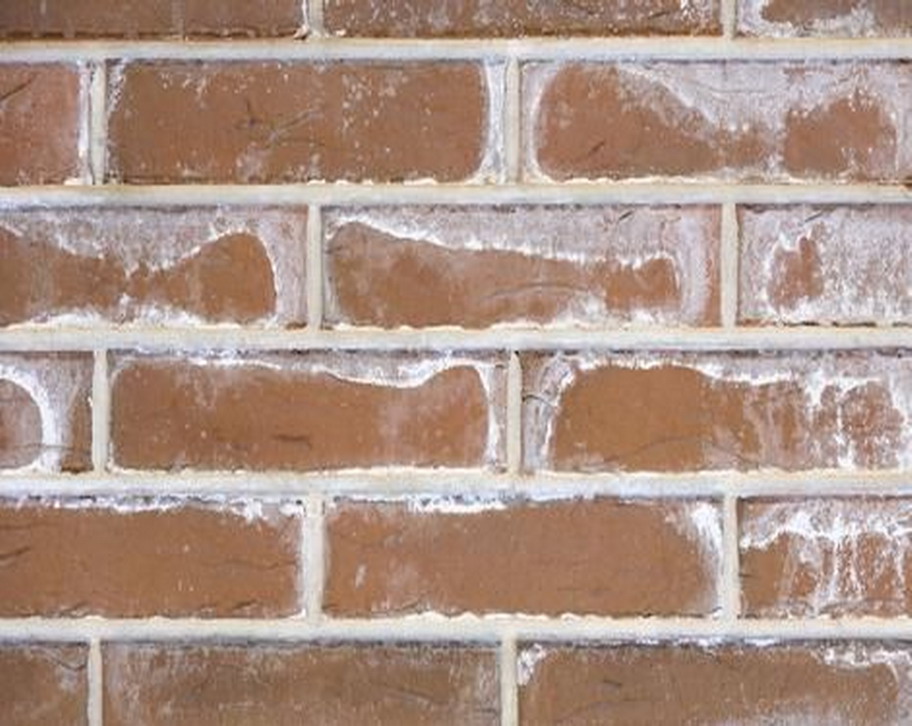
Efflorescence is the name for the crystalline deposits on masonry that show up as white, chalky, or powdery patches on brick, block, or concrete. Sometimes the salts look like a thin film. Other times they grow as tiny whiskers or a crusty build‑up. Whether the wall is red brick, stone, or grey concrete, the deposit itself is usually white and easy to smear with a finger.
Chemically, efflorescence comes from water‑soluble salts that are already in the masonry. Common ones include calcium sulphate, sodium sulphate, potassium sulphate, and calcium carbonate. These minerals can be in the brick clay, the Portland cement in mortar, the sand and aggregate, or even in surrounding soil. On their own, while the wall stays dry, these salts sit quietly inside the material and do nothing.
Brick and mortar are full of tiny pores and channels, almost like a sponge made of stone. This is why masonry can soak up water and why moisture in brick walls can travel quite far. When water gets into the wall, it dissolves the salts and turns them into a salty solution. That solution moves through those pores toward the nearest drying surface; most often, that means the outside face of the wall.
At the surface, the water meets the air and evaporates. The salts cannot evaporate, so they stay behind as brick salt deposits. That is the white film people see when they ask what causes efflorescence on brick in the first place. Because this movement depends on moisture, efflorescence is often heaviest after a period of rain followed by a dry, sunny day.
Efflorescence is often confused with mould or paint residue. A simple test helps tell it apart:
Atlantic Brick and Stone often starts with quick checks like this before planning any efflorescence removal or repair work.
There are two broad types of efflorescence. Primary efflorescence is common on new walls as construction moisture dries out. Secondary, or recurring, efflorescence shows up later in the building life and points to an ongoing water source. In both cases, the white deposit itself is not the main issue. It is the sign that water is moving through your brickwork.
Efflorescence on brick does not just appear at random. Three things must happen at the same time for those white stains on brickwork to show up:
If any one of these three parts is missing, there will be no visible brick efflorescence.
Understanding this three‑part pattern is very helpful when trying to answer what causes efflorescence on brick on a specific house or building. Homeowners and property managers can rarely control the salts that are already in older masonry, but they can control moisture and evaporation paths. That is why Atlantic Brick and Stone always looks closely at these three conditions during an inspection.
Every brick wall contains some amount of mineral salt. The clay used to form bricks often carries calcium, sodium, potassium, and magnesium compounds. Portland cement in mortar and concrete adds more sulphates and carbonates. Even the sand and stone used in mixes can come with their own natural salts, depending on the source.
These salts do not cause white powder on bricks until they meet water. Dry bricks can hold a fairly high salt content while still looking perfectly clean. The salts stay “locked” inside the structure of the brick or mortar and do not move very far. Once moisture reaches them, though, they can dissolve into a solution and start to migrate.
Salt content can differ from one brick manufacturer to another. Mortar recipes and concrete mixes also vary in how much soluble salt they contain. In some areas, local aggregates add more salts to the mix. Atlantic Brick and Stone takes this into account on new projects, choosing quality bricks and low‑salt mortar and concrete mixes whenever possible. That choice cannot remove efflorescence risk completely, but it does lower the amount of material available for future brick salt deposits.
Water is the driving force behind efflorescence in brickwork. When people ask what causes efflorescence on brick, the honest answer is that salts are only the fuel; water is the engine. It takes enough moisture to soak into the brick or mortar, dissolve the internal salts, and create a liquid that can actually move.
Masonry draws water in through tiny pores by capillary action, in the same way a paper towel soaks up a spill. The water usually moves from wetter areas, such as soil or a leaking gutter, toward drier parts of the wall. This is how moisture in brick walls can travel upward from the ground or sideways from a leak several metres away.
In Fredericton, there are many ways this moisture can get into a wall. Heavy rain, wind‑driven storms, melting snow against a foundation, and damp basements all add water to the mix. When temperatures swing above and below freezing, small cracks sometimes open in mortar or brick faces, giving water one more entry point. Because it is very hard to change the salts inside existing masonry, addressing water is the most effective way to control efflorescence.
The final step in the process is evaporation. Once the salt‑rich water reaches a surface that is exposed to air, it starts to dry out. The water turns to vapour and escapes. The minerals cannot leave, so they crystallize in and on the surface, creating the white marks on bricks that catch the eye.
This explains why brick turning white often shows up after a spell of wet weather followed by dry, sunny days. The rain or snow provides the moisture. As the sun and wind dry the wall, the drying front moves inward, pulling the salt solution toward the surface. When the moisture reaches that front, it leaves behind more crystalline deposits on masonry.
Conditions around the wall matter as well. Warmer temperatures, moving air, and lower humidity all speed up evaporation. Cooler, damp conditions slow it down. In some cases, salts crystallize just under the surface instead of on top. This hidden build‑up, called subflorescence, can damage brick faces even when visible efflorescence is light. Atlantic Brick and Stone sometimes uses breathable protective treatments on exposed walls to interrupt this evaporation path and reduce surface deposits, while still letting trapped moisture escape safely.
Once someone understands the three conditions above, the next question is where the water is coming from. For real homes and commercial buildings, this is the heart of what causes efflorescence on brick. Salts are already present, and evaporation is part of normal weather, so the key is tracking down moisture paths.
The position of the stain often offers strong clues. Efflorescence near the base of a wall usually points to ground or foundation issues. Patches higher up can point toward roof, eavestrough, or window problems. Atlantic Brick and Stone looks at these patterns carefully when planning both efflorescence removal and longer‑term repair work.
Water coming from above is one of the most common reasons for efflorescence in brickwork around Fredericton. When eavestroughs clog with leaves or pull away from the fascia, water spills over the edge instead of running to the downspouts. That overflow runs straight down the face of the wall, soaking the brick and mortar in wide vertical bands. Over time, this repeated soaking leaves clear white stains on brickwork following the water path.
Downspouts can cause similar trouble when they discharge too close to the base of the wall. The ground near the foundation stays saturated, and moisture rises into the lower bricks. Missing or damaged flashing at roof‑wall connections, window heads, and door headers also allows water to slip behind the brick veneer instead of being directed out and away. Once water is inside the wall system, it can travel in many directions before it shows up as white deposits on the outside face.
Caulking around windows, doors, vents, and other wall openings wears out with time. Small gaps look harmless but can admit enough water during wind‑driven rain to soak the surrounding masonry. Poor roof maintenance, including ice dams that force water under shingles, adds to the issue. During inspections, Atlantic Brick and Stone pays close attention to eavestrough condition, downspout placement, flashing details, and sealant lines. Regular cleaning, proper downspout extensions, and fresh, weather‑resistant caulking are simple but very effective defences.
Ground‑level moisture is another major part of what causes efflorescence on brick, especially on older foundations. Brick, block, and stone all act like wicks when they sit in damp soil. Through capillary action, groundwater rises through the pores of the masonry, sometimes climbing half a metre to a metre above grade before it evaporates. The result is a clear “tide line” of brick efflorescence across the lower wall.
Homes built before modern damp‑proofing standards often lack proper waterproof membranes or footing drains. In Fredericton’s older neighbourhoods, many foundations sit close to high water tables or near rivers and streams that raise ground moisture during certain seasons. If the yard slopes toward the house instead of away, surface water from rain and snow melt also gathers against the wall, adding to the load.
Planting beds close to the house, heavy mulch piled against brick, and poorly placed sprinklers keep soil wet at the base of the wall. From there, moisture in brick walls spreads upward. Efflorescence can show both outside on exposed brick and inside on basement walls. Atlantic Brick and Stone deals with these problems using grading corrections, drainage improvements, exterior waterproofing, and careful foundation repair to block these paths and protect the structure.
Modern brick veneer walls are built with a cavity between the brick and the framed structure. That gap is meant to act as a drainage plane. Any rain that gets through the brick should drain down and exit through weep holes near the bottom. When this system is blocked or missing key parts, water becomes trapped instead.
Blocked or absent weep holes mean water has no easy way out. Damaged or poorly installed house wraps and membranes can also hold water against the sheathing. At the same time, rain still enters through the brick face and mortar joints in heavy storms. With nowhere else to go, this trapped moisture sees the outer brick face as its drying surface. The result is repeated brick salt deposits and, if ignored, damage to the veneer and the wall behind it. Atlantic Brick and Stone’s crews understand these wall systems well and pay close attention to weep holes and drainage details when they work on veneer projects.
Moisture does not always come from outside. In some buildings, the answer to to what causes efflorescence on brick lies indoors. High humidity in basements, bathrooms, and kitchens without good ventilation can drive warm, moist air into cooler wall sections. As this air moves outward and cools, water condenses inside the wall and dissolves salts.
Hidden plumbing leaks inside walls or ceilings add even more water in a short time. Condensation from HVAC equipment or poorly vented dryers can also raise moisture levels. While interior sources are less common than rain or groundwater, they still matter, especially during cold months when houses stay tightly closed. In these cases, improving ventilation, repairing leaks quickly, and managing indoor humidity are key steps in stopping the white powder on bricks from returning.
Efflorescence on a brand‑new house does not always mean the same thing as efflorescence on a 40‑year‑old foundation. The age of the structure is an important part of what causes efflorescence on brick and how serious it may be. New masonry often goes through a drying phase that brings salts to the surface but then fades. Older walls with recurring deposits almost always have a current water source that needs attention.
Understanding this difference helps owners decide when to watch and wait, and when to call a specialist such as Atlantic Brick and Stone for a closer look.
In the first few years after construction, it is quite common to see white marks on bricks on new homes and commercial buildings. This is often called “new building bloom” or primary efflorescence. During construction, large amounts of water go into mortar, grout, and concrete. Even if workers keep surfaces dry, the interior of the wall holds a lot of moisture for some time.
As the wall cures and dries, that moisture slowly works its way out through the brick face. On the way, it dissolves the built‑in salts from the brick and mortar. When the water finally reaches the surface and evaporates, it leaves behind the familiar white powder on bricks. Because the main water source is inside the wall from construction, this effect usually becomes weaker over time.
Most new‑build efflorescence fades over one to three years as the wall system finishes drying. Light deposits can often be left alone to weather away, or gently brushed off for appearance. It becomes more concerning if heavy deposits continue past three to five years, or if new white bands appear where none existed before. Atlantic Brick and Stone helps limit this risk on new work by choosing mixes with low permeability and fewer soluble salts, and by following good curing practices so moisture can exit in a controlled way.
On older buildings, or where stains return after cleaning, brick efflorescence means something different. This secondary, or recurring, efflorescence shows that fresh water keeps entering the masonry system. The construction moisture has long since left, so any new brick salt deposits must be coming from a current moisture source.
This type of efflorescence will not disappear on its own. As long as water continues to move through the wall, salts will continue to reach the surface. Over time, that same moisture causes much more than just white stains on brickwork. It contributes to freeze–thaw cracking, spalling brick faces, and mortar joints that weaken and crumble. In Fredericton, recurring efflorescence often appears after spring thaw, long rainy periods in fall, or snow‑heavy winters that stress older drainage systems.
Older homes without modern waterproofing, buildings with worn mortar joints, and properties with poor grading are all common cases. Simply washing the wall is not enough. The deposits will come back until the moisture path is cut off. Atlantic Brick and Stone handles these situations with a full diagnostic process, often including moisture readings and, when needed, input from structural engineers. That deeper review helps find the real cause so repairs can address more than just surface appearance.
Because efflorescence first shows up as a surface blemish, it is easy to treat it as a minor detail. Many owners focus on how the brick turning white looks in photos or from the street. In reality, those crystalline deposits on masonry are the visible tip of a much larger moisture issue. Ignoring them gives water more time to damage brick, mortar, interior finishes, and even air quality.
Seeing efflorescence is like seeing a warning light on a car dashboard. The light itself is not the problem; it is the sign that something important is happening inside the system. When people ask what causes efflorescence on brick and then delay dealing with it, they are taking a risk with both their structure and their comfort.
When moisture and salts stay active inside masonry, they start to break it down. If the salt solution dries just below the surface instead of on top, the crystals grow inside the tiny pores. As these crystals expand, they press against the walls of those pores with surprising force. Brick and mortar can only take so much of this internal pressure before the face starts to flake, peel, or pop off. This process, known as known as spalling, leaves bricks looking chipped and rough.
Water inside the brick also reacts badly to freezing weather. In a New Brunswick winter, any water trapped in the pores of brick and mortar will freeze during cold snaps. Frozen water expands by about nine percent compared to liquid water. That expansion pushes outward on the material around it. With each freeze–thaw cycle, tiny cracks grow wider and deeper, leading to visible cracking and surface loss.
Mortar joints suffer as well. Constant wetting and drying can wash out some of the binders in the mortar, turning it soft and sandy. Gaps start to appear between bricks, and in severe cases, bricks may even shift or loosen. The longer this goes on, the more expensive the fix becomes. Atlantic Brick and Stone deals with this kind of damage through careful careful repointing, brick replacement where needed, and structural stabilization work that brings the wall back to a safe condition.
Moisture that causes that causes efflorescence in brickwork does not stop at the outside face. It often keeps moving inward, especially through basement and foundation walls. Damp concrete and masonry create ideal conditions for mould and mildew growth on the inside of the wall or on nearby framing and drywall. These fungi release spores into the air that can trigger allergies, asthma, and other breathing issues.
Interior finishes also suffer. Paint can blister and peel, drywall can swell and crumble, and flooring near exterior walls may cup or rot. A musty smell and heavy air in basements or lower levels are common signs. Over time, buyers and renters may see these problems and question the overall condition of the building, which can pull down property value. Fixing the water source that drives efflorescence helps protect both the building envelope and the indoor environment.
Moisture damage builds over years. Each season that brick efflorescence is ignored adds one more round of stress to the structure. Prolonged exposure to groundwater can weaken footings and foundation walls, especially where old mortar or bricks are already worn. If water reaches steel elements such as reinforcing bars or lintels, rust can form. Rust occupies more space than bare steel, so it expands and cracks the masonry around it.
Historic buildings around Fredericton are especially at risk because their materials and designs were not based on modern waterproofing methods. Deferred maintenance turns small issues into major structural repairs. As certified Foundation Repair Specialists, Atlantic Brick and Stone handles these deeper problems with a full range of repair and reinforcement methods, helping owners protect the long‑term strength of their buildings.
After learning what causes efflorescence on brick, many property owners prefer having a specialist handle diagnosis and repair. Atlantic Brick and Stone brings over 15 years of masonry and concrete experience in Fredericton and nearby areas, working in a climate that challenges brick, block, and stone.
Instead of treating efflorescence as just a cleaning task, the team views it as a sign the whole system needs attention. From initial visit to final clean‑up, the goal is protecting both appearance and structural integrity of homes, commercial sites, and historic buildings.
Atlantic Brick and Stone starts every project with root‑cause thinking. The crew looks beyond washing off white powder on bricks to find how water enters the wall—through faulty eavestroughs, poor grading, aging mortar joints, or damp foundations. When needed, they consult structural engineers for complex issues.
Repair services include careful brick repointing to renew worn mortar joints and seal water entry points. This covers chimneys, where failing mortar and bricks cause leaks and safety concerns. Brick restoration helps older buildings maintain original character while fixing damage from spalling, cracking, and moisture exposure.
Foundation repair, backed by Foundation Repair Specialist certification, addresses cracks, bulging, and water ingress in brick, stone, or concrete walls. Professional efflorescence removal and low‑pressure cleaning restore surfaces to a clean, even appearance. Concrete services include foundations, garage slabs, resurfacing, and crack repairs with moisture‑resistant treatments. Protective coatings and weather‑resistant caulking seal exposed joints and surfaces.
Choosing the right contractor matters when dealing with efflorescence in brickwork and moisture issues. Atlantic Brick and Stone brings over 15 years of local experience in Fredericton and surrounding communities, understanding how freeze–thaw cycles, rain patterns, and soil conditions affect brick and concrete.
The company’s masons and concrete workers combine technical expertise with careful craftsmanship, using quality materials and proven methods for lasting, attractive repairs. Attention to detail—from clean mortar joints to properly placed control joints and weep holes—prevents repeat problems.
Strong communication keeps homeowners, property managers, and contractors informed at each stage. Atlantic Brick and Stone handles projects from small porch repointing to full foundation restoration and large‑scale hardscape construction, addressing immediate efflorescence concerns and related water management needs. Their solid local reputation across residential, commercial, and historic work demonstrates earned trust.
Efflorescence appears as white stains on brickwork and occurs when salts inside masonry dissolve in water, migrate to the surface, and crystallize as the moisture evaporates. What causes efflorescence on brick is the combination of soluble salts, moisture infiltration, and a drying surface. While salts are inherent in masonry materials, the moisture typically comes from preventable sources.
Cleaning can temporarily improve appearance, and light efflorescence on new construction may fade naturally. However, for older buildings or persistent deposits, washing alone is insufficient. Continued moisture exposure can cause spalling, cracked bricks, deteriorating mortar joints, mould, and structural damage, particularly in Fredericton’s freeze–thaw climate.
Atlantic Brick and Stone provides comprehensive solutions: thorough diagnosis, safe removal of brick efflorescence, targeted repairs, and protective treatments. Their approach addresses root causes rather than masking symptoms. If brick turning white recurs, professional evaluation is essential to protect your property and investment. Contact Atlantic Brick and Stone if you notice white powder on bricks or crystalline deposits on masonry, their local experts will provide clear, effective moisture control solutions.
Efflorescence itself is not considered toxic. The white powder on bricks is made of natural mineral salts that most people can touch without trouble, although it may irritate very sensitive skin or eyes if rubbed. The real concern is the extra moisture that brings those salts to the surface. Damp walls and basements can support mould and mildew, and those growths can affect breathing, especially for people with asthma or allergies. Dealing with the moisture source that causes efflorescence helps keep indoor air healthier.
Painting straight over brick efflorescence is not a good idea. If the salts stay on the surface and the moisture source is active, the new paint is likely to peel, bubble, or flake off as more salts push forward. Paint and non‑breathable coatings can also trap water inside the wall, which may speed up spalling and freeze–thaw damage. Efflorescence and any loose paint should be removed first, the moisture path must be corrected, and only then should a breathable, vapour‑permeable coating be considered. Atlantic Brick and Stone can advise on suitable products once the wall is dry and stable.
On new construction, mild efflorescence caused by drying construction moisture can fade over one to three years as the wall dries out fully. Weathering and occasional gentle cleaning help this process. On older buildings, or where heavy deposits keep coming back, efflorescence will not disappear by itself. The repeating pattern means water is still entering the masonry. In those cases, waiting only gives moisture more time to damage brick and mortar, and a professional assessment is strongly recommended.
A good, breathable water‑repellent sealer can help reduce water absorption from rain and melting snow, which may lower the amount of white stains on brickwork from outside sources. However, sealing by itself does not fix what causes efflorescence on brick. If water is rising from the ground, leaking from eavestroughs, or coming from inside the building, that path must still be corrected. Non‑breathable sealers can even make problems worse by locking moisture inside the masonry. Atlantic Brick and Stone uses commercial‑grade, vapour‑permeable sealers as part of a wider moisture‑control plan, not as the only step.
GET STARTED
Create stunning structures with our residential and commercial masonry services in Fredericton. From meticulous designs to the completed build, our process is professional and rewarding, and we can’t wait to build your dream with you.
Atlantic Brick and Stone, one of the best masonry contractors in Fredericton, NB
Contact
8 Muskie Street, Lower Kingsclear, New Brunswick E3E 0E7, Canada