
Can a fireplace finish still look right after several Fredericton winters? Will exposed joints crack, collect debris, or suit the rest of the room? A dry-stack vs grouted stone fireplace choice comes down to visual style, while long-term strength depends more on the wall behind the stone.
Dry-stack stone creates a clean face with narrow shadow lines and little visible mortar. Grouted stone uses mortar joints as part of the design, making it a natural fit for fieldstone and traditional masonry. Material type, heat exposure, water control, and skilled installation matter more than the visible joint style.
Atlantic Brick and Stone helps Fredericton-area property owners compare stone options for new fireplaces, refacing work, chimney repairs, and outdoor features. The sections below cover appearance, safety, weathering, upkeep, and project costs.
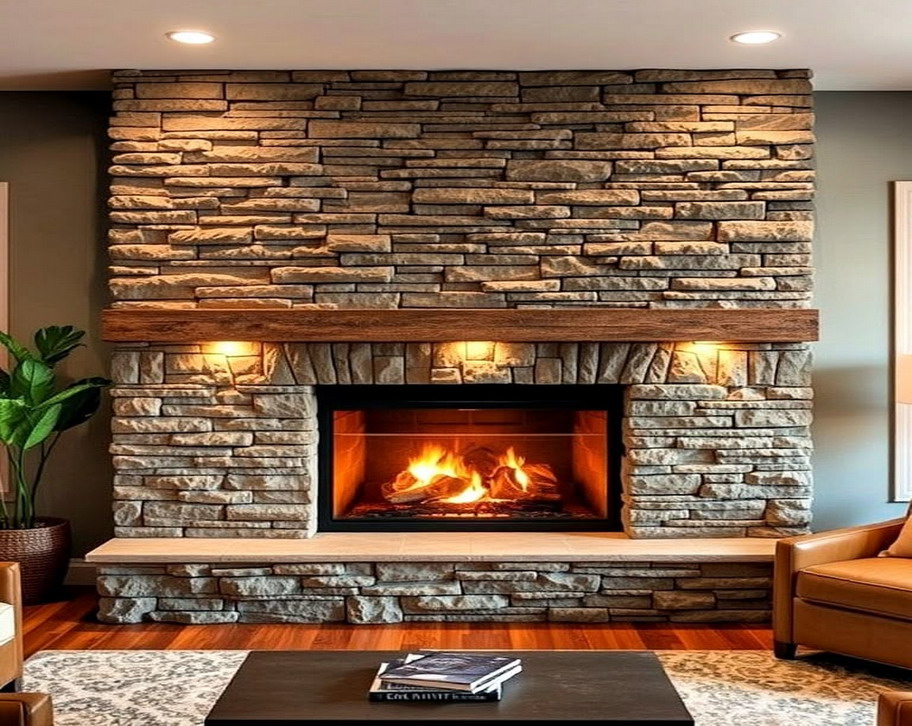
Dry-stack and grouted stone fireplaces differ mainly in their visible joints and overall character. Dry-stack uses tightly fitted stone with little exposed mortar, while grouted work leaves mortar visible around each unit. A dry-stack vs grouted stone fireplace decision should also account for the stone profile, fireplace type, and wall condition. Neither finish alone makes a fireplace safe, weather-resistant, or long-lasting.
A dry-stack stone fireplace has narrow shadow lines that let the stone face take priority. Linear ledgestone, split-face slate, granite, quartz, thin natural veneer, and manufactured panels all suit this look. Most residential dry-stack veneers still use concealed mortar behind each stone, so the finished face is not a true load-bearing load-bearing dry-stone wall. Dry-stack fireplace pros and cons include bold texture and clean lines, balanced against close-fitting demands and exterior gaps that can collect debris.
Grouted stonework frames each stone with visible mortar, adding another colour and texture to the fireplace face. Flush, recessed, raked, tooled, and lightly overgrouted joints can shift the look from formal to rustic. A dry-stack vs grouted stone fireplace comparison often favours grout for irregular fieldstone, reclaimed stone, heritage-inspired homes, and commercial entrances. Mortar colour can blend into the stone or create contrast, while types of masonry joints can make grouted fireplace repair areas easier to identify later.
Installation and fire-safety needs affect dry-stack and grouted fireplaces because the visible stone is only a finish layer. A dry-stack vs grouted stone fireplace project needs stable support, approved backing, and appliance clearances before stone placement begins. A dry-stack appearance does not mean the fireplace structure can rely on gravity alone. Masonry fireboxes, chimneys, hearths, flues, and vented appliances follow separate construction rules.
Stone veneer needs a stable, clean substrate before dry-stack or grouted installation. A mason checks brick, concrete, backing walls, and chimney areas for loose mortar, movement, moisture, and damage. Sound brick can often accept stone wall cladding after preparation, including a scratch coat, secure bonding method, level layout lines, and non-combustible backing where required. Natural stone weight may also call for a review of walls, floors, hearths, and support ledges.
A stone surround differs from a masonry firebox and chimney system. Gas, wood, electric, and pellet appliances require the manufacturer’s stated clearance, venting, mantel, and finish details. Stone is non-combustible, but framing, membranes, adhesives, and wood blocking behind it may not be. Wood-burning projects, damaged chimneys, and vent changes should receive qualified review, often involving a WETT professional where applicable.
Dry-stack and grouted fireplaces can both perform well in Fredericton if water stays out of the wall assembly. A dry-stack vs grouted stone fireplace choice does not replace flashing, drainage, caps, or a frost-resistant base. Freeze-thaw cycles can turn small moisture paths into cracked mortar, loose veneer, staining, or spalled stone. Dense granite, slate, and quartz generally handle demanding exposure better than porous stone with weak detailing.
Dry-stack fireplace durability depends on secure concealed bonding and a backing system that drains and dries properly. Watch for shifting stones, widening gaps, water stains, white white efflorescence, loose veneer, or debris packed into joints. Clean the face with a soft brush, water, and a masonry-safe cleaner. Harsh acids, aggressive pressure washing, and moisture-trapping coatings can harm stone or hide a drainage issue.
Grouted stone fireplace maintenance focuses on mortar joints as well as the stone itself. Cracks, crumbling, recessed joints, separation, stains, and damp spots can point to wear or water entry. repointing removes failed mortar removes failed mortar to a suitable depth before compatible new mortar is placed and tooled. Surface patching often fails quickly, while heritage brick and soft stone may need a lime-based mortar that allows moisture vapour to pass through.
Dry-stack stone fireplace cost and grouted stone pricing depend on project conditions more than the joint style alone. A dry-stack vs grouted stone fireplace estimate should cover material, access, wall repairs, height, cutting, and exterior water work. Natural stone, manufactured veneer, full-bed stone, and thin veneer each create different labour and support needs.
|
Dry-stack |
Grouted stone |
What affects the result |
|---|---|---|
|
Tight fitting and stone sorting |
Joint filling and tooling |
Stone shape and desired finish |
|
Minimal visible mortar |
Mortar colour and joint profile |
Labour time and material match |
|
Clean stone-led face |
Traditional joint-defined face |
Building style and care needs |
Choose dry-stack for narrow joints and linear or carefully fitted stone. Choose grouted stone for irregular fieldstone and visible masonry character. Atlantic Brick and Stone can install either finish over sound brick after reviewing heat resistance, porosity, support, and site conditions.
A quick dry-stack vs grouted stone fireplace guide can narrow the choice before a site review. Both styles can last for decades with sound preparation and timely repairs. Outdoor work needs careful water control in New Brunswick weather.
Dry-stack suits modern, stone-led designs because tight joints put texture, colour, and stone shape at centre stage.
Grouted stone suits traditional homes because visible mortar adds pattern, depth, and a hand-laid masonry feel.
Hidden wall work drives durability because bonding, support, drainage, and clearances affect both finishes.
Freeze-thaw protection matters outdoors because trapped water can crack stone, loosen veneer, and damage mortar.
Material and labour shape project cost because fitting, cutting, access, repairs, and stone type all affect the scope.
Frequently asked questions about stone fireplace finishes often focus on cladding, sealing, heat, repair, and project timing. A dry-stack vs grouted stone fireplace plan needs a site-specific review if the fireplace has damage, active moisture, or appliance changes. The answers below cover common planning concerns.
Yes, stone veneer fireplace can often be installed over sound brick. Loose mortar, moisture damage, structural movement, and unsafe fireplace conditions need repair before cladding begins. The brick also needs a prepared bonding surface and an approved stone veneer system.
Sealing depends on stone type, porosity, location, and exposure. Limestone cladding and sandstone may need more stain and moisture protection than dense granite or slate. A breathable product can suit some projects, but sealing cannot replace flashing, drainage, cap, or crack repairs.
Yes, manufactured stone can work around many fireplace surrounds and is often lighter than natural stone. Product directions and appliance clearance rules must guide its use near heat sources. Manufactured veneer can create both dry-stack and grouted stone appearance options.
Many stone-over-brick fireplace restoration take about 2 to 4 days. Timing changes with fireplace size, wall repairs, stone type, access, weather, curing time, and appliance work. An on-site review provides the most reliable schedule for the property.
Yes, isolated mortar damage can often be repaired through proper repointing. Repeated cracking can signal water entry, settlement, heat cycling, or an incompatible past repair. Find and fix the cause before repairing the visible joint.
GET STARTED
Create stunning structures with our residential and commercial masonry services in Fredericton. From meticulous designs to the completed build, our process is professional and rewarding, and we can’t wait to build your dream with you.
Atlantic Brick and Stone, one of the best masonry contractors in Fredericton, NB
Contact
8 Muskie Street, Lower Kingsclear, New Brunswick E3E 0E7, Canada